Merritt Island Wildlife Refuge
If you’re visiting Florida, and in particular the Orlando area, Merritt Island Wildlife Refuge on the east coast is well worth a visit, and only about 50 miles away. In fact you can combine a trip there and to the Space Centre as a day out. Although December to April is best for wildlife, in summer you can still see a good range of the species.
The refuge has a number of drives that you can follow but most people favour the Black Point Drive and a stop at the Visitor Centre. This January we drove up from Stuart and arrived about mid morning, so missed the very quiet part of the day. We paid the $10 entrance fee and started on the drive. Its about 7 miles long with a number of places to get out of the car. There are many information boards on the route, and most of the time you can pull over and take photos.
Black Point Drive
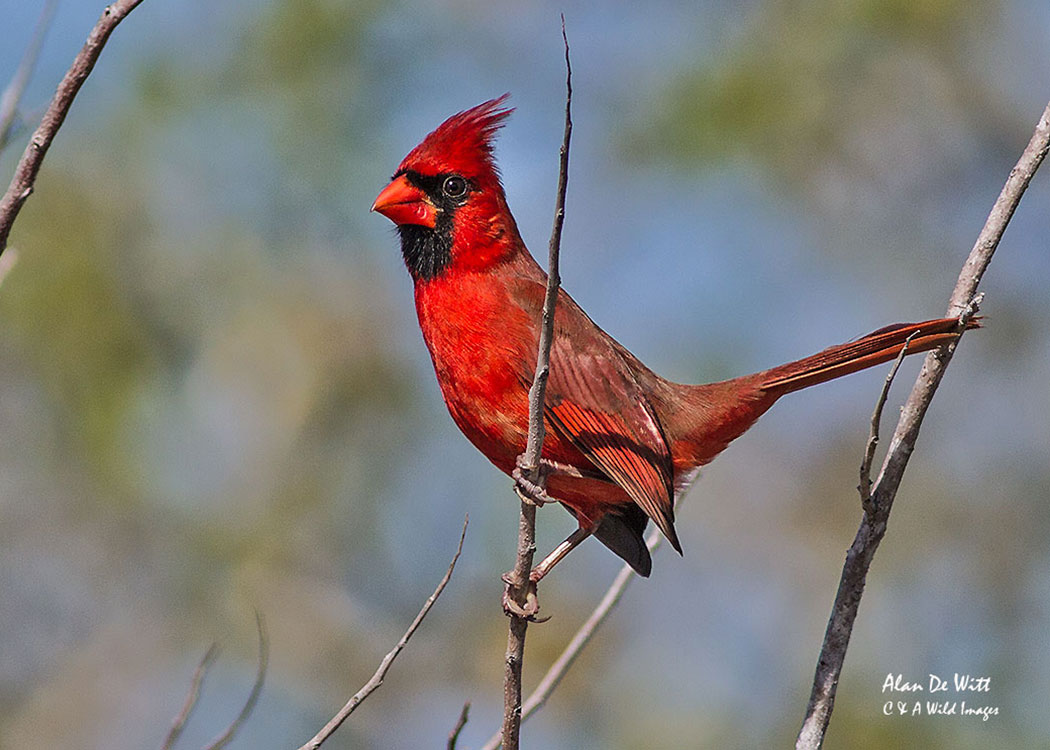
Within minutes of starting we were greeted with some great views of a male Cardinal and the people in the car in front had just seen an otter run across the road. January is the dry season in this part of the world so the area was very different from when we visited in July last year. There were large areas of mud flats, crisscrossed with foot prints of alligators that inhabit the refuge. In the pools that remain wintering birds gather, sometimes in large numbers.
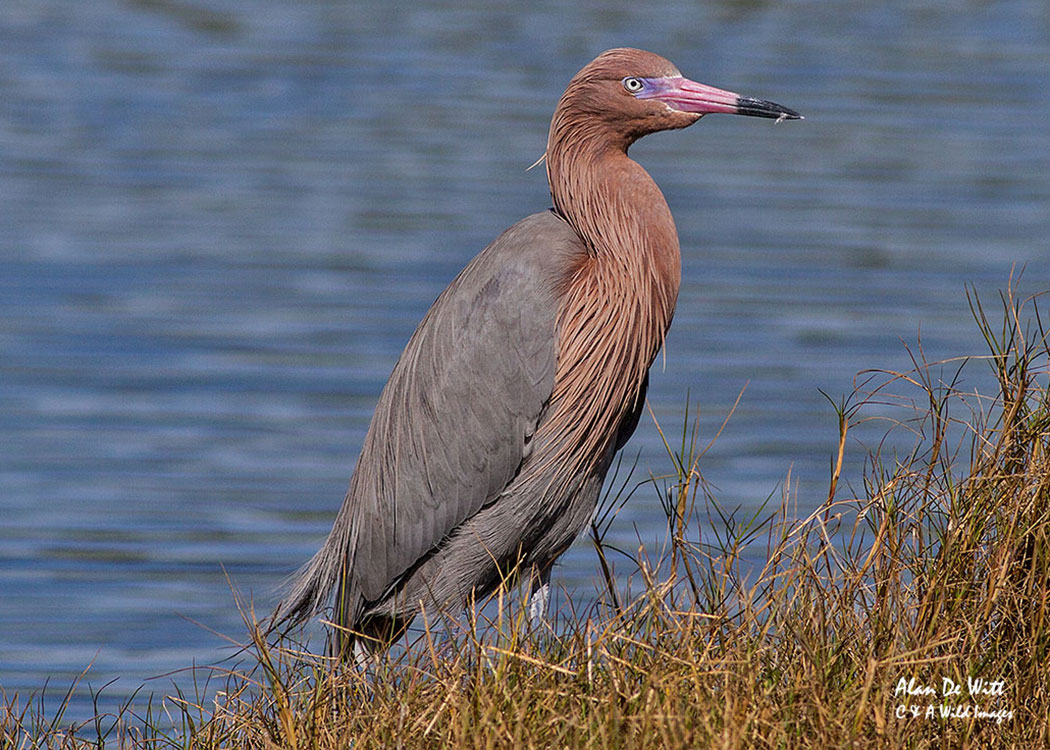
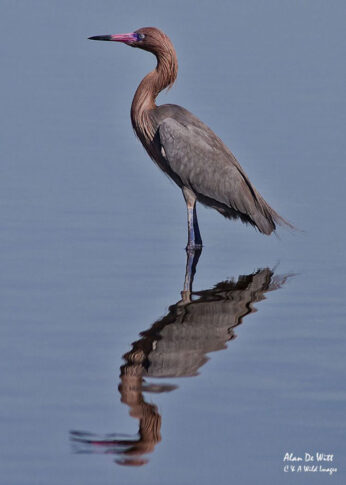
A few hundred yards further along the drive we had some great views of a Reddish Egret, a new bird to my Florida list. It was feeding very close to the road in perfect light with the sun behind us. Not something you can always guarantee when viewing wildlife.
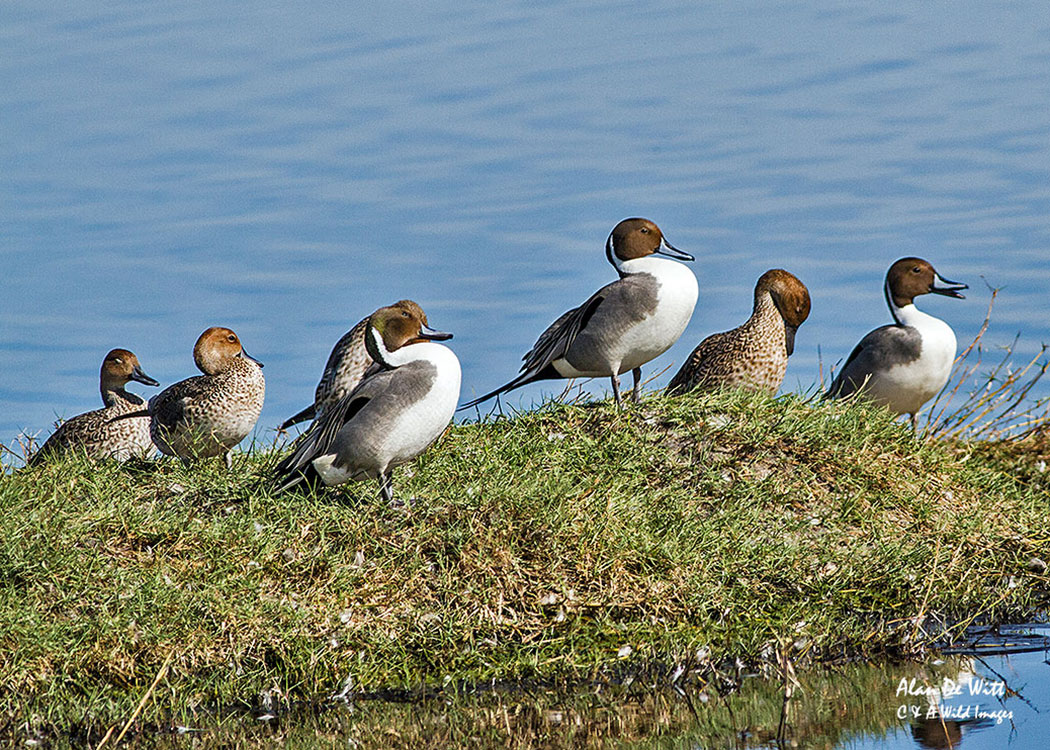
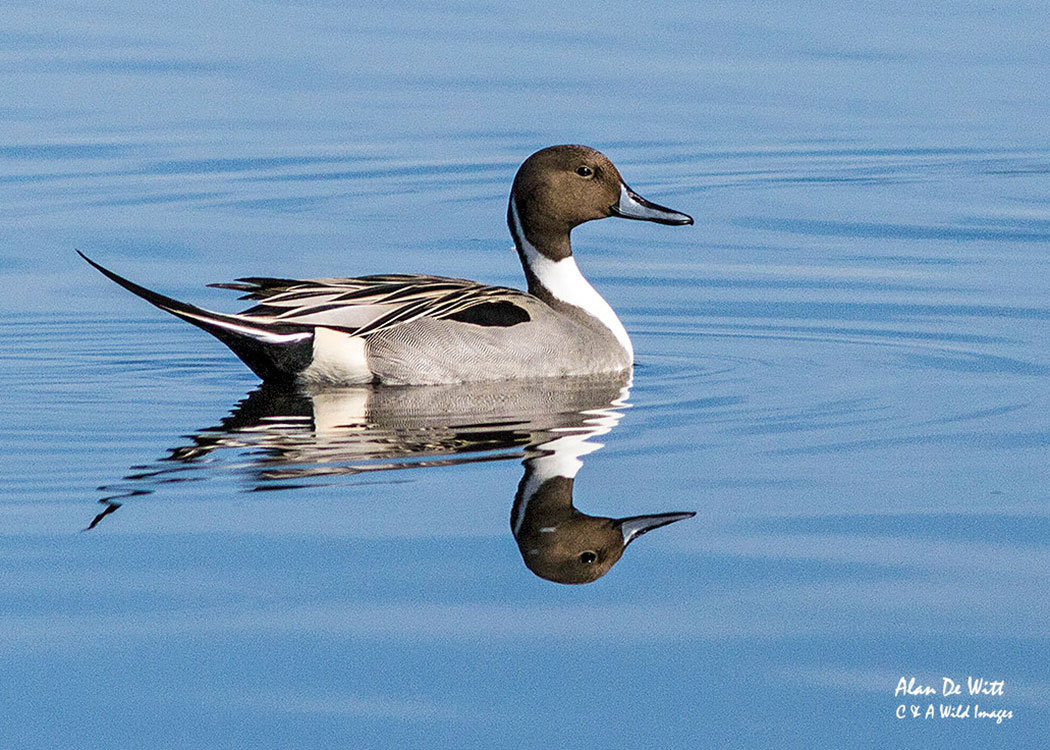
Merritt Island at this time of year is renowned for its winter visitors both of the human and feathered kind and our next stop was at an area that was populated by hundreds of pintail ducks.
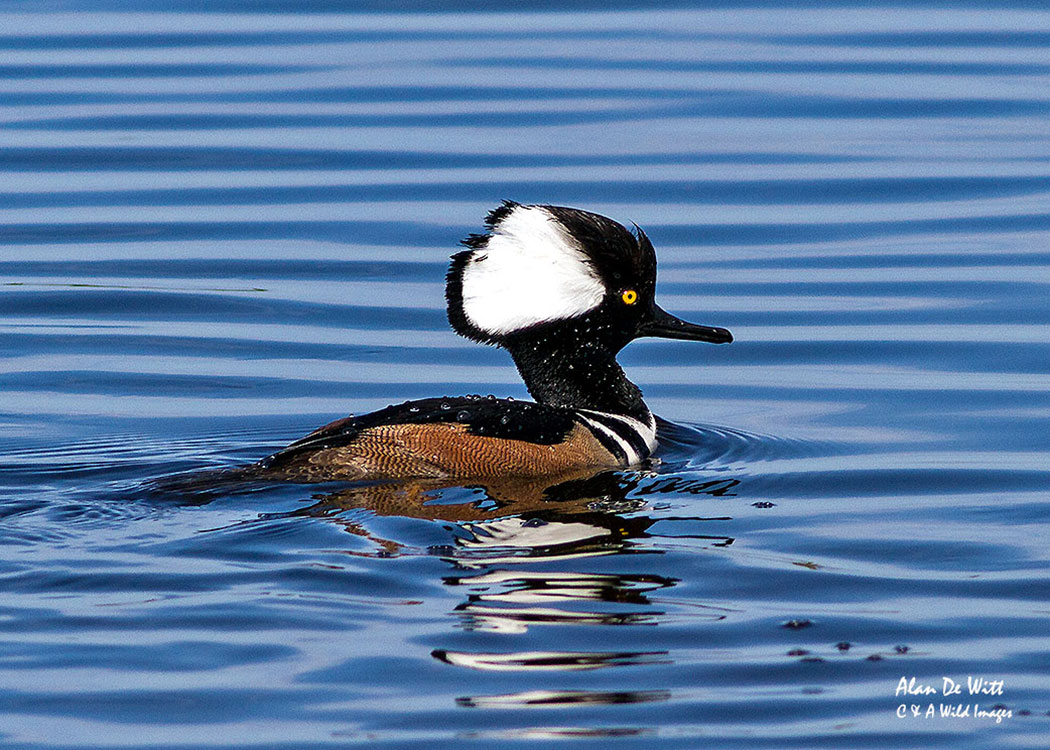
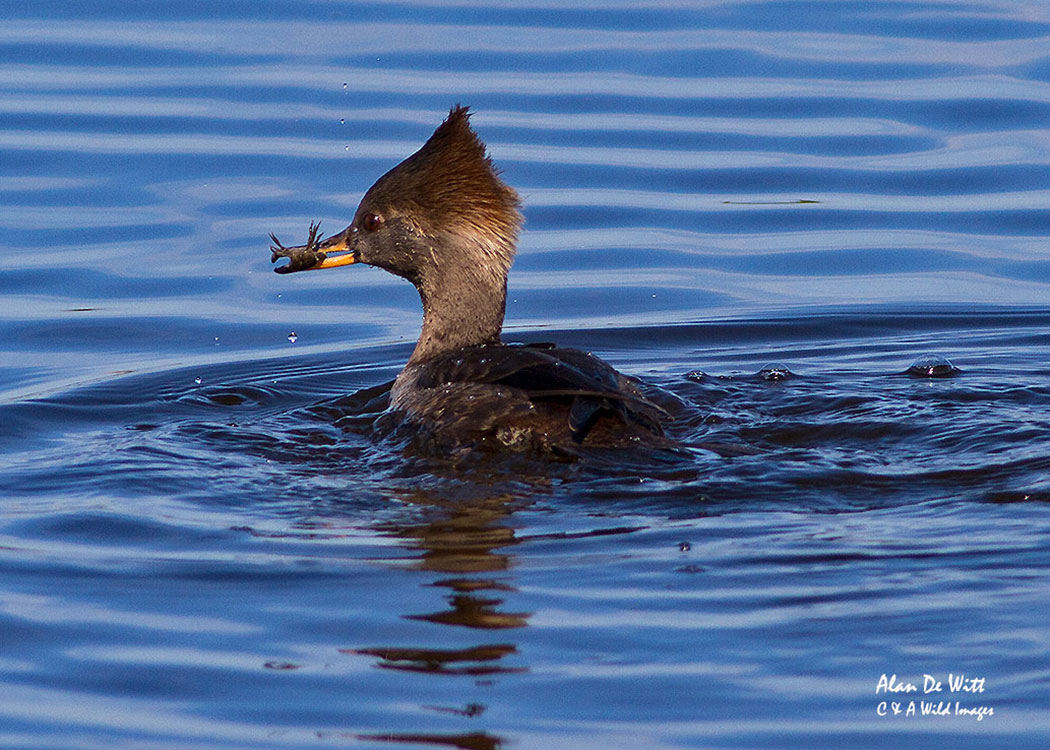
Further along the drive we noticed two very distinctive looking ducks. They were Hooded Mergansers, which were swimming close to the shore. This was a bird on our hope to see list at the start of the drive. They were fishing for crayfish. There was plenty of evidence of the abundant underwater life as fish and crabs could be easily seen in the clear water and the reflections in the still water were beautiful.
Wild Bird Hiking Trail
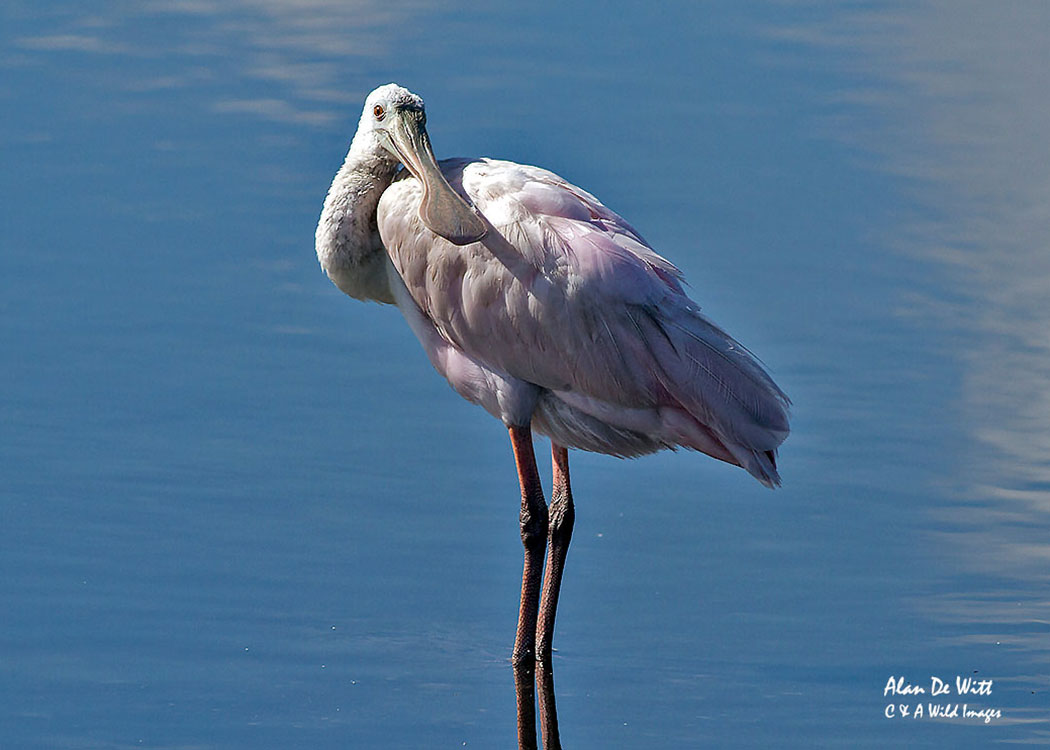
There was the opportunity to park and get out of the car to walk along a track to some overlooks. Immediately we saw an otter disappearing quickly down a creek, too fast to take a photograph but a good view. Along the track two roseate spoonbills were feeding. Their colours were disappointing and they seemed quite small in size.
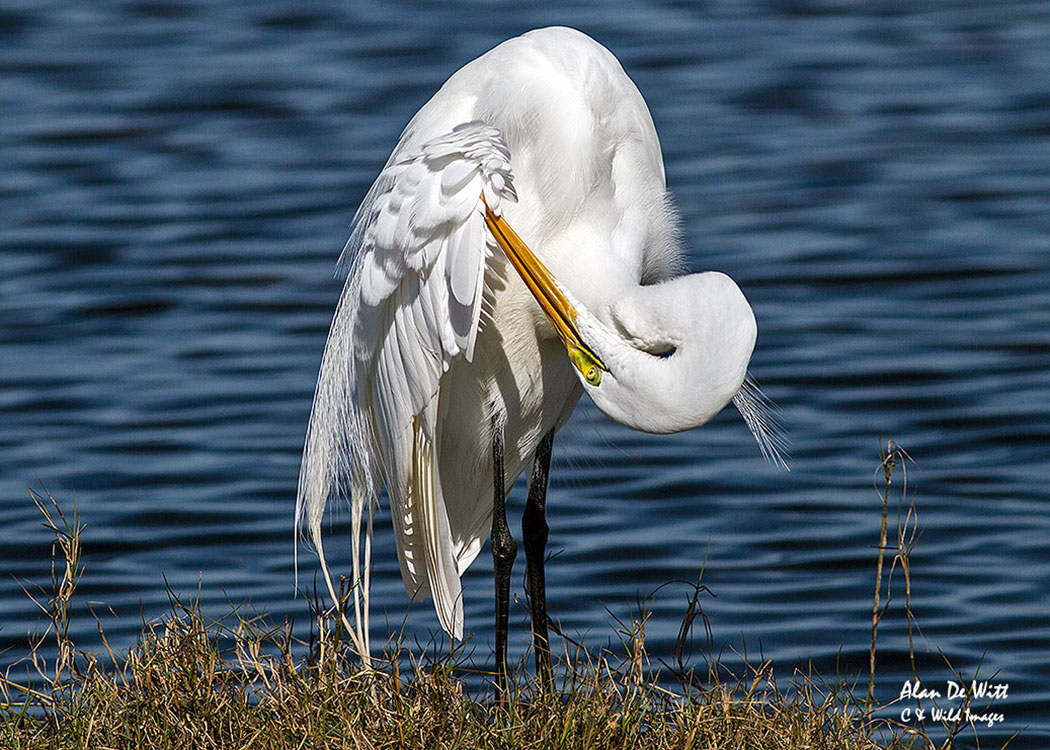
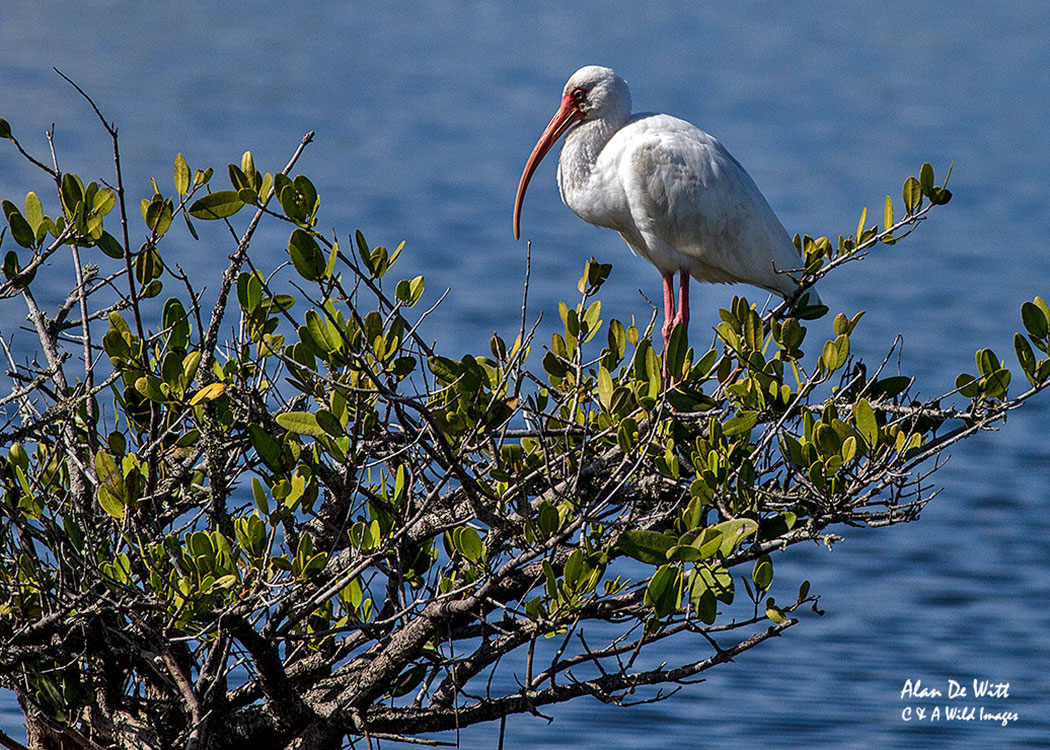
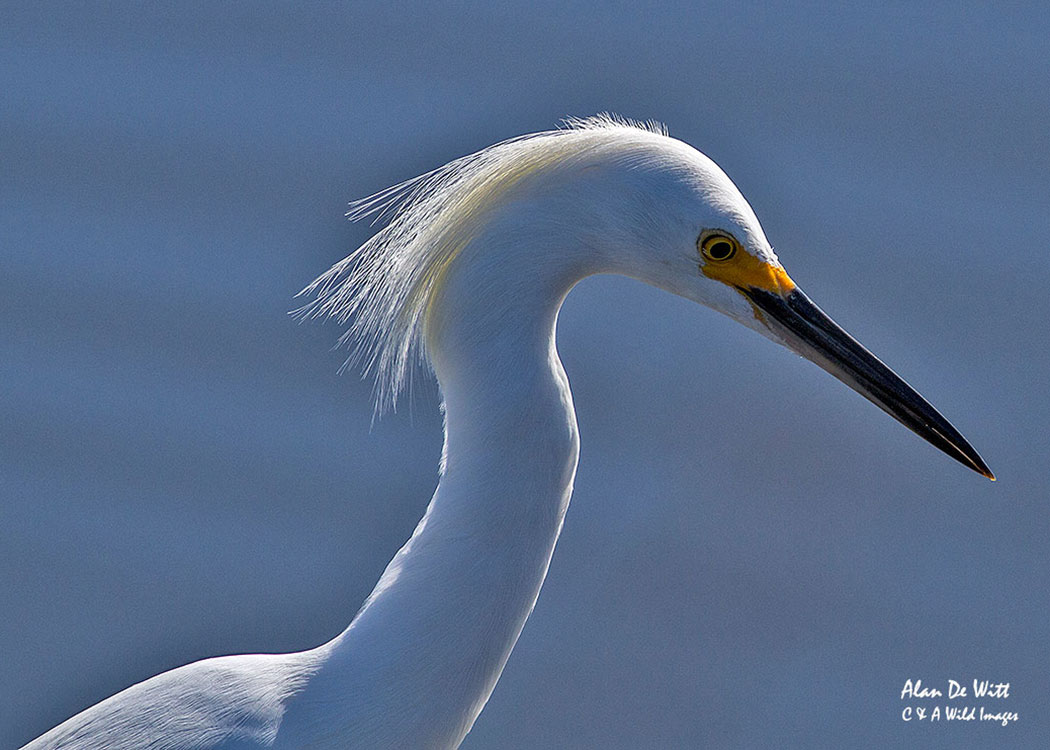
Herons, egrets and ibis were feeding or stalking fish. It was interesting to see them using their wing as a shade to get a better view of the fish. White peacock and Julia butterflies were numerous feeding on nectar from the flowers along the track. A Belted kingfisher perched high on the top of a bush preening his feathers.
Roseate Spoonbills
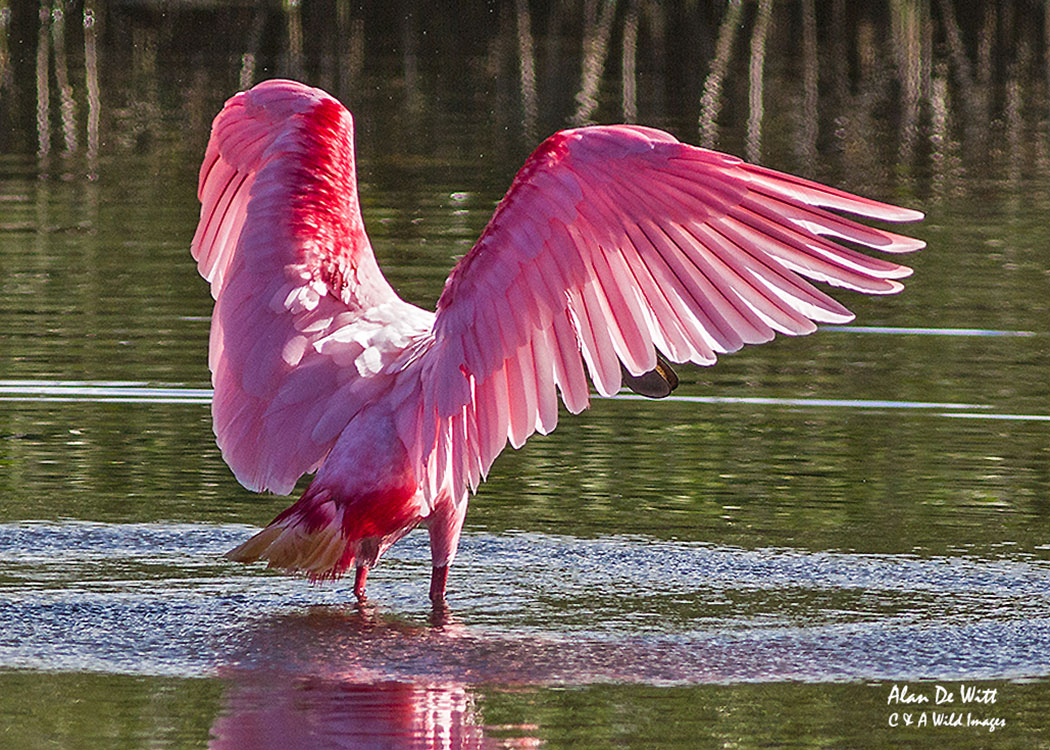
Walking towards the second overlook we saw the amazing site of a roseate spoonbill, in full colour taking a bath. They really are a beautiful bird and the colour is incredible. Totally oblivious to us he continued preening giving us the opportunity to observe his behaviour and take photographs.

Back to the drive and about half way around the route there’s another rest area and the start of the Cruickshank trail. Here you can take a short walk to an observation tower or opt for the five mile hiking loop. As we didn’t fancy the 5 mile route there was plenty to see in the mangroves around the parking lot.

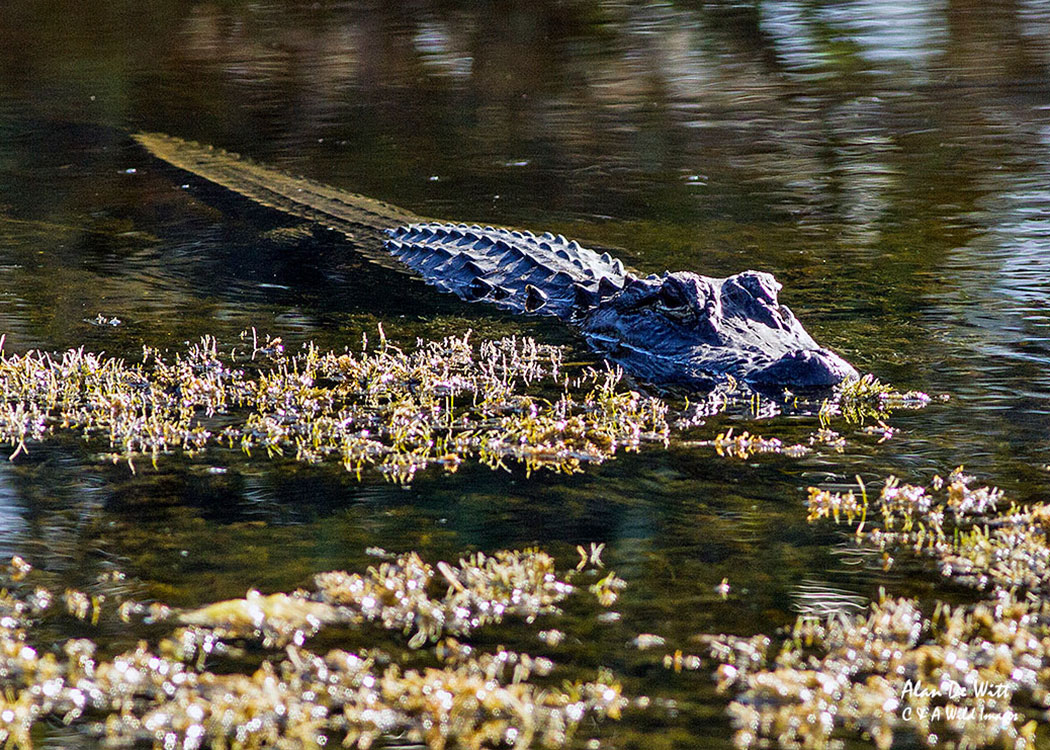
Further along the drive the habitat changes to restored marsh and an open waterway that is home to numerous Alligators, varying in size from small two footers to enormous 10 to 12 footers, weighing in at 500 to 600 pounds
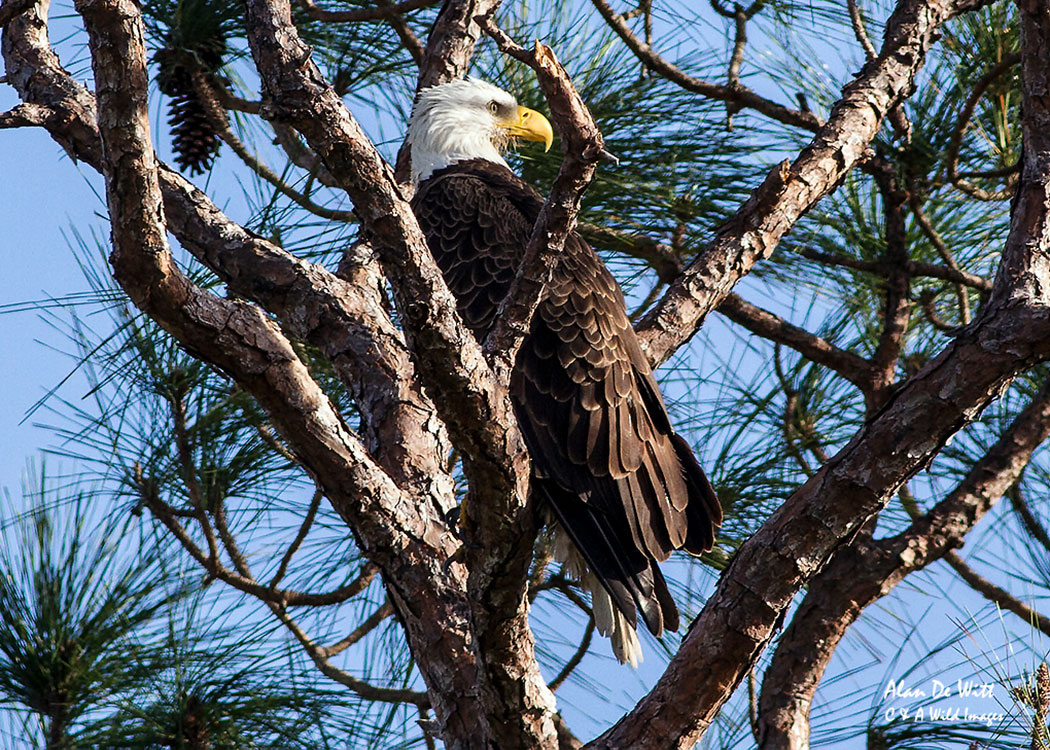
Towards the end of the drive, near stop 11, there is a stand of old pines, the location of an old eagles nest which had been abandon in 2013, but on our trip we were treated to views of a Bald Eagle. Perhaps he was thinking about re-establishing the nest site, and for us it was a great finish to the Merritt Island drive.