Searching for Lucy and Her Cubs
After a good night’s sleep surrounded by the sounds of the African bush, we were up early again — this time for a 5:00 a.m. breakfast before heading into the park looking for the ever-elusive Lucy the leopard and her two cubs. By 5:30 a.m, everyone was ready, cameras packed, coffee finished, and we set off across the bridge over the Luangwa River just as the first light began to colour the sky.
Lucy the Leopardess.
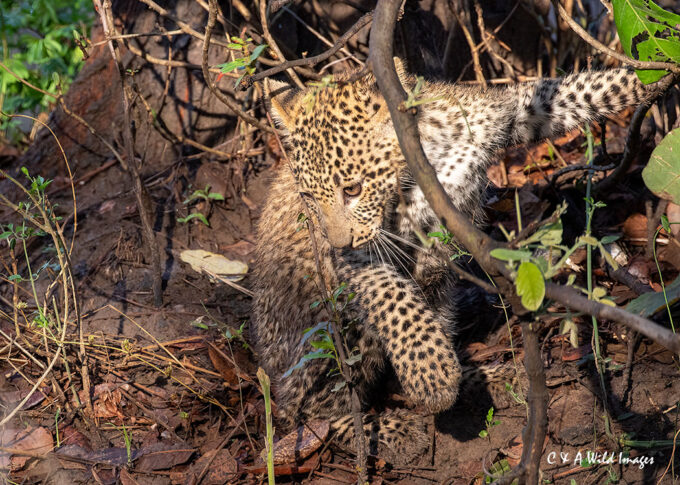
Our plan was to search for Lucy, the resident leopard, and her two cubs who had been seen the previous day. After a quick stop at the park gate for the usual paperwork, we were the first vehicle inside. It didn’t take long before we found Lucy resting in a thicket, keeping a close eye on her cubs as they played along an earth bank. We waited quietly, cameras ready. Before long, the cubs began climbing a small tree — perhaps one of their first real attempts. They scrambled up a few feet before tumbling back down, only to try again. It was a wonderful sight, and they gave us some superb photographic moments.


After spending plenty of time with the family, we moved on and let another vehicle enjoy the sighting. The rest of the morning was spent exploring other areas of the park. Yellow-billed kites, bateleur eagles, and bee-eaters filled the sky — all making the most of the insects stirred up after the recent rain. Pied kingfishers perched neatly on overhanging branches, scanning the water below like sentinels.

A little later, we came across a young male leopard briefly moving through the bush, followed by a group of Thornicroft’s giraffes and a bachelor herd of young males practising their play-fighting (necking)— a lively display of neck-crashing and posturing that adults do in earnest.

By late morning, as the temperature began to rise, we made our way back to camp. A delicious brunch was waiting for us at Flatdogs, followed by a welcome few hours of rest in the shade — time to recharge batteries (both ours and the cameras’) before the next adventure.
Afternoon Drive
After a restful few hours back at Flatdogs, we set off again for our afternoon drive. The air was warm but comfortable, and the light had that golden quality that makes South Luangwa so special.

Not long after crossing the bridge, the park came alive once more. We stopped to watch a colony of Carmine Bee-eaters flashing brilliant red and blue as they darted along the riverbank — always a delight to photograph. Nearby, we spotted a busy bees’ nest hanging from a branch, the hum of activity blending into the sounds of the bush.

Further along, a Myna bird called noisily from a treetop while a small family of warthogs trotted past, tails held high. A kudu bull stood watchfully in the dappled light, and soon after, we came across a small group of zebra grazing quietly. Their stripes glowing gold in the late afternoon sun.
High above, an eagle circled on the thermals, and near a shallow lagoon, a saddle-billed stork stood poised alongside lapwings and plovers, all busy feeding in the shallows. A slender mongoose dashed across the track — gone almost as soon as it appeared.

The Storm
As the sun began to sink, we found the perfect spot for our sundowners — cold drinks in hand, cameras set aside for a moment. But the clouds built quickly, and within minutes the wind picked up. We squeezed in a quick drink before packing everything away and making for the exit.

Halfway across the park, the heavens opened. Sheets of rain hammered down, turning the track into a river. We arrived back at Flatdogs camp a bit soggy but laughing about the adventure. Some retreated to their rooms to dry off; others waited it out in the dining area. A hot meal rounded off the day perfectly before we all headed to bed.