The Snettisham Spectacular 2026 Whirling Waders
In early Autumn a high pressure weather system settled over much of England producing some crystal clear skies. This combined with an exceptionally high tide provided us with ideal conditions to witness one of the UK’s must see Wildlife spectacles. It is one of the highlights of the Norfolk birding calendar. Along the coast of the Wash, at Snettisham, there is an opportunity to see the Whirling Wader Spectacular


2026 Dates
Car parking until 11am on event days is strictly by pre-booked ticket only. Book your parking space at www.events.rspb.org.uk/snettisham.
Fees apply
Booking on the day will not be available and visitors attempting to park without a ticket will be turned away.
| Mar 2026 | Aug 2026 | Sept 2026 | Oct 2025 | ||||
| Sun 22nd | 6.15 am | Sat 15th | 6.30 am | Tues 1st | 7.30 am | Thurs 1st | 8.00 am |
| Sun 16th | 7.15 am | Wed 2nd | 8.15 am | Thur 29th | 6.00 am | ||
| Sun 13th | 6.30 am | ||||||
| Mon 14th | 7.00 am | ||||||
| Tues 29th | 6.15 am | ||||||
| Wed 30th | 7.00 am | ||||||
|
These times are when you need to leave the car park, this gives you time to get to the reserve (not high tide time) |
|||||||
The Snettisham Whirling Wader Spectacular
Very high tides in the Wash are always good for watching waders at any time of year. As the tide covers their normal feeding grounds they are forced to find somewhere to roost, where they wait until the to tide retreats. During the autumn, with huge numbers of wintering birds arriving to over winter on the Wash, the numbers are mind boggling.

As parking space when these events occur is at a premium, and with Monday’s high tide just before 9:30am it meant an early start to the day. We had to ensure that we arrived at the RSPB Snettisham car park by 7.15. Despite the forecast of an unusually warm day, the lack of cloud cover over night had given rise to a misty if somewhat chilly sunrise. After parking the car in one of the few spaces left we walked to the reserve’s wader watch point on the beach. This involves walking well over a mile, along a well trodden path accompanied by a steady line of others barely visible in the mist. After taking up a place among the other watchers the wait was on.


View Over The Wash As The Tide Begins To Rise.
Despite the heavy mist and the chill the sun was warming our backs and burning it off over the sea. Everyone was straining their eyes to see if the waders and the tide were on the move. Not being able to see the usual band of birds being pushed toward the shore, all you could hear today was the whirling whoosh as 1000’s of waders took to the air. Moving from one area of the mudflats to another they tried to avoid the incoming tide.

Finally as the mist cleared dark shadows began to appear in the sky as the tide continued to flush up the wading birds. As the water reached the top of the shore hundreds of thousands of waders finally left the mudflats and passed overhead to the lagoons that form the major part of the RSPB reserve . The first wave was made up of Oystercatchers, followed today by a small number of Godwits, then finally mind-numbing numbers of Knot.
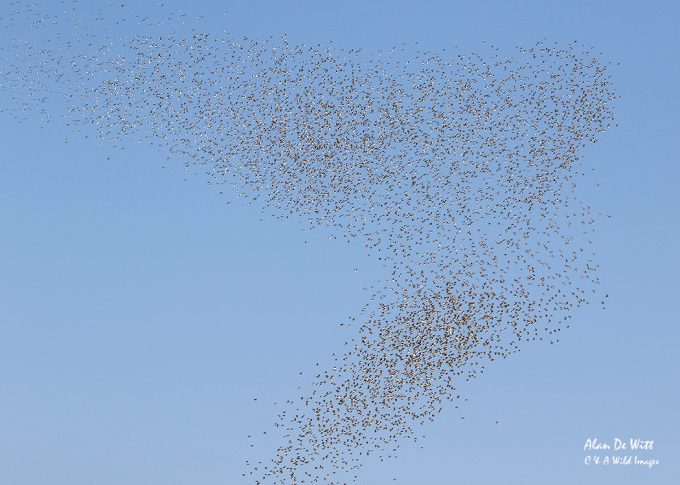

The Rising Tide Forces More Birds Towards The Pits
Once the tide was fully in, the groups of swirling wading birds headed over the to the old quarry to rest around the edges of the pits and on of the small islands in the lagoon. We then walked around to the newly opened hide, from where we enjoyed close views of huge flocks of Knot and Oystercatcher, as well as good numbers of Dunlin and Redshank. Also roosting on the pits were a number of Little Egrets plus a small number of Godwits.

A new storm proof hide gives both the casual visitor and the keen watcher great views of the flocks. It even provides specially designed viewing for the growing number of photographers. There are places to get some low angle shots of the birds as they move from the islands.


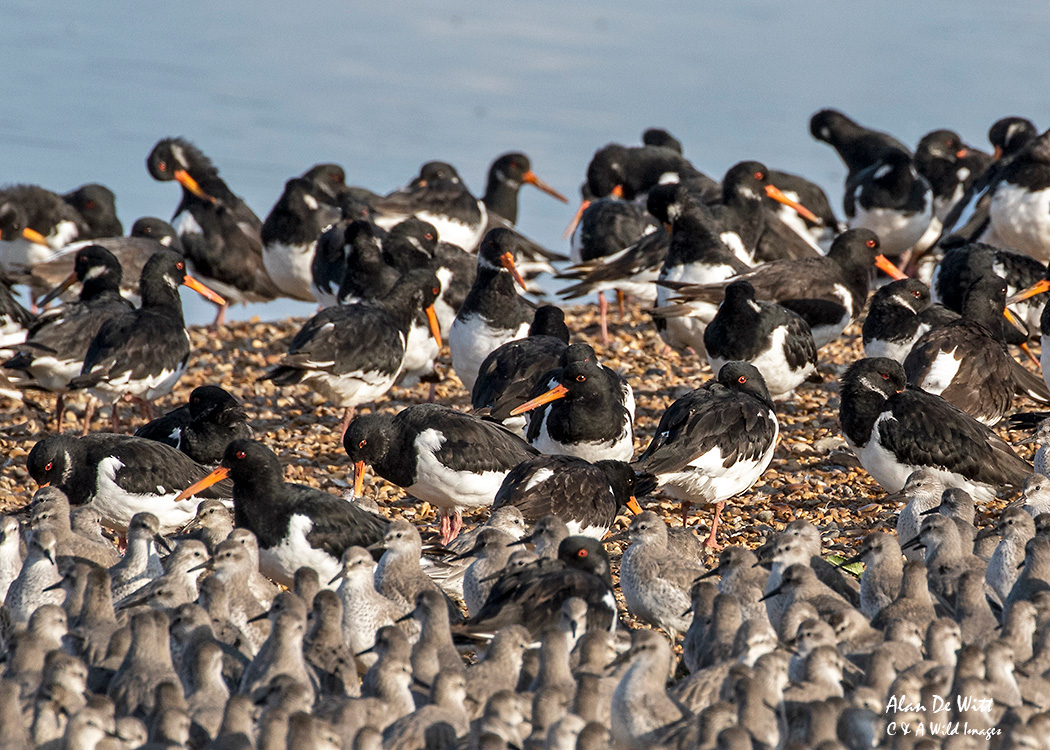

Other Waders often seen at the beach at Snettisham
After spending a short time in the hide we continued around the lagoon back to the shore line. Here there were more groups of mixed waders including Plovers, Dunlin and Sanderling. They had gathered to sit out the high tide. We managed to photograph some of the small flocks of Oystercatchers flying along the shore line, before heading back to the car. As we walked, overhead noisy skeins of Greylag Geese were heading back to the mudflats.


Alan, these are stunning photographs that deserve to be displayed in a coffee-table size book. Brilliant.
Hi Jim. Thanks for the comments re the photos on our blog they are much appreciated and glad you enjoyed them. This particular event only occurs on certain days over our Autumn/ Winter, I think we got lucky with the weather that day for the photos.
Alan, a great portfolio that really captures the atmosphere of the occasion. I hope you won’t mind me pointing out that the 3 godwits are actually Black-tailed
Hi Doug.
Many thanks for the comments and taking the time to read the post, it’s nice to see that the posts are reaching a wider audience. As you probably gathered our focus is in the main wildlife photography, sometimes finding differentiating between some species in winter plumage a challenge. As our local patch is the North Norfolk coast, when you’re carrying a camera and binoculars people often ask “what bird is that ”, especially the Godwits and Redshanks.. In an effort to sort it out in our minds I’ve written a couple of posts on the difference and run them past a couple of experts on a trip. They really confused us in that they were finding the recognition a challenge. So it is great to get feedback.
Many Thanks once again. Alan & Carol
PS Post edited 🙂
Lovely blog! I’m a wildlife photographer and wading bird enthusiast!…as I wrote this on getting ready to head to Titchwell from London in the hopes of capturing image of the Golden Plover and various other waders!.
Thank you for stoking my enthusiasm with your beautiful images.
Hi Andy,
Thanks so much for your kind words! I’m really glad you enjoyed the post. I hope your trip to Titchwell goes well and you capture some great shots of the Golden Plover and other waders. Fingers crossed the weather’s on your side! If you have time, a walk over to the pits at Snettisham is always worthwhile, even without the really high tides.
Safe travels and happy shooting!