Birding at the Asa Wright Centre
Our spring trip to Trinidad took us to one of the world’s most renowned birding destinations — the Asa Wright Nature Centre, set deep in the lush Arima Valley. We arrived on a sunny afternoon after our flight from Gatwick, and the birding began almost immediately. Even before leaving the airport, we spotted Carib Grackles, a Yellow-headed Caracara, and Tropical Mockingbirds. A brief detour via a nearby golf course added Southern Lapwings, Cattle Egrets, and two dazzling Saffron Finches to the list, while a Spectacled Caiman rested by a pond and a West Indian Mongoose dashed across our path — a perfect welcome to Trinidad’s rich wildlife.

Asa Wright Centre
Then it was into the cooler Northern Range and up to Asa Wright Centre, a former colonial estate turned wildlife sanctuary. Lush forest and flowering poui trees lined the road, and birds like white hawks and orange-winged parrots marked our climb.


Nocturnal Encounters: Tarantulas, Crabs & Leafcutters
Later that evening, we joined our guide Mukesh for a night walk along the lodge road. With torches lighting our path, we spotted a Trinidad chevron tarantula, giant harvestmen, whip scorpions, stick insects, and a parade of leaf-cutting ants. Two snakes crossed our path – a brightly coloured tropical flat snake and a coffee snake disappearing into a hole. The sounds of frogs, insects, and rustling leaves added to the rainforest soundtrack.


Wildlife Adventures Beyond Asa Wright
Our excursions across Trinidad revealed even more diversity:
- Caroni Swamp at dusk was a spectacle, as hundreds of scarlet ibises flew in to roost – their vivid red glowing against the mangrove dusk.
- In the Northern Range, we were lucky to see not one, but two Trinidad piping guans – rare and localised.
- At Nariva Swamp, a cryptic pinnated bittern emerged from the reeds
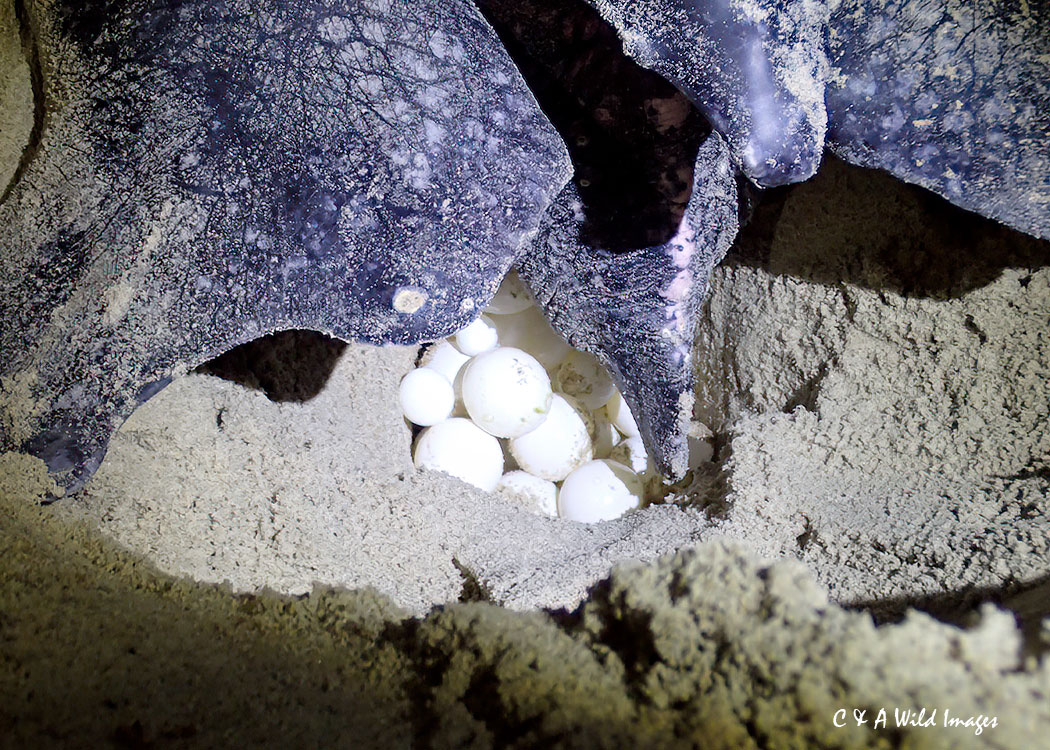
- Beach at Matura where we watched a leatherback turtle quietly digging her nest in the sand, laying eggs under the moonlight
Selection of more Images from the trip




All across the island, bananaquits, tropical kingbirds and great kiskadees were familiar sights, adding colour and character to every stop.
The Veranda Life: Hummingbirds & Tanagers Galore
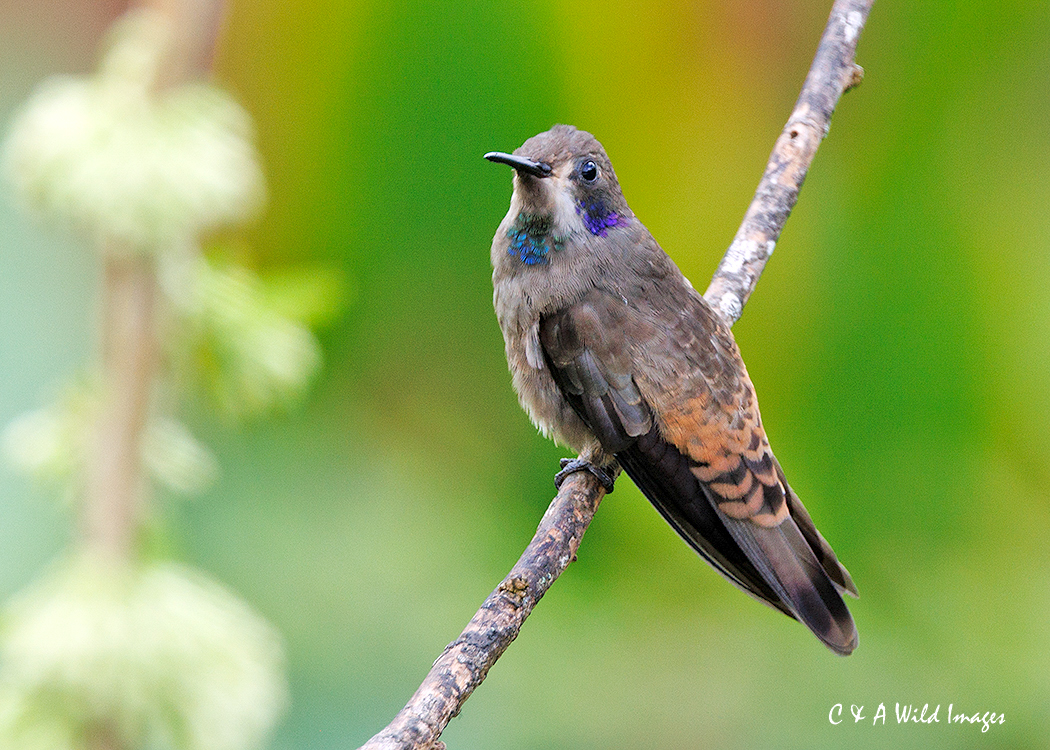
The veranda at Asa Wright is legendary – and for good reason. Hummingbirds zipped around the sugar-water feeders in dazzling numbers: white-necked jacobins, copper-rumped hummingbirds, black-throated mango, and the more elusive long-billed starthroat. Nearby fruiting trees attracted colourful tanagers, a pair of blue dacnis, and even a toucan calling in the distance. A brown violetear – a real rarity – gave us fantastic views. Red-rumped agoutis wandered below us, and the strange “clong!” of a bearded bellbird echoed through the forest.
Day 2 – Exploring the Discovery Trail
Dawn broke with the song of a cocoa thrush, and the veranda soon buzzed with hummingbirds and tanagers. A squirrel cuckoo, a rare swallow tanager, and a dainty tufted coquette added colour to the morning. We then set off along the Discovery Trail, accompanied by Mukesh and Charran. A fruiting fig tree was a bird magnet: turquoise tanagers, bay-headed tanagers, green honeycreepers, and white-bearded manakins were all present, while a male green-backed trogon gulped down a stick insect.

Further down the trail, we were surrounded by the industrial-sounding “tonk-tonk” of bearded bellbirds, and we were thrilled to spot several males displaying. Later, a white-bearded manakin lek came alive with their signature bouncing dance – a real highlight!

We also had good views of a golden-headed manakin, a crimson-crested woodpecker, and even a green hermit visiting a ginger bloom. Butterflies like the scarlet peacock and cloudless sulphur added extra colour to our walk.


Day 3 – From Waterloo to Caroni Swamp
After breakfast and early veranda birding, including a diving black hawk-eagle, we hit the road westward to Waterloo. Roadside birding was excellent, with tropical kingbirds, ospreys, and a striking ringed kingfisher. Fields yielded red-breasted meadowlarks, wattled jacanas, and yellow-hooded blackbirds. At the coast, brown pelicans, neotropic cormorants, and magnificent frigatebirds put on a show, with scarlet ibises and willets in the mangroves. Lunch was a local treat – traditional rotis, eaten by hand at a lively roadside spot.


Later in the day, we boarded a boat at Caroni Swamp, gliding through peaceful mangrove channels alive with wildlife. We were lucky to spot sleeping silky anteaters, a tropical screech-owl, Trinidad tree boas, and an American pygmy kingfisher. A stunning moment came as scarlet ibises – hundreds of them – began flying in to roost, their glowing red plumage lighting up the dusk sky.


Day 4 – Oilbirds and Turtle Watching
Another fine morning with familiar birds visiting the feeders and plants near the veranda. Highlights included a pair of channel-billed toucans in the distance and a pair of lineated woodpeckers drumming impressively on a dead branch. At 8:30am, we set off to Dunstan Caves – one of the most accessible nesting sites for oilbirds, which are nocturnal and fruit-eating, using echolocation like bats to navigate. On the way, we stopped by a fig tree where we saw white-bearded and golden-headed manakins, bay-headed and turquoise tanagers, and another lineated woodpecker.
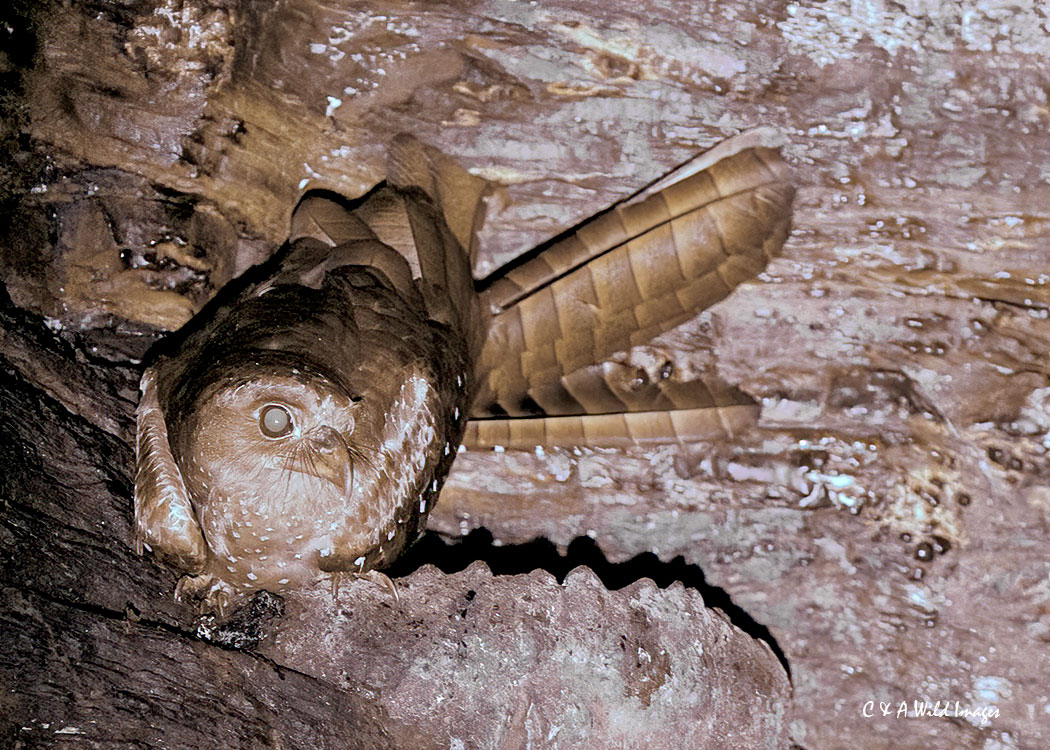
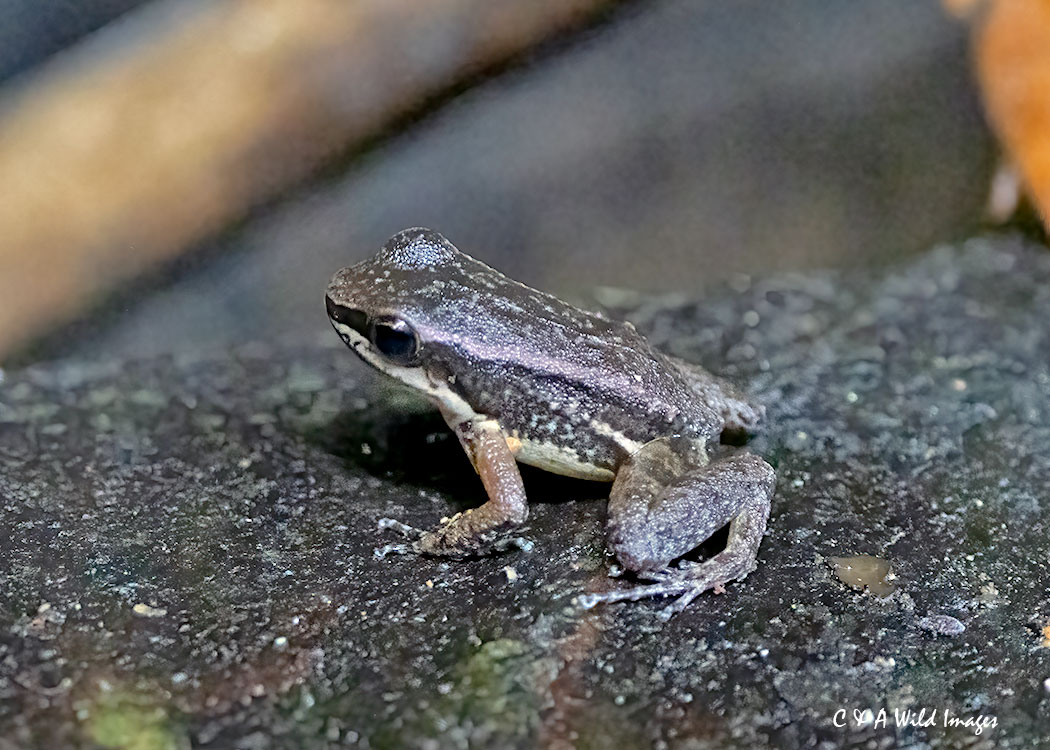
Caleb, our guide, introduced us to the extraordinary oilbirds before we set off on the hour-long walk to their cave. Along the way we came across a number of blue morpho butterflies drifting through sunlit gaps, listened to the song of a white-necked thrush, and picked out green hermit, cocoa woodcreeper and golden-fronted greenlet. At the cave entrance, a greater white-lined bat swooped past and tiny Trinidad stream frogs clung to the rocks. Inside, under red torchlight, we watched up to seven oilbirds – strange, night-flying fruit-eaters with bristly faces and huge eyes. The cave floor was littered with the stones of palm fruits they had regurgitated, and as we left, their eerie hissing calls echoed behind us.
Leather Backs on Matura Beach
After lunch we set off for the east coast and Matura beach. On the way we paused to watch a pair of bat falcons – the female calling while the male devoured a giant owl butterfly on a dead palm. A cocoa woodcreeper sang nearby, smooth-billed anis passed overhead, and orange-winged parrots showed well. Soon after, a plumbeous kite, freshly arrived from Venezuela, gave us close views.
At Matura we ate our sandwiches as dusk fell, fireflies flickering in the trees and house geckos calling around us. Then came the moment we had been waiting for: a female leatherback turtle hauling herself up the beach. By red torchlight we watched her dig a deep nest, lay her eggs and carefully disguise the site before returning to the sea. Researchers tagged her, and we were shown relocated nests protected in wooden boxes. Best of all, we held three tiny hatchlings before they were released to start their own journey.

Day 5: Arena Forest and Etect Park, Wallerfield
A restful morning after the late night. On the veranda, we saw a common black hawk, Trinidad euphonia, boat-billed flycatcher, Guianan trogons, purple and green honeycreepers, a female barred antshrike, and a double-toothed kite circling with a long-tailed lizard in its talons! We took the opportunity to try to photograph a male tufted coquette, alongside butterflies like scarlet peacock, long-tailed skipper, roseate skimmer dragonflies and postman in the centers gardens. After lunch, an immature male green mango made an appearance – a first for Asa Wright – and we also saw a blue-chinned sapphire.

The day ended in style with an open-air dinner and rum punch. While we ate, a plumbeous kite perched nearby, mobbed by sulphury flycatchers. Three short-tailed swifts called overhead, frogs began singing, and fireflies blinked in the dusk. A final palm swift passed overhead. After dark, we tracked down and saw both white-tailed nightjar and pauraque using torches.


Day 6 – Northern Range
With our new guide, Dave, we explored the Arima–Blanchisseuse Road through the Northern Range. Early stops brought us sooty grassquit, golden-headed manakin, collared trogons and purple honeycreepers. Raptors were a highlight – broad-winged hawk, ornate hawk-eagle, Snail Kite and soaring frigatebird. A group of channel-billed toucans fed noisily in a treetop, while tanagers and flycatchers kept us busy throughout the day. The real prize came in Brasso Seco village – two critically endangered Trinidad piping guans perched in a tree, one even flying right over our heads. Later sightings included Trinidad motmot, great antshrike and a female rufous-tailed jacamar feeding young.


Day 7 – Nariva Swamp
On the east coast we enjoyed roadside stops for antwrens, honeycreepers and parulas before reaching Manzanilla beach, where frigatebirds, pelicans and even two blue-and-yellow macaws drifted by. At Nariva Swamp, snail kites, herons, plovers and sandpipers filled the wetlands, with the star find a cryptic pinnated bittern.


Day 8 – Farewell
Our final morning on the veranda brought close views of toucans before we reluctantly departed. After a smooth flight home, we landed back in the UK with memories of a remarkable Trinidad adventure.