Greater Adjutants at Guwahati’s Garbage Dump
After several weeks exploring the wildlife, forests, and riverbanks of north-eastern India, our journey down the Brahmaputra River came to an end in Guwahati, Assam’s largest city. From here, we’d be flying back to Kolkata and onwards to the UK. But before heading to the airport, we made one last, unforgettable stop — Guwahati’s garbage dump.

It’s not the sort of destination you’d find in a travel brochure, but for birdwatchers and wildlife photographers, this site is famous for being one of the few remaining strongholds of the Greater Adjutant Stork — a huge, near-threatened species that’s as rare as it is bizarre.


On arrival, the stench hits you first. There’s no escaping it. The vast dump is a sprawling mountain of waste — plastic, rotting food, clothing, and the remnants of daily life — piled high under the sun. But look a little closer, and the scene becomes even more surreal.
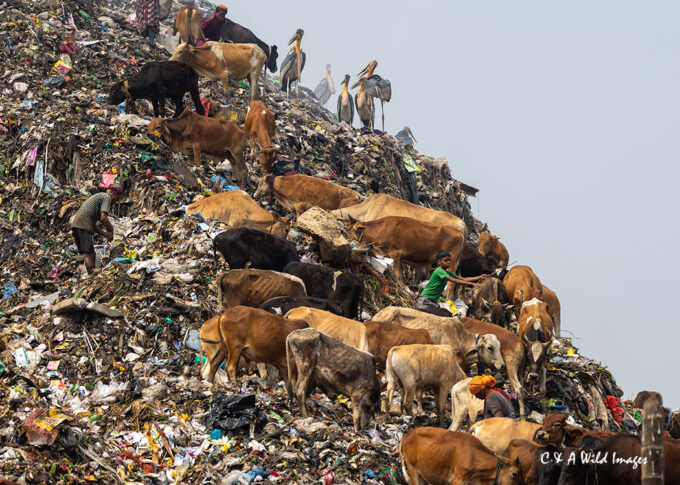

Among the garbage are people and cows, picking through the rubbish in search of anything useful or edible. And rising above them, both literally and figuratively, are the Greater Adjutants — dozens of them. These huge birds, with their bare heads, thick bills, and hunched posture, look almost prehistoric. Standing nearly 1.5 metres tall with a wingspan up to 2.5 metres, they are among the largest storks in the world.

We had seen their smaller cousin, the Lesser Adjutant, during earlier stages of our trip, but nothing prepared us for seeing these giants up close. Watching them walk across the garbage, picking at scraps, or soaring overhead with effortless grace, was both fascinating and unsettling.

Locally, these birds are known as “Hargila” — an Assamese word meaning “bone-swallower.” It’s a fitting name for a bird with ghoulish habits, known to feed on carrion and waste. Their closest relative is the Marabou Stork of Africa, another scavenger with a similar reputation and appearance.

The Guwahati dump may seem like an unlikely haven for a rare species, but it’s one of the last reliable places in the world to see Greater Adjutants. Once widespread across South and Southeast Asia, habitat loss, persecution, and pollution have pushed them to the brink. Today, over 80% of the global population is found in Assam, and particularly around Guwahati.

What makes this location all the more striking is the proximity of human life to the dump. Families live right on the edge, in makeshift homes, eking out a living in incredibly tough conditions. Children, dogs, cows, and birds all share the same toxic landscape. And yet, within this chaos, the Greater Adjutant is surviving — even thriving, thanks in part to local conservation efforts.


We learned that community-based groups, especially women-led initiatives, have been instrumental in shifting local attitudes. Once seen as dirty or bad luck, the storks are now being celebrated as part of Assam’s natural heritage, with education campaigns, nest protection, and awareness events helping to build support for their conservation.
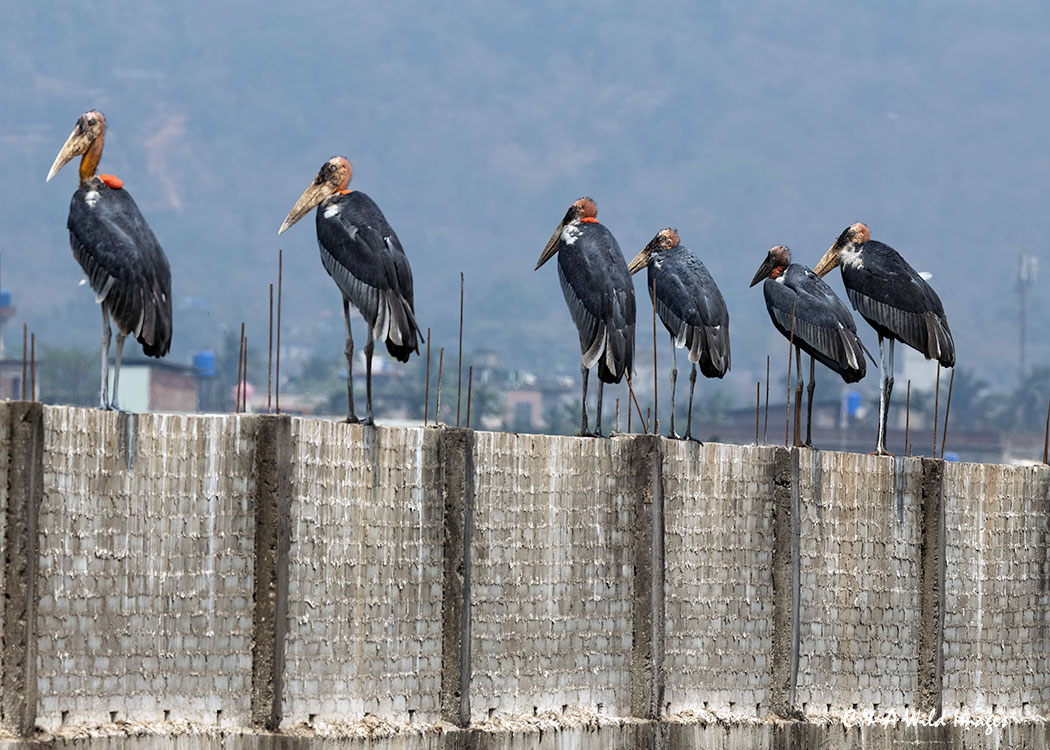
Photographing these birds in such an environment presented its own challenges — not just the smell and heat, but the emotional impact of seeing wildlife and poverty intersect so vividly. Yet it also reminded us of the complex ways humans and animals share space, particularly in fast-growing urban areas.
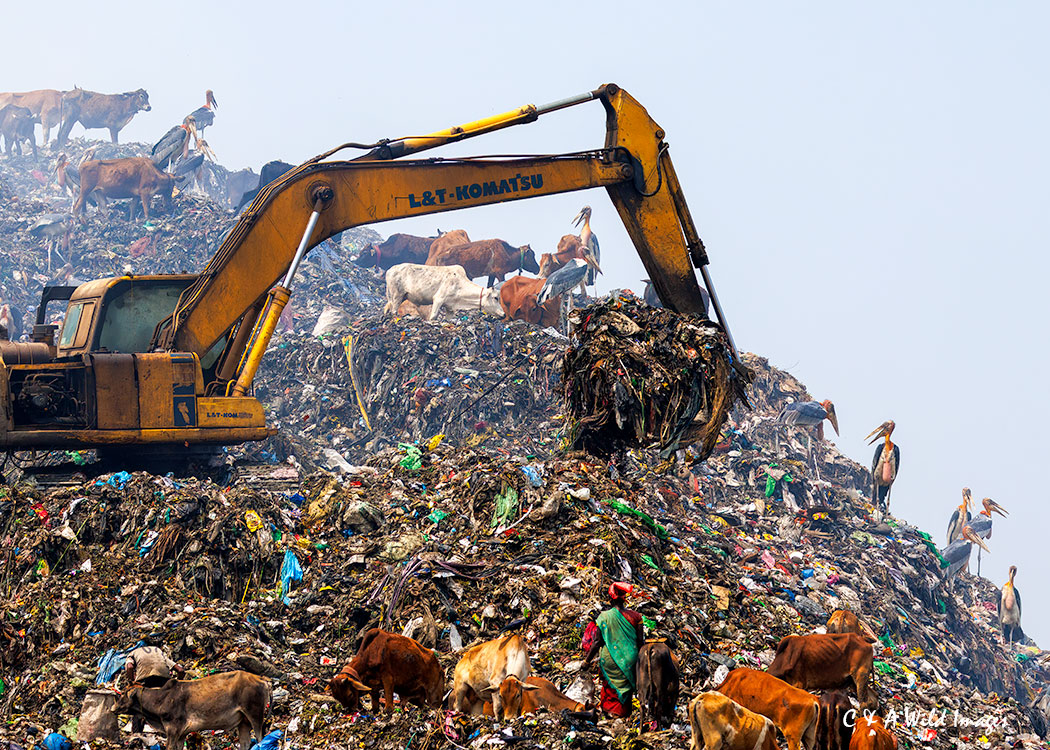
As we left for the airport and reflected on our journey — from the tranquil jungles of Assam to the chaotic beauty of Guwahati’s dump — we couldn’t help but feel that this final encounter, however unexpected, had been one of the most powerful. A rare bird clinging to survival, in a place that represents both the worst and best of human impact — the Greater Adjutant is a story of hope amid the waste.