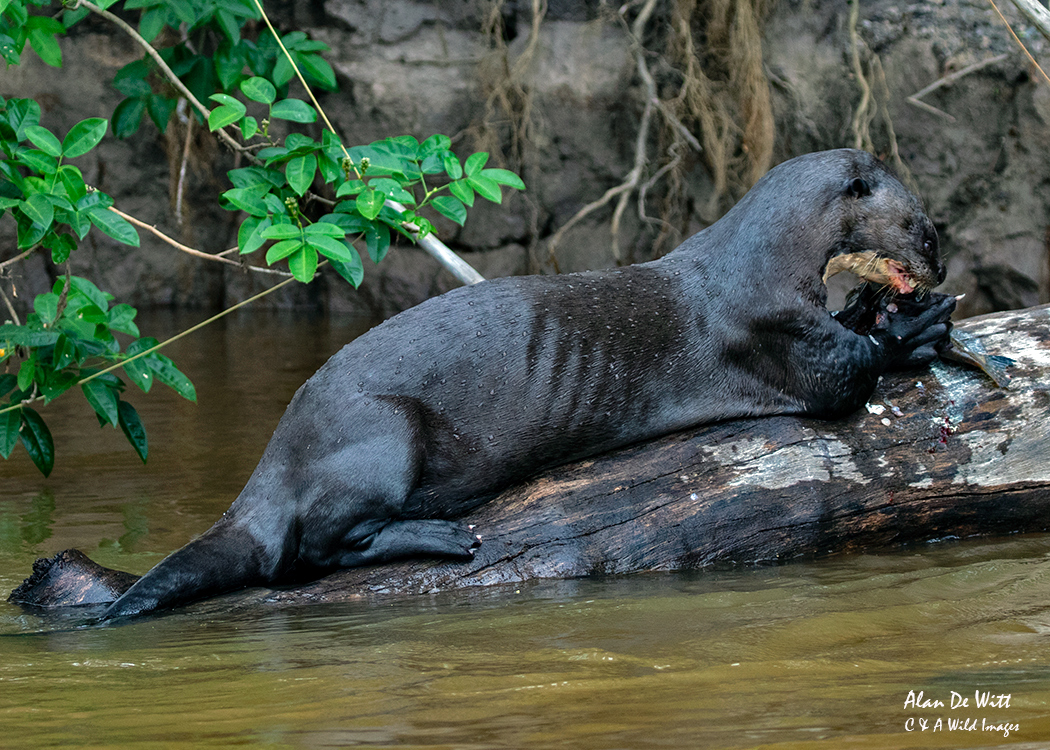
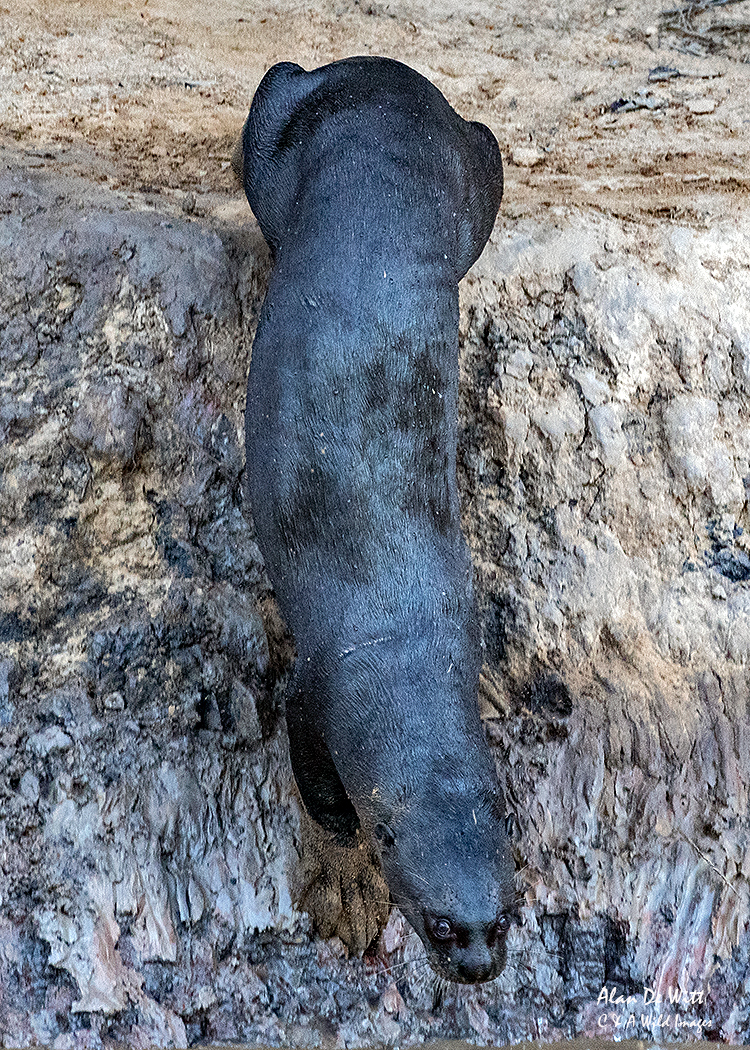
Giant River Otters of the Rio tres Irmaos
Giant Otters were once found throughout large areas of South America . By the 1970’s their numbers had fallen dramatically. This was mainly due to a demand for their pelts, deforestation, and human disturbance.
When we travelled in 2008 to the Peruvian Amazonian rain forest, they had become an endangered species. We travelled by canoe up the Las Piedras River to the Amazon Rainforest Conservation Centre (ARCC) in the heart of the Amazon Jungle. We were hoping to see a resident family of Otters. Although we encountered them on each occasion we went out and located their holt , getting close was challenging. Unfortunately capturing reasonable images proved very difficult and disappointing.
So armed with upgraded camera equipment it was with some trepidation that we ventured to Brazil’s Pantanal in search of both Jaguars and the Giant Otter. Arriving at the flotel on the river Cuibia it wasn’t long before we came across the first of four families that had made this area their home. Fortunately, far from being wary of humans these seemed to be happy to allow us to see and study them at close range. It was an excellent opportunity to find out more about these endangered animals.
Collection of Giant Otter images taken :- Click Here.
The Giant River Otter (Pteronura Brasiliensis)
One of the rarest mammals in the Pantanal region. The Giant River Otter isalso know locally as the River Wolf or Ariranha from the Tupí word meaning water jaguar. Is also one of South America’s top carnivores and the largest member of the weasel family.


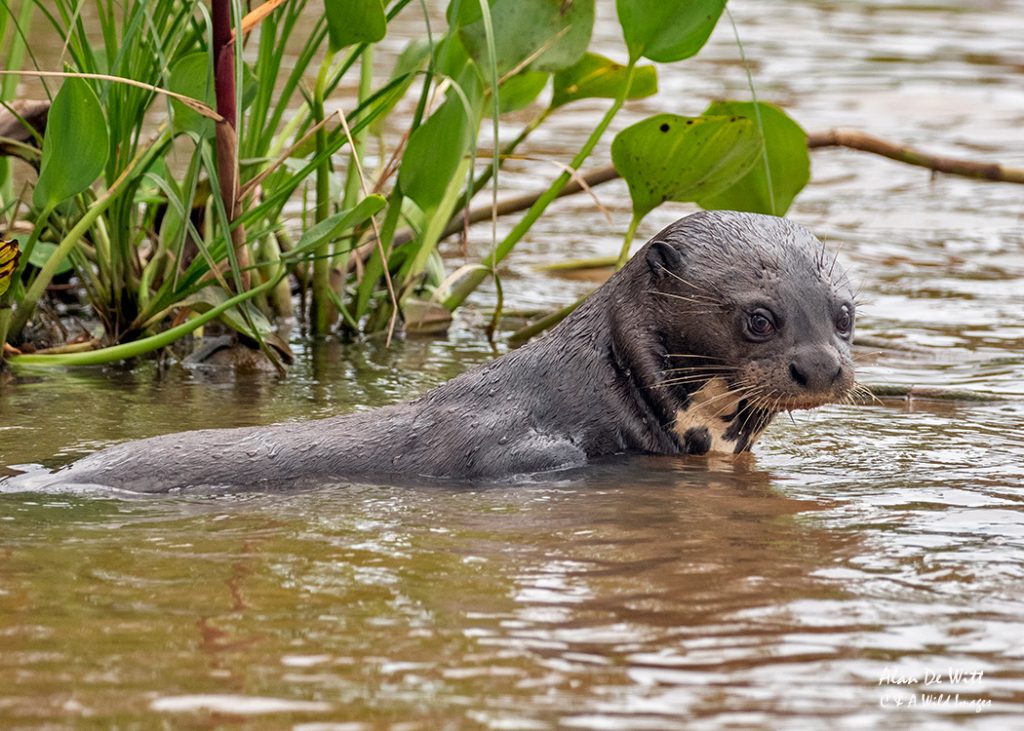

Like all river otters they have a long body, a strong tail which they use as a rudder, webbed feet, short legs and sharp claws. Their ears are very small. They thaclose when they go underwater adding to their streamline shape.
Giant Otters are both very social and vocal. They live in family groups and are known as the noisiest of all species due to their constant communications. Their vocalisations use a variety of sounds and calls. However unlike some other members of the otter families the giant otter is diurnal. They are active exclusively during daylight hours, making getting images in good light much easier. Male (boar) Otters weigh up to 75Ibs (34kg) with the female (sows) being smaller at about 57Ib (26kg). Some adults reach up to 6 feet (1.8m) in length.
On our second encounter we observed a very vocal stand off between two adult otters and a young Jaguar out hunting. The otters were displaying a behaviour known as ‘periscoping’ whilst barking noisily.
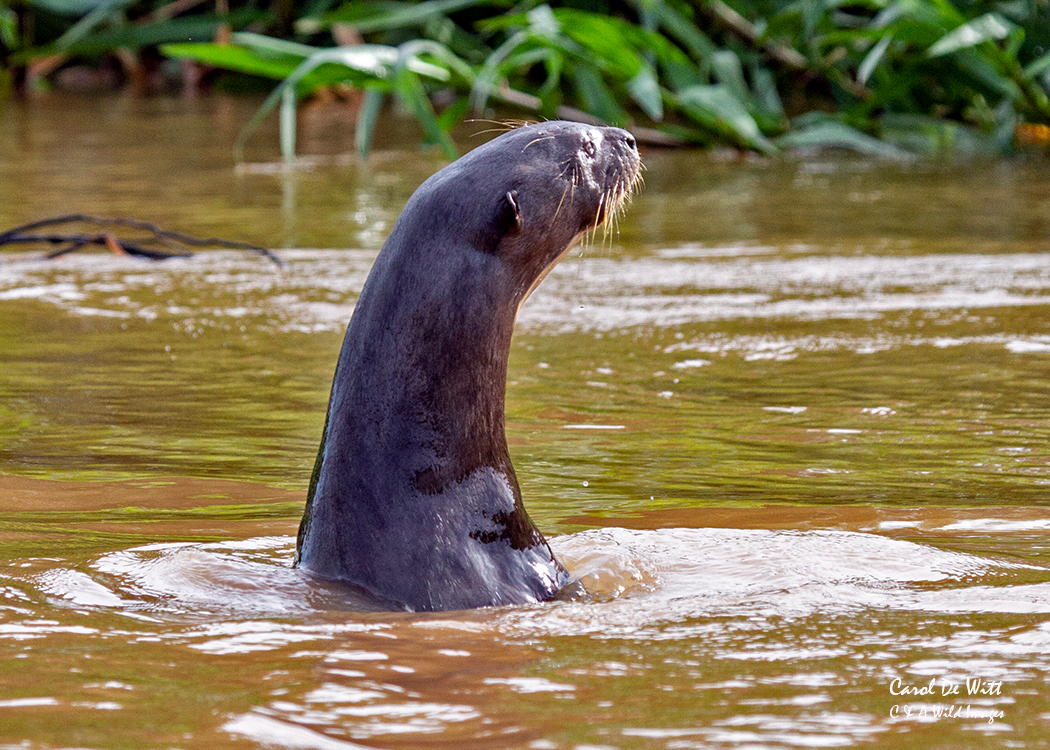
Again like other Otters they are very territorial, needing home areas, of up to 4.5 m2 (12 km2). In this area there were a number of holts along reaches of slow-moving sections of the rivers. Their holts are where there are high banks and thick vegetation. Here they can build their dens into the riverbanks or under fallen trees. They also need areas where there is a good stock of fish.
The Otters of this area seemed to be feeding on many fish and in particular Sailfin Catfish. They need about 10 Ibs (4Kgs) of fish a day. We heard that in this area there were some reports of them catching small caimans and anacondas. This can put them in competition with Jaguars and larger Caimans for prey items
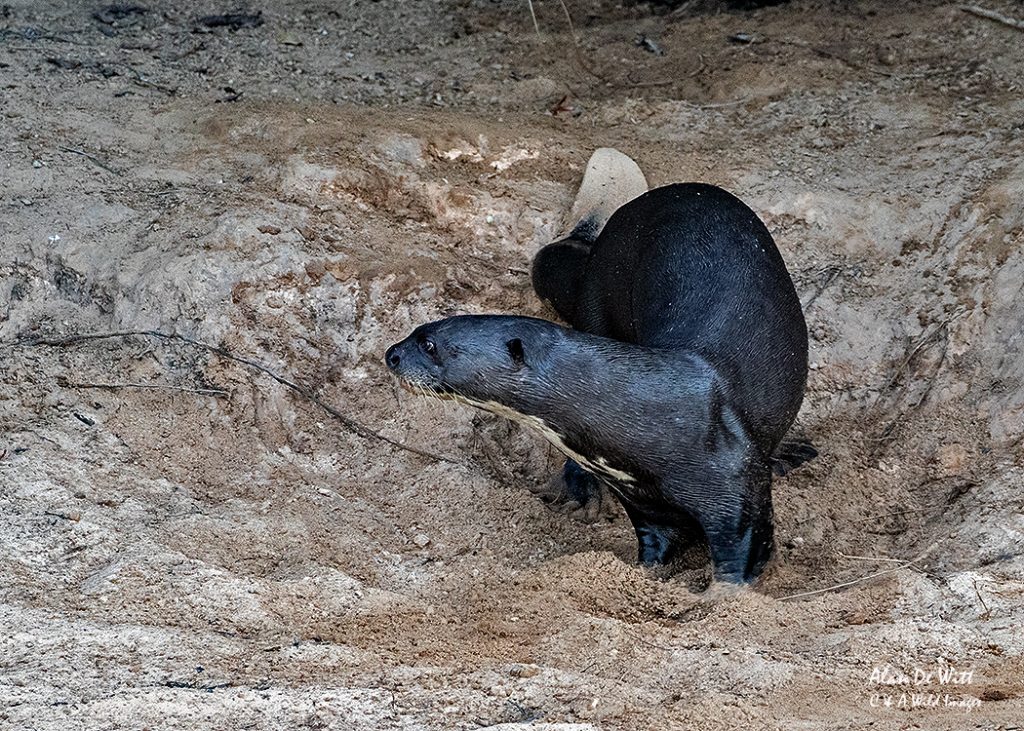
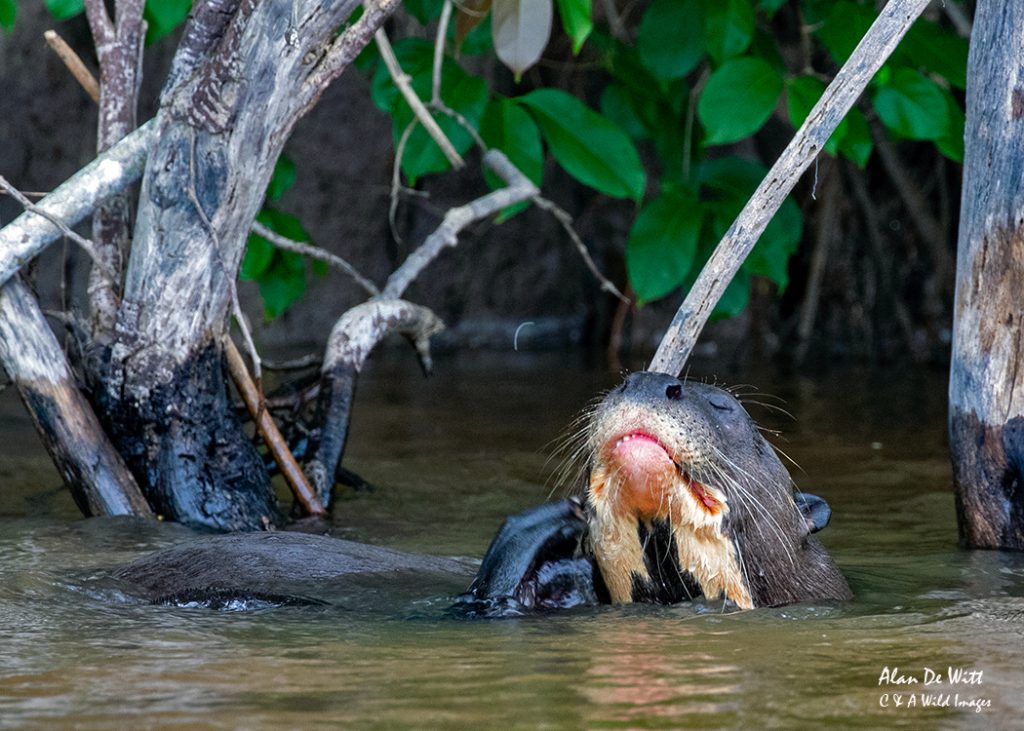
On a number of occasions we observed them hunting and successfully catching some large fish in very muddy water. They achieved this mainly to due to their whiskers, which they can use to detect both changes in currents and water pressure as well as detecting the prey’s movement.
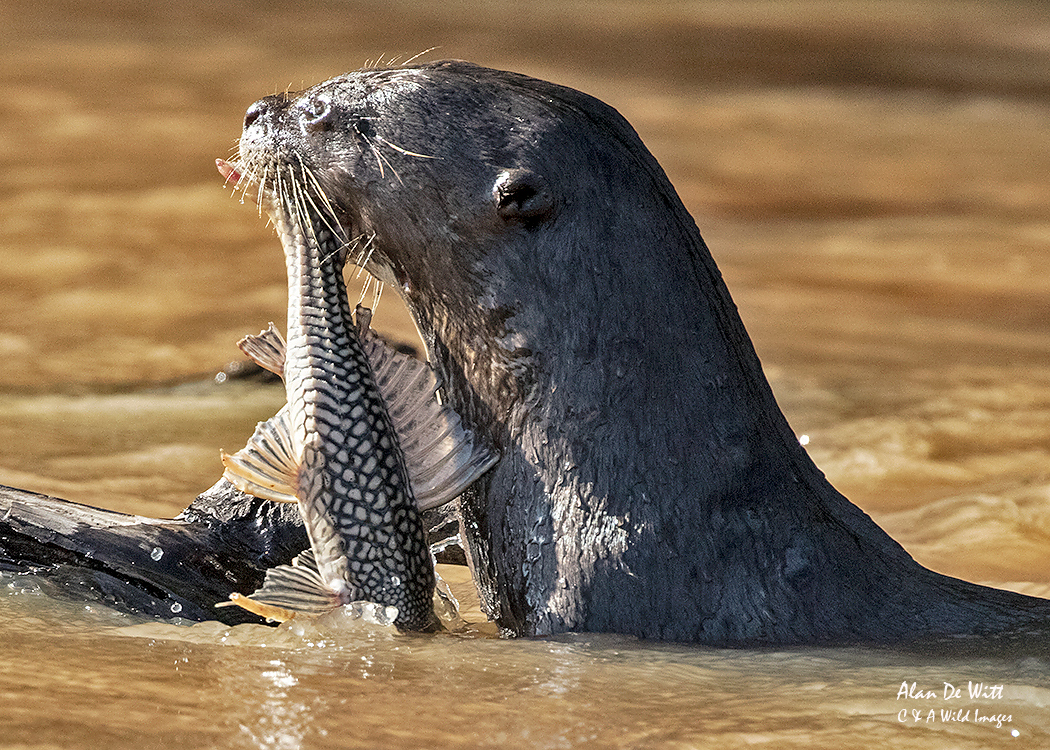
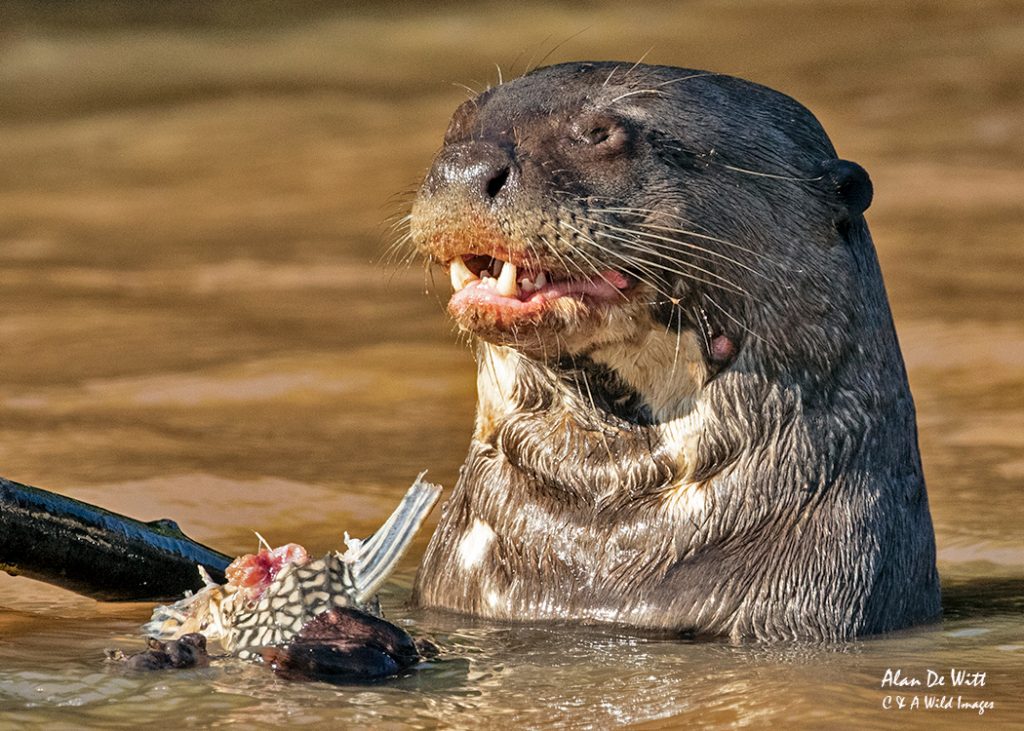
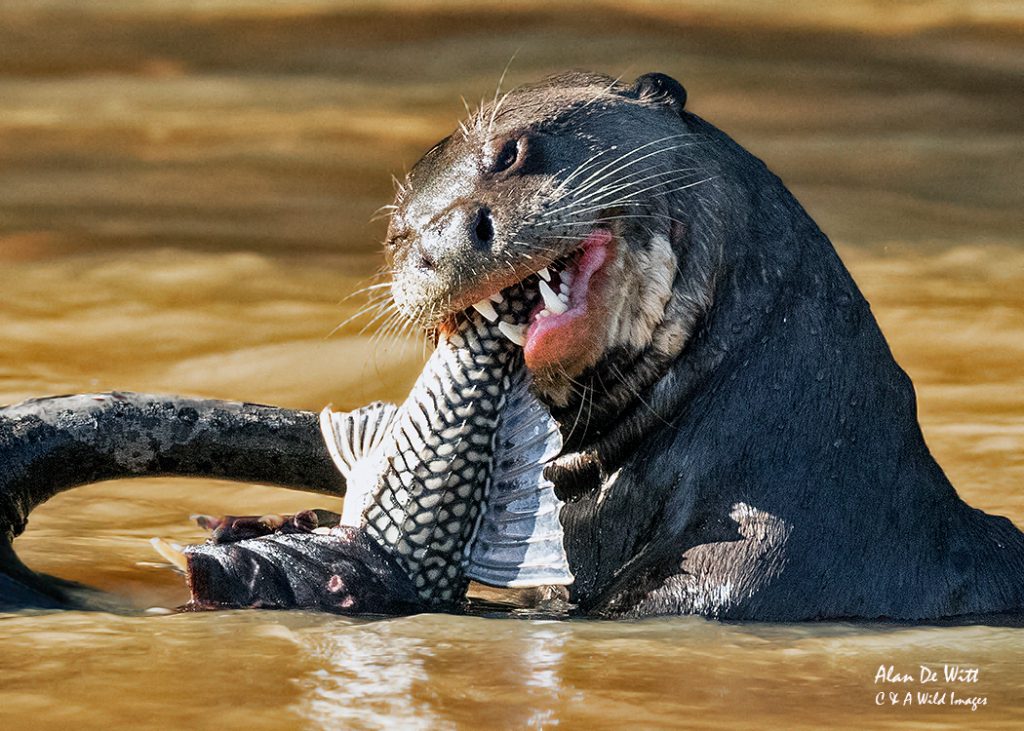
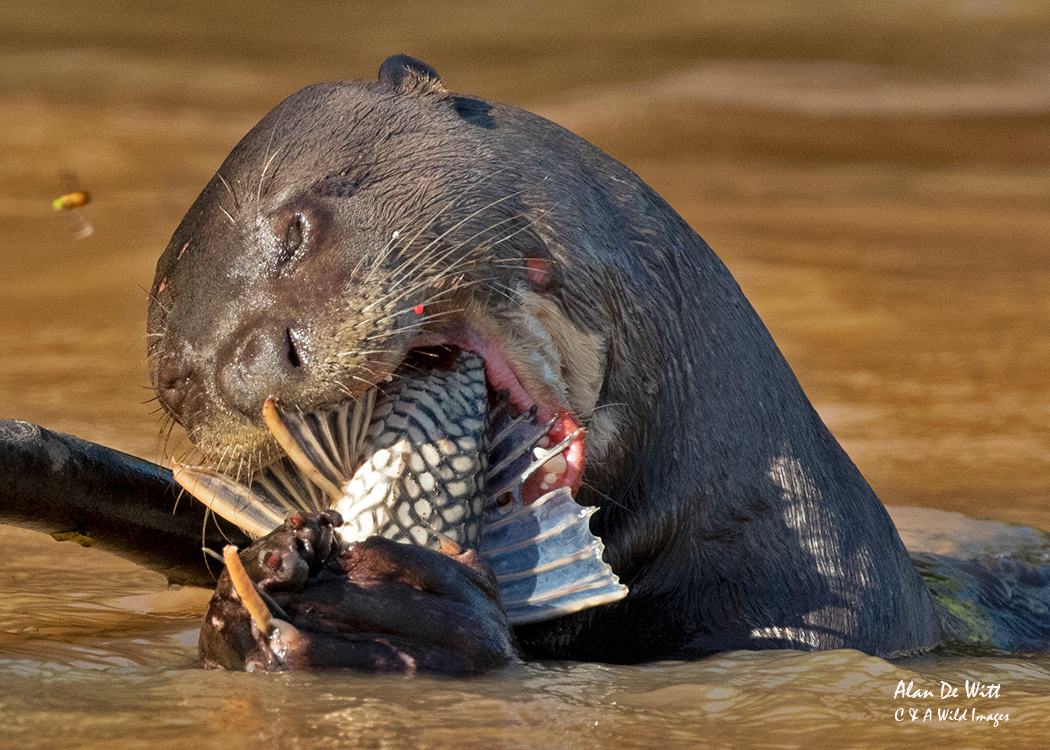
One of the main reasons for the drastic decline in the otter population in the 70’s was the hunting for their pelts. As well as being water repellent the Giant Otters fur is extremely soft, thick and a deep brown colour. Except for large creamy white patches on the underside of the throat. These patterns found on the necks are unique to each individual otter and are used to identify different individuals. Giant Otters are the only member of the mustelid family that is monogamous.They spend much of their time spraint marking and patrolling their home areas. This makes finding and photographing the family groups a little easier.

Giant Otters have few natural predators. Their main predators on land are Jaguars, of which there were a high number in this area. Also large Caimans which were even more plentiful. However as one of the top predators of this area they do a lot to keep the river systems in balance. Their numbers provide a good indicator of the health of the river ecosystem in this area. The number of encounters we had, seems to suggest that things are going in the right direction.