Bar-tailed vs Black-tailed Godwits
Following on from writing an earlier post, which helped me fix in my own mind the distinguishing features of the Redshanks. Another two birds that can be a cause of confusion when visiting the local reserves are the Bar and Black-tailed Godwits. At Titchwell both species are regularly seen in winter. However when feeding they can be quite tricky to identify. Both are extremely attractive birds when seen in their summer plumage, but more drab during winter.
In flight they should be straightforward to identify with very distinctive tail and wing markings. These however may not always be the easiest feature to use.
As with the Common and Spotted Redshanks there are some key features which can aid those not used to seeing these elegant waders.

Location and Season
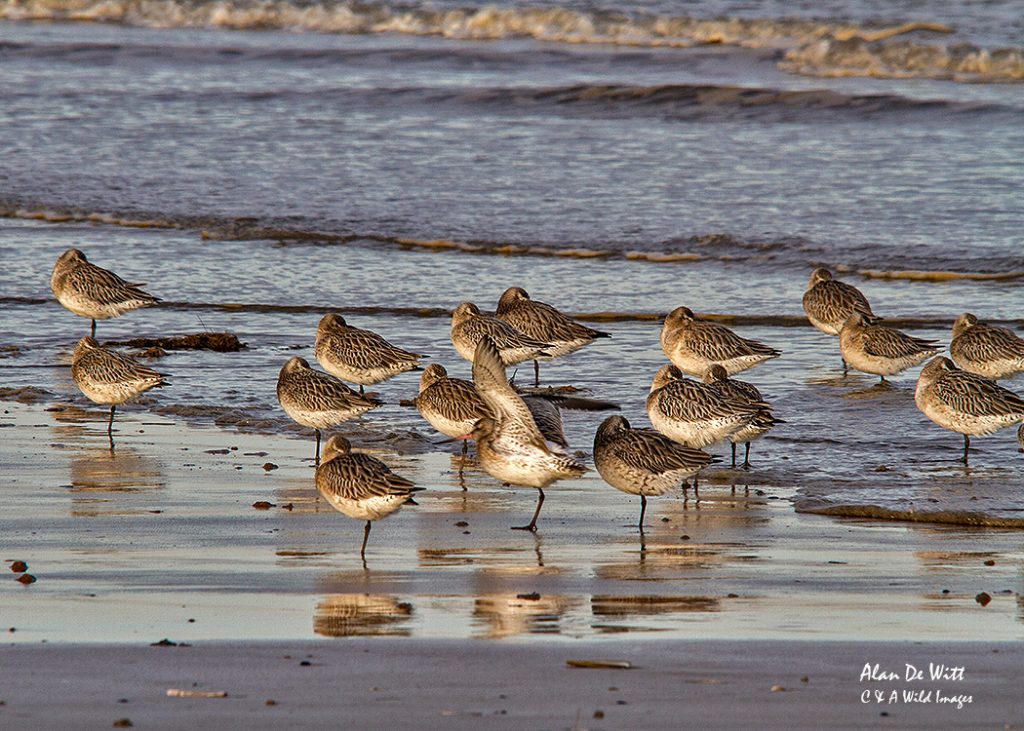
Location and time of year can be a good guide but only a guide to start with. If you are watching them on the beach in winter there is a good chance they are Bar-tailed. If they are inland at any time of year then its likely that they are Black-tailed. Like the Redshanks their plumage changes depending on of the time of year and age, but luckily the birds main body features do remain constant.

In Flight


By far the easiest way to tell the two species apart is to catch them in flight. With the Bar-tailed Godwit showing a white wedge on its back, barred tail and plain dark wings. Whilst the Black-tailed have black and white stripes on their wings and a distinctive strikingly black tail with a square white rump.
On the Ground

When these waders are on the ground, often wading around or feeding in the mud, it’s difficult to spot them with their wings open. Its then a case of looking for some physical features of their legs, bills and plumage colouring to help with identification.
Legs and Bills
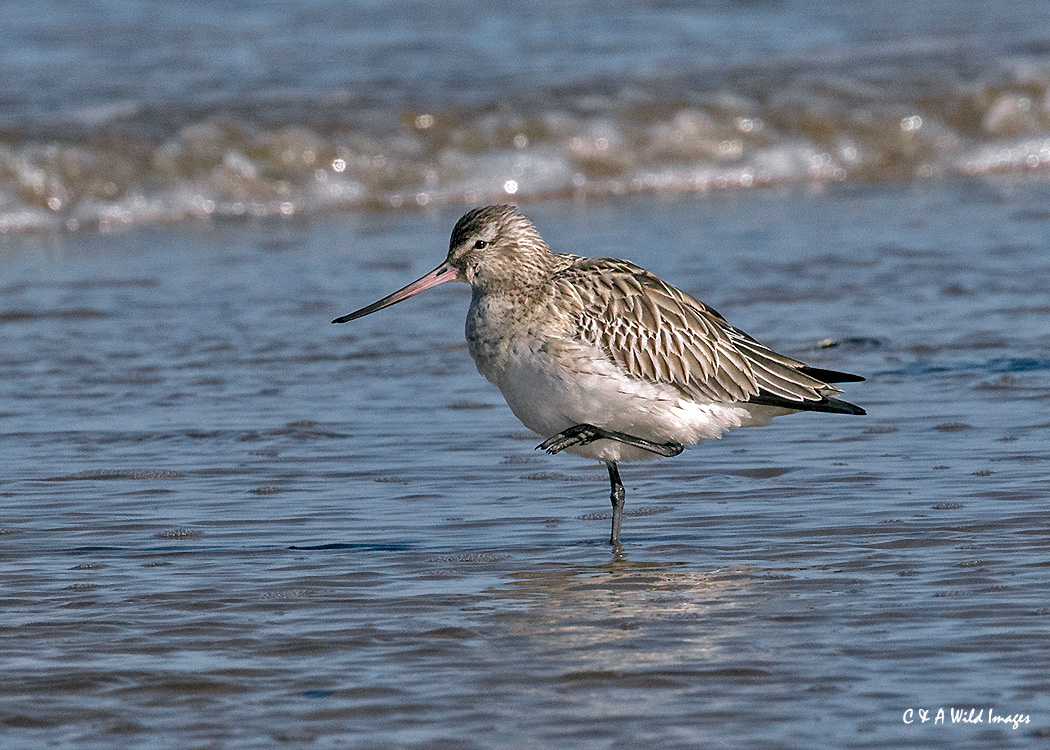
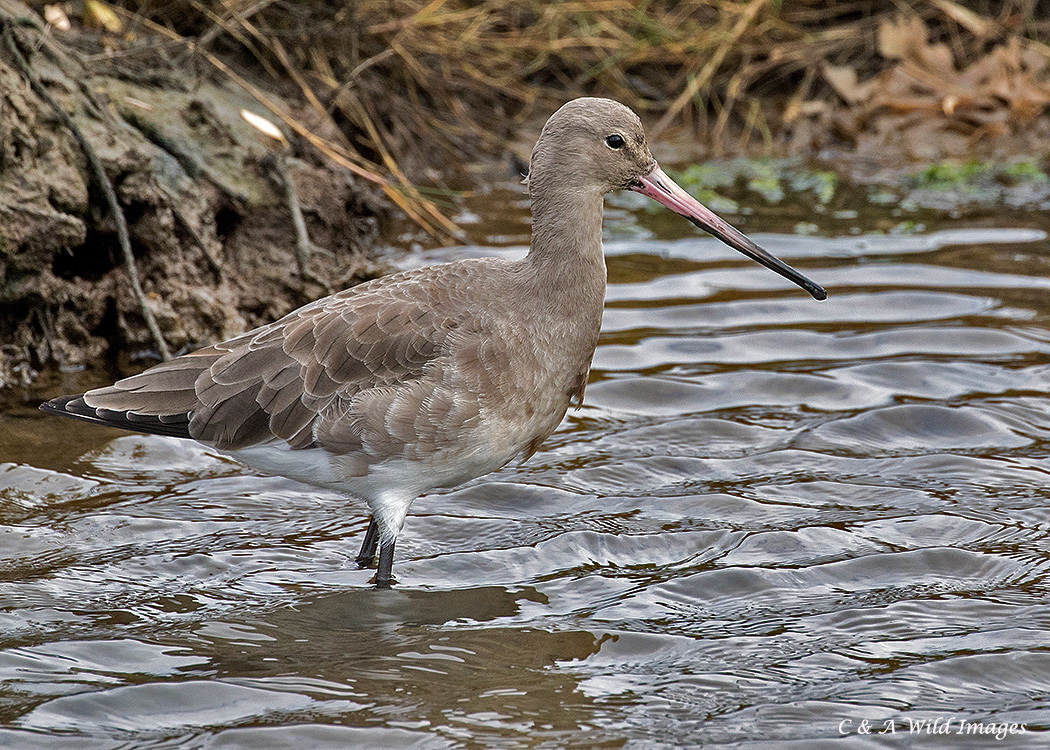
Of the two species, the Black-tailed Godwit has longer legs. However, this feature is difficult to judge unless both birds are together and not wading. Both species have long bills, but the Black-tailed Godwit’s bill is usually straighter. The Bar-tailed Godwit’s bill is typically slightly upturned.
Plumage
Unfortunately, in the UK, both species are most often seen around our coasts during the winter months. At that time, they are usually not in breeding plumage. In spring and summer, the Black-tailed Godwit develops black barring across its orange breast and belly. The Bar-tailed Godwit has a more uniform orange-red breast when in breeding plumage. The Bar-tailed Godwit also retains its streaked back throughout the year.In contrast, the Black-tailed Godwit shows plain back feathers during the winter months.


Really helpful. Needed such a detailed reminder after seeing Godwits on Holme beach. Thanks for taking such trouble.
Hi Andrew, Thanks for the feedback. Glad it all made sense and was of help, I struggled for a long time with these birds especially at this time of year.