Ketchikan and Black Bears in the Tongass Forest, Alaska
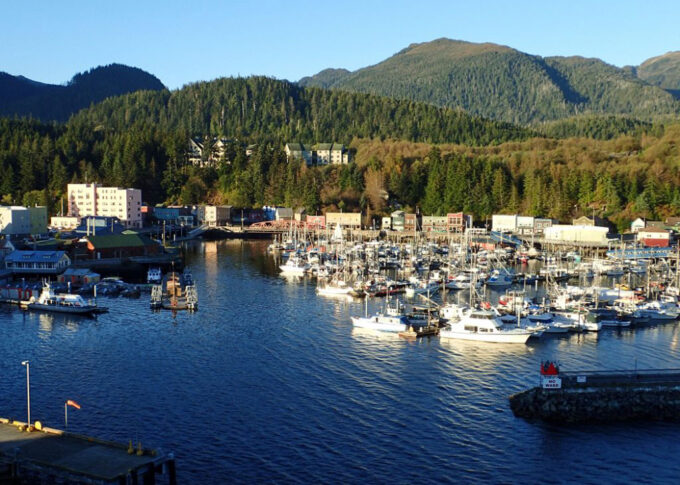
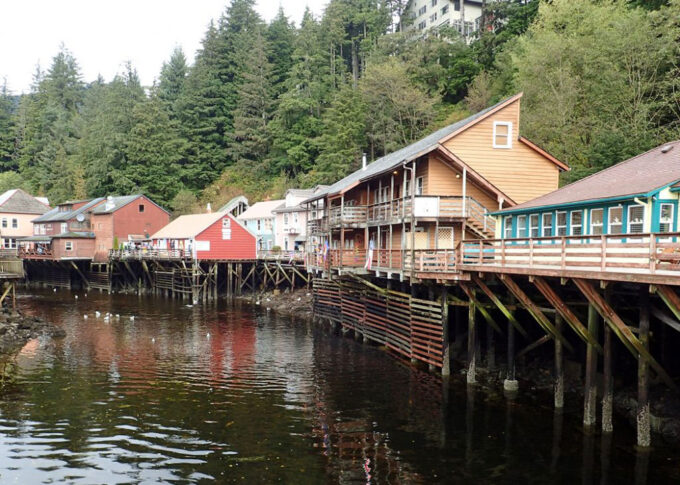
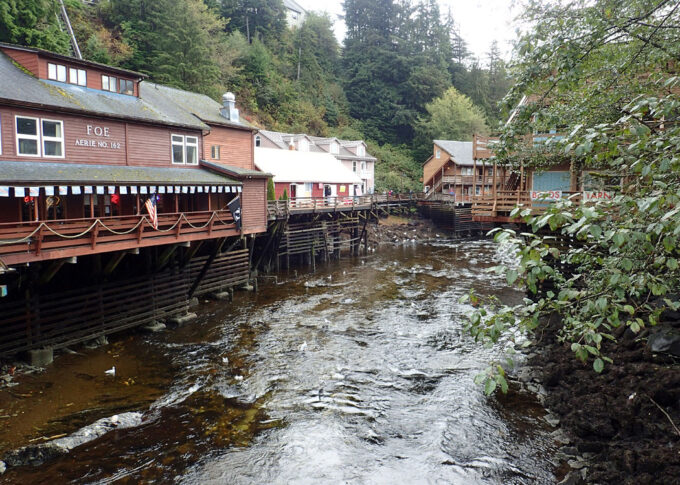
Our last port of call on the way back to Vancouver was Ketchikan, on Revillagigedo Island. The town takes its name from the creek that runs through its centre, a Tlingit name, and sits right on the edge of the Tongass National Forest. Known as the “salmon capital of the world”, Ketchikan grew up around a salmon cannery built at the mouth of Ketchikan Creek in the 1880s. Picturesque Creek Street, the town’s historic area, is built on boardwalks above the creek and was the red-light district until 1954, with more than 30 brothels in its heyday.
The salmon run
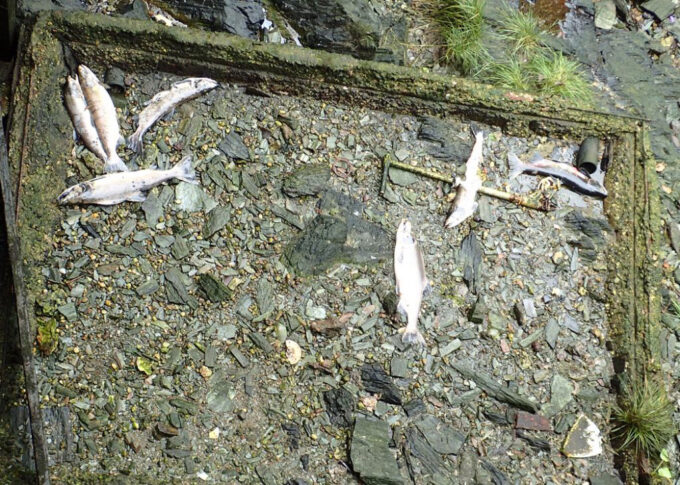
At this time of year the creek is full of salmon, dead, dying and desperate to get upstream, all trying to return to where they hatched to spawn.
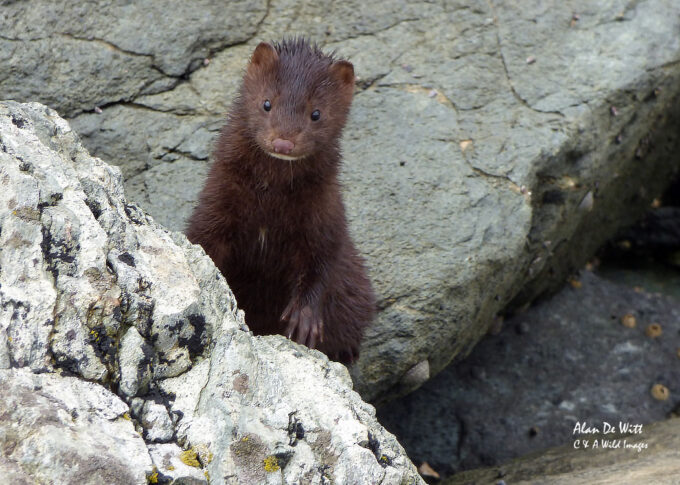
We had been told this was the place to see bald eagles close up, but there were none today; apparently the gulls bully them, so they keep well away. Instead, the gulls and harbour seals were feasting on hundreds of fish dying on the banks. After a look round the historic area, we walked to the end of the pier and came across a family of mink playing in and out of the rocks on the sea wall, and spent some time watching their antics.
Deer Mountain stands behind the town, and the locals say that if you can’t see the top it must be raining, and if you can see the top it’s going to rain soon. They also say it rains 364 days a year in Ketchikan, but we must have struck it lucky: not a drop, and brilliant sunshine by midday. Nicknamed the “rain capital of Alaska”, Ketchikan averages around 150 inches (12.5 feet) of rain a year, and in its wettest year, 1949, it had more than 200 inches, about 17 feet, a record marked on the town’s “Liquid Sunshine Gauge”. All that rain feeds the vast Tongass National Forest that surrounds the town.
The Tongass National Forest
The Tongass National Forest covers nearly 17 million acres, most of the southeast Alaska panhandle, and is the largest national forest in the United States and the largest intact temperate rainforest in the world. As well as vast spruce, hemlock and cedar forests, it has countless clear creeks, rivers and lakes that are home to fish such as trout and salmon, and this huge forest is also home to brown and black bears, deer, bald eagles and wolves.
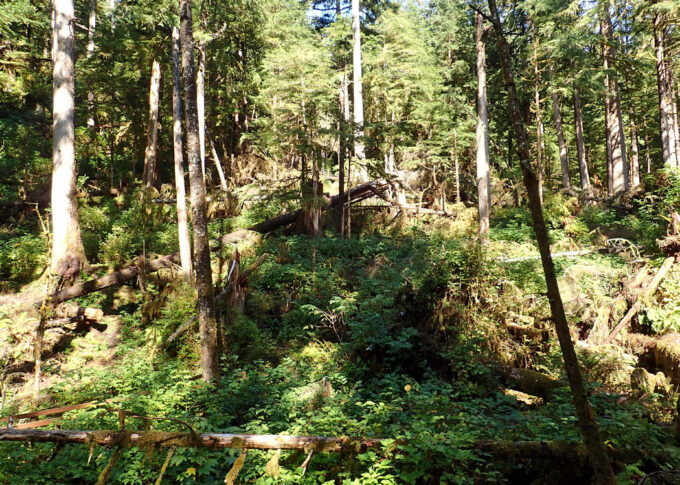
Our afternoon excursion was into the rainforest in the hope of seeing black bears. The Tongass has some of the highest densities of bears anywhere, and is one of the few places where bears outnumber people.
Bears are omnivores and eat a wide range of food, but in late summer, when the salmon are running back to their spawning grounds, they gorge on fish to fatten up for the winter ahead, and during this feast they can gather in numbers along the creeks.
There are several places in the Tongass where bears gather naturally when there are fish in the streams, and here a boardwalk had been built above the creek to make watching the bears easier and safer, with as little disturbance to them as possible.
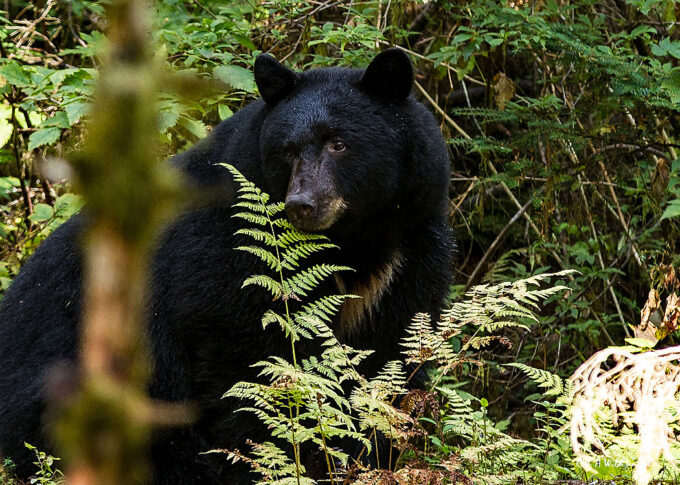
Black bears fishing
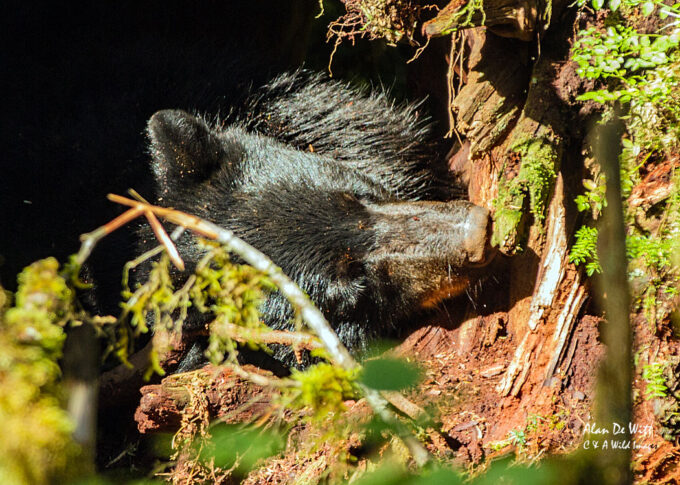
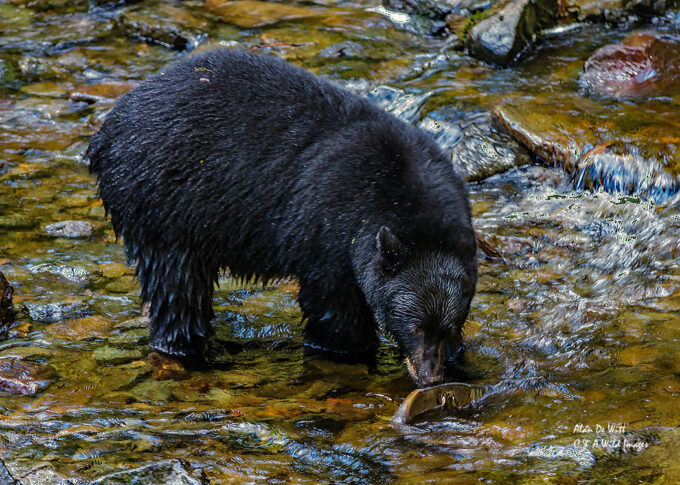
The excursion guaranteed a bear sighting or an $80 refund, and as the salmon had been running for a few weeks, the chances were good. Even so, our small group didn’t expect to spot a bear within a few minutes of setting off down the trail: curled up in the bottom of a hollow tree in front of us was a black bear trying to sleep. With so many salmon in the crystal-clear creek below, he had probably eaten his fill. Further along the creek, through an almost magical, Middle-earth-like forest, more black bears were chasing salmon through the pools and eddies formed by fallen trees.
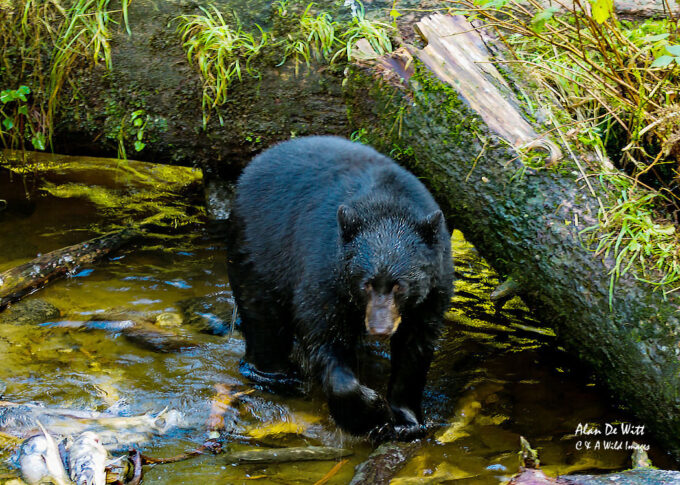
The gulls were shrieking loudly as they shared the feast. Then a large black bear suddenly appeared from behind a tree on the slope above us, waiting cautiously for his turn to come down into the creek. We probably saw at least eight different bears in and around the creek, and had a wonderful opportunity to watch and photograph their behaviour.
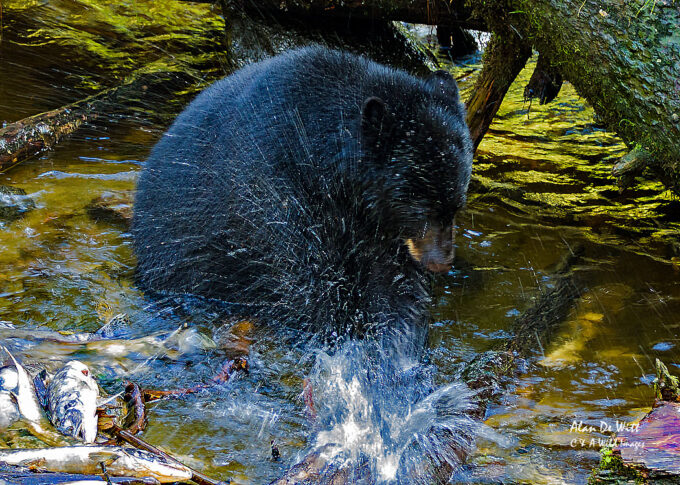
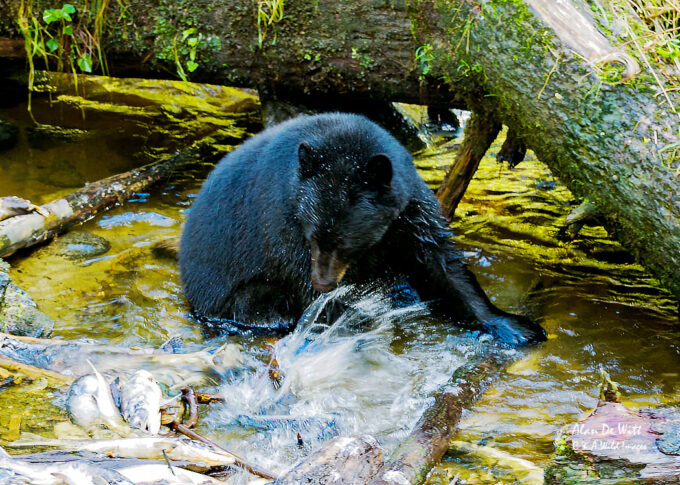
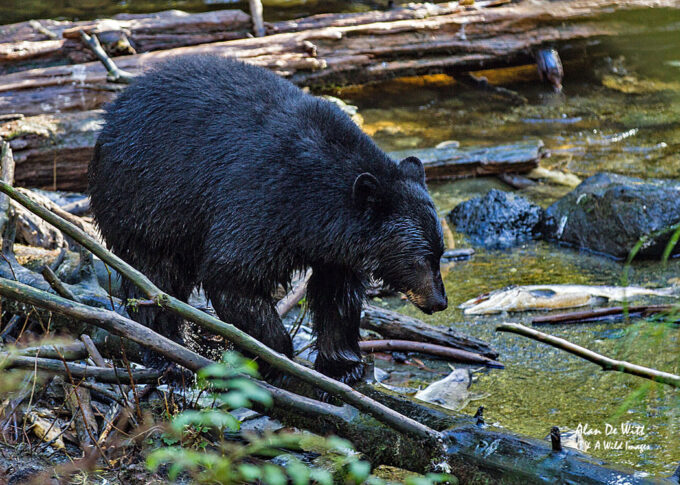
Where the boardwalk left the creek, we walked through ferns and moss-draped trees to the cove, where a large number of harbour seals were eating the salmon.
This was an unforgettable experience, and another excursion we would recommend.
Previous: A Day in Glacier Bay National Park. Back to the start of the trip: A Wet Day with the Grizzlies at Knight Inlet.