Beaver Diaries December 2024 and January 2025
December 2024 – Weathering Challenges and Beaver Impact
As the year draws to a close, navigating Sculthorpe Moor has remained a challenge due to persistently high water levels. In fact, much of the woodland is still flooded, and Dragonfly Meadow is completely submerged. Consequently, this may serve as a indication of the beavers’ influence on the reserve’s landscape. Compared to this time last year, the difference is striking, further highlighting the ongoing environmental transformation
December Storms and Rising Waters
During our two December visits, we encountered cold, icy conditions and a series of storms that swept across the country. Each visit required taking the longer route via the Wetland Hide, as other paths were inaccessible. This may remain the norm until the ground starts to dry out in the spring or summer. As this route might become the only reliable access to the drain where their main lodge is situated.
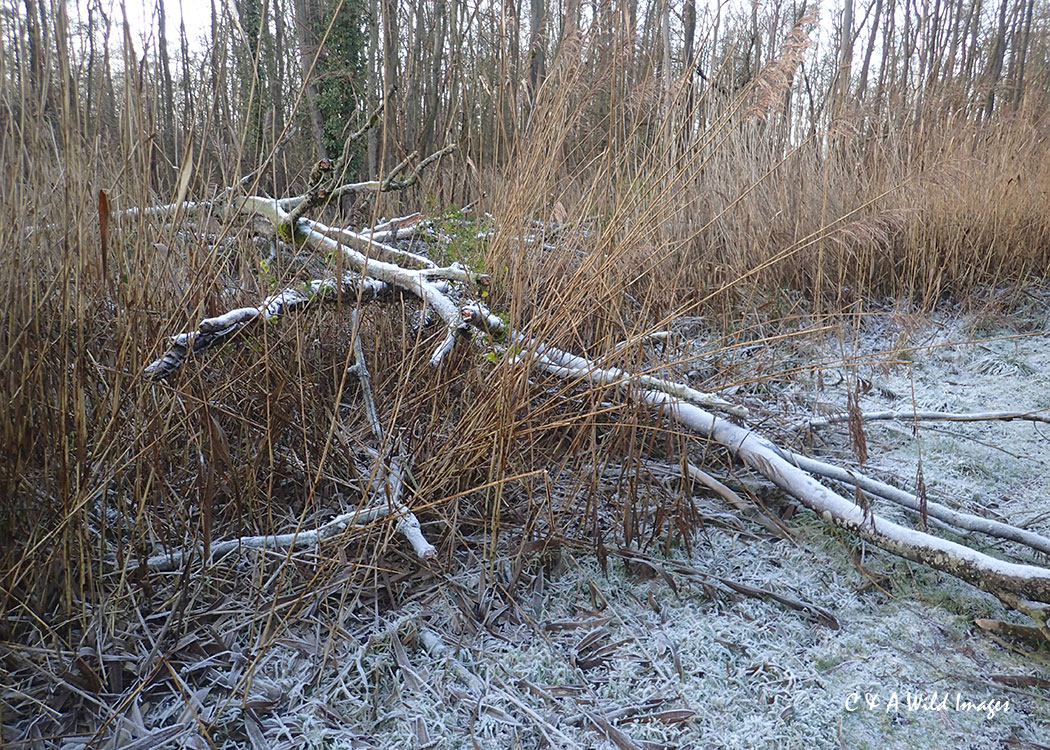
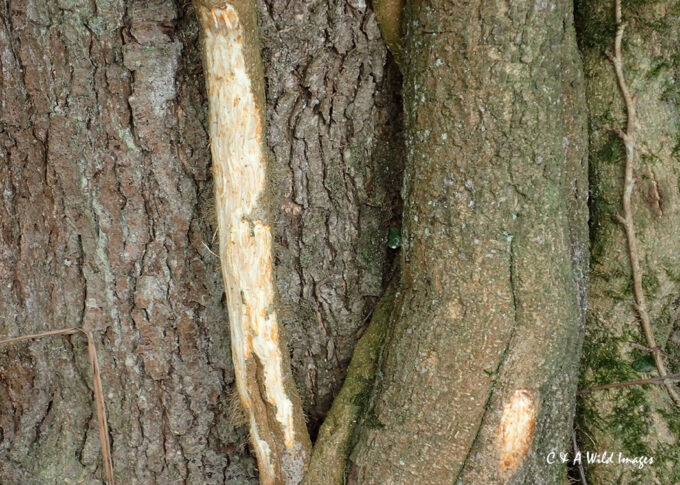
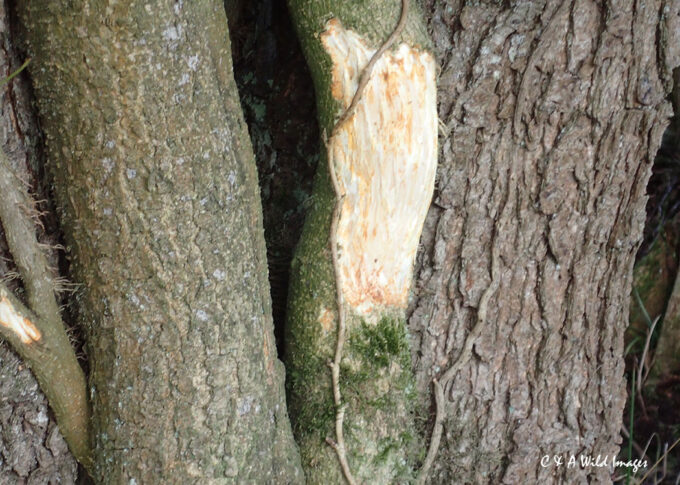
The December storms brought down several trees. Some blocked Oak Fen Drain path and others falling in the wooded areas. Combined with the beavers’ activity, this has started to open up both Poplar Wood and Plantation Wood. This will hopefully encourage greater biodiversity next year. Evidence of bark stripping was noticeable during both visits. It was concentrated in new areas compared to last year. Probably because the beavers now have easier access to a wider range of habitats due to the flooding.
Lodges Two and Three, appeared to have been reinforced. The Wensum sluice has been fitted with additional boards to regulate water levels. Interestingly, the beavers seem less inclined to block the sluice when the boards are in place. However, the trail cameras also captured their consistent routine of swimming across and rebuilding dams whenever water levels drop, demonstrating their adaptability and industriousness.
Around the reserve
Wildlife sightings remain plentiful, with flocks of finches moving through the woods, egrets, swans, and ducks on the wetlands, and red kites occasionally soaring overhead. By the end of December, we noticed that the wardens brought in a boat to help manage the reserve under these waterlogged conditions.
Plans to set the beaver trap, which is required for chipping the yearlings and kits as part of the licensing agreement, were initially optimistic. However, by the end of the month, it was clear that trapping would require more detailed planning and a coordinated effort in January.
January 2025 – Successfully Trapping a Beaver
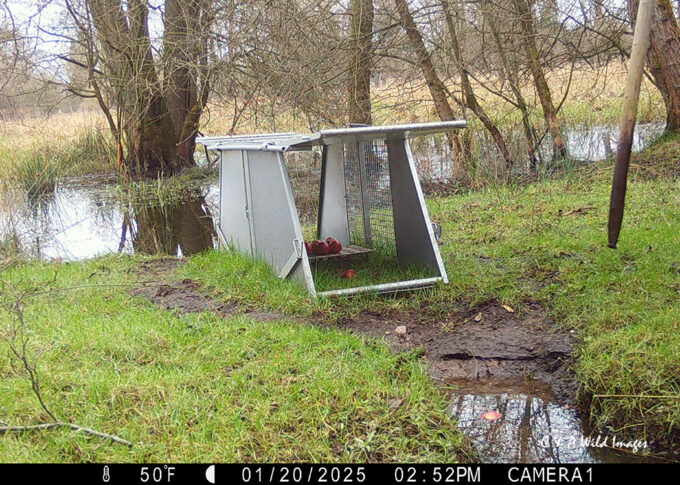
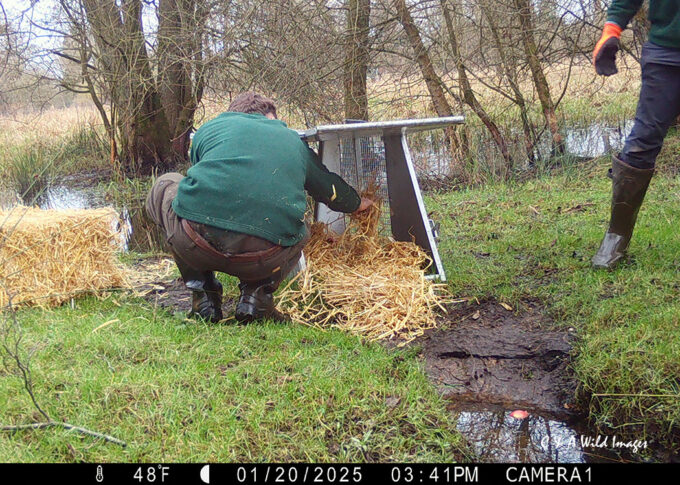
In mid-January, a focused effort was made to trap one of the beavers. Alongside the wardens and a local vet, we carefully prepared the Bavarian beaver trap. Apples, a proven favourite food from previous trials with the trap (minus the doors), were used as bait. To improve access for us, a couple of sluice boards were removed to lower the water levels slightly. On Monday, after setting the trap, we added straw for comfort and ensured the weather conditions were suitable, with no frost predicted. A trail camera was positioned near the trap, and the wardens set early alarms to check if it had been sprung.
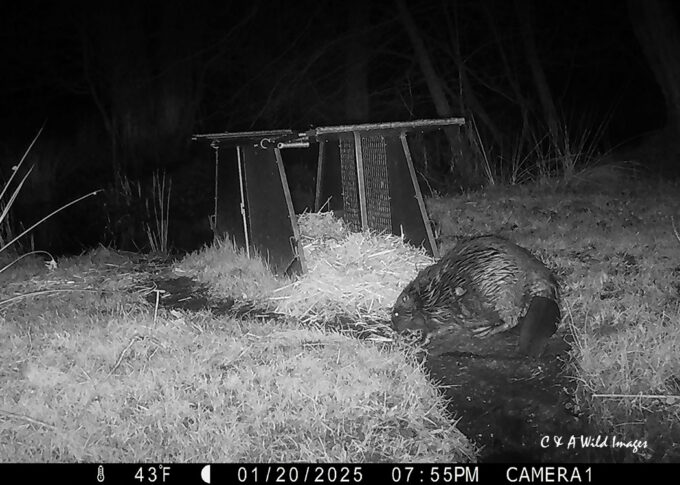
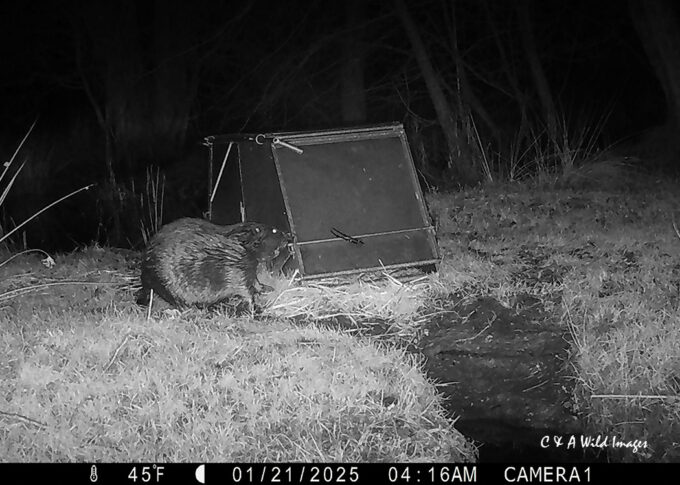
Tuesday Morning
On Tuesday morning, around 7 a.m., we received an exciting text message: “We have got one.” This was a significant moment, especially as other projects, such as the one at Wild Ken Hill, had faced challenges trapping beavers last year.
We arrived at Sculthorpe along with the vet and headed to inspect the trap. Inside, we found what we believe to be one of the yearlings. The vet performed a thorough health check, testing the beaver’s heart, and examining its tail and feet, before inserting the required chip as part of the licensing agreement. Watching the vet and wardens handle the beaver was a reminder of just how strong and powerful these animals are.
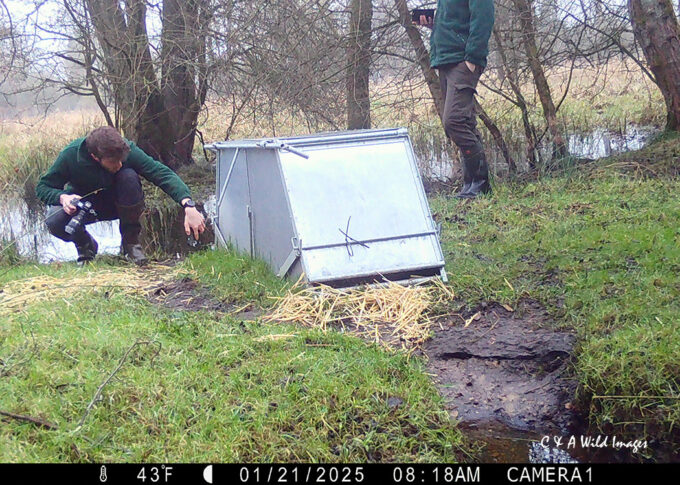

After the health check and chipping were completed, the yearling was released back into the channel. We are hopeful the process didn’t cause too much disturbance, as we aim to capture the remaining yearling and the kit before February’s deadline

Sculthorpe Moor continues to transform under the beavers’ influence. Their industrious nature, combined with the reserve’s changing environment, offers endless opportunities for discovery and learning.
| Fox | Muntjac | Otter |
| Rat | Teal | Wood Mouse |
| Mallard | Robin | Water Vole |
| Pheasant | Blackbird | Jay, |
| Blue Tit | Thrush | Wren |
| Barn Owl |