Beaver Diaries July 2024
July brought summer weather to Sculthorpe Moor, and water levels around the reserve began to drop. While wellingtons were still essential in some areas. However the lower water levels have allowed volunteers to resume surveys and observe increasing Beaver activity. Feeding signs became more noticeable, especially around Oak Fen Drain between Dams 1 and 6.
First Visit of the Month
On our first visit of the month, we collected SD cards from six trail cameras. Though I have to admit, I forgot to place a card in the Bushnell camera. A small oversight that even seasoned professional photographers occasionally make! Fortunately, the other cameras captured plenty of activity. Showing beavers around the newly built dams and the area we call Poplar Wood.
Elsewhere on the site, dragonfly and damselfly numbers seemed noticeably higher than last year. They were flitting among the abundant summer blooms now in full flower. We also spotted a red kite possibly from the nest on the far side of Beaver Wood.
That evening, we focused our watch near Dam 1. Before long, an adult beaver and a yearling appeared, hauling hawthorn branches to a feeding point in Poplar Wood. The yearling later moved through a pipe under the path toward Dragonfly Meadow, where it began feeding on Flag Iris.


As the evening drew to a close, we checked the drain near the lodge. Here we spotted at least one, possibly two, new kits heading back toward the main lodge.

Second Visit of the Month
Heavy rain before our second visit brought more flooding, making access to the reserve challenging once again and requiring us to enter the enclosure through Gate 3. Beaver activity was mainly concentrated around the dams along the drain, with less movement observed elsewhere.
As we made our rounds collecting the cameras, we spotted other wildlife, including a woodpecker, Beautiful Demoiselle damselflies, cinnabar moth caterpillars, and a variety of flora in bloom.
Trail camera footage showed the beavers focusing their feeding in the flooded areas of Poplar Wood, much like we observed last year. They appeared to favour a haul-out along Oak Fen Drain, though it’s unclear whether this spot will remain a feeding ground or be abandoned later in the season.
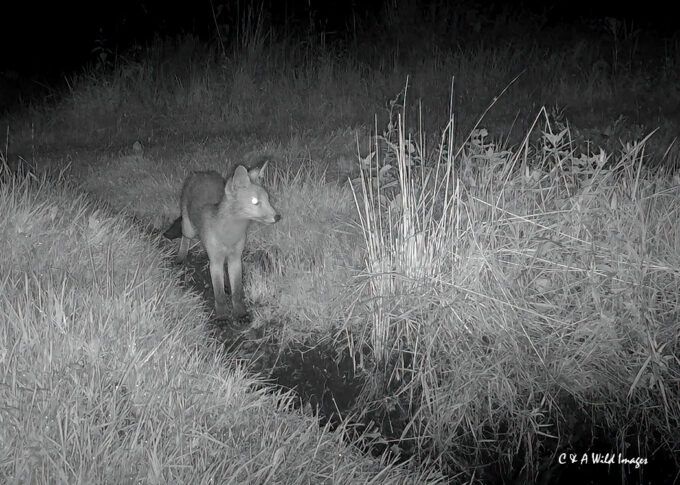
With a group tour planned for the evening to observe the beavers, we didn’t stay late to capture still images. However, reviewing the trail cameras revealed more wildlife activity, including a fox near Dragonfly Gate and an otter making an appearance at Dam 1

Third Visit of the Month
Much of the reserve remained underwater on our 18th July visit, partly due to the persistent poor weather and the beavers’ activity. As a result, we couldn’t access some cameras, including the one at Dragonfly Gate. However, the trail camera footage we collected revealed all the beavers, including a kit, making use of the haul-out in Poplar Wood.
While retrieving the cameras, we noted a variety of other wildlife, including gatekeeper, red admiral, and speckled wood butterflies, a little egret on the wetland , and marsh and bull thistles in full bloom on oak fen area
With better weather that evening, we set up in two spots: one near the lodge, where a kit had been seen previously, and another at Poplar Wood. Both locations provided excellent sightings. Near the lodge, a female beaver brought a kit onto the bank, placed it carefully, and cut Flag Iris for it to feed on before swimming off to join the yearlings at the Poplar Wood haul-out.
At the haul-out, the activity continued in full view, with the yearlings and an adult beaver feeding openly—a perfect opportunity to observe their behavior up close.

Fourth Visit of the Month
Our fourth visit took place after a spell of drier weather, making the paths more accessible, though wellingtons were still essential for navigating the damp terrain. One of the main tasks for this visit was deploying a newly constructed floating platform near Dam 1. Baited with apples, the platform is designed to get the beavers accustomed to it, so it can eventually be used to safely trap and chip the yearlings as required for government monitoring.

While collecting footage from the trail cameras, we spotted a range of other wildlife around the enclosure. A juvenile buzzard soared above the woodland, while ruddy darter and broad-bodied chaser dragonflies darted across sunlit clearings. Closer to the ground, white-tailed bees busily worked among the flowering plants, adding to the richness of the summer scene.
These additional sightings served as a reminder of how the beaver enclosure supports a vibrant ecosystem, benefitting species both large and small
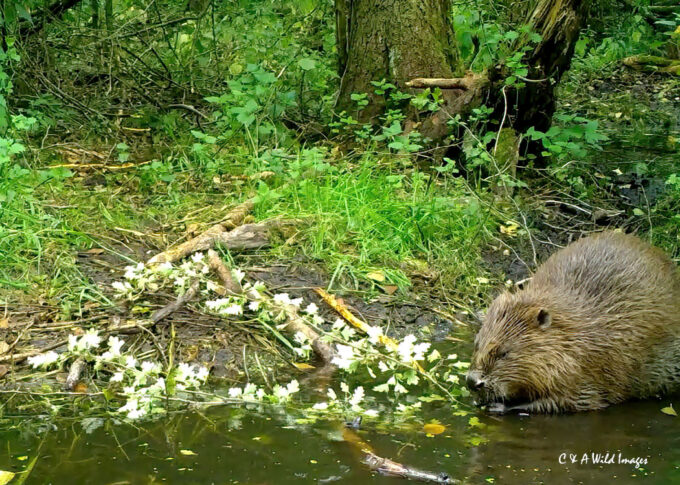
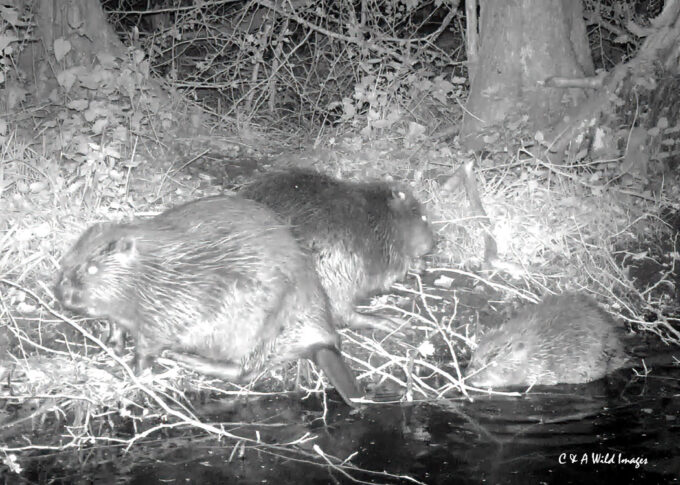
That evening, activity near the lodge was minimal. However the drain and haul-out near Dragonfly Meadow were bustling, providing excellent photo opportunities. Two yearlings were also observed at the sluice near Gate 2, actively building a blockage using logs, foliage, and mud—likely an attempt to hold back water in the meadow where they were feeding on fresh Flag Iris.
Trail camera footage reviewed the next day offered a treasure trove of insights. In Poplar Wood, hawthorn branches were being cut and dragged to the drain to be eaten. The most exciting discovery was video evidence of two kits feeding together on the bank, often accompanied by the yearlings. While one kit appeared livelier and healthier than the other, both showed encouraging signs of growth and interaction.
Last Visit of the Month
On our fifth visit of the month, we were able to enter the enclosure through Gate One and make our way to the IDB sluice. Here we noticed fresh mud had been added to the sluice —a clear sign of ongoing beaver activity. Along the way, the reserve was alive with wildlife. Frogs leapt through the undergrowth, and numerous dragonflies, including large hawkers and ruddy darters, buzzed through the air. A red admiral butterfly flitted by, adding a splash of color.
We observed a newly formed canal along the IDB from close to the honey bee tree area. Butterflies were abundant on this visit, including large whites and speckled woods, while hawkers and beautiful demoiselles darted around the reeds along the drain. Freshly chewed branches on the path and nearby foliage hinted at the beavers’ recent activity.
Overhead, a juvenile marsh harrier and a goshawk patrolled the wetland, and we also spotted a toad during our walk.
In the evening, we set up opposite the Wetland Hide to observe the beavers. A yearling was active near Dam 6, resting at the haul-out. While a kit swam cautiously in the open drain, often hiding among the rushes, proving difficult to photograph. Nearby, two yearlings were seen moving between Dam 6 and Dragonfly Gate, while the new kit stayed close to the bank, navigating the bend of the open drain.
July proved to be another eventful month at Sculthorpe Moor, with the beaver family continuing to thrive and adapt to their environment.
| Fox | Otter | Hedgehog |
| Muntjac | Wood Mouse | Jay |
| Rat | Moorhen | Squirrel |
| Frog | Woodpigeon | Blackbird |