Beaver Diaries April 2024
It’s now been nearly two years since the release of the two beavers into the Hawk and Owl Trust’s Sculthorpe Moor Reserve in Norfolk. In that time they have begun to leave their mark on the woodland areas of the reserve. Our visits during April showed further reduction of the floodwaters that had been lingering for the past few months. This has allowed the volunteers and staff to reach areas that had been nearly impossible to access since early December.

First Visit
Initially, the beaver activity appeared concentrated along the stream managed by the Internal Drainage Board (IDB) within the enclosure. Here, clear signs of gnawing on trees and a distinctive haul-out spot indicated recent beaver presence together with what looked like signs of a channel and small dam. The trail cameras documented all four beavers travelling from their lodge to this area. However, there was little evidence of them returning via the same route. Interestingly, other cameras positioned near the lodge and along Oak Fen Drain, where we previously captured their movements, showed minimal activity. It left us wondering where they could be hiding!


Plantation Wood & Oak Fen
As volunteers surveyed the fence line, they made an intriguing discovery. The wooded area, which we now called Plantation Wood, adjacent to Oak Fen showed signs of alder sapling gnawing. There was also a substantial dam. This discovery solved the mystery, revealing that the beavers had begun to use this area. Possibly due to the winter flooding giving them access to more of the site. It would appear not only for winter feeding but also as a pathway to return to their lodge and the main drain.

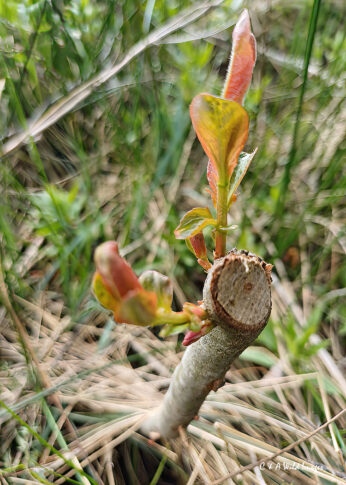
With the flood water receding our entrance into the enclosure now was through the main gate, where on each visit we could see little egrets were feeding along the bank of the IDB. From there we decided to take a look at the main fen and walked along the edge of Plantation Wood where there was now a lot of evidence of beaver activity. The gorse around the edge of the fen was now in bloom, and the bright green leaves of the alder were unfurling. Fresh growth was appearing on the alder that the beaver had coppiced. On the way round we spotted numerous frogs hopping through the marshy ground. On each occasion Buzzards and Red Kites flew overhead, and muntjac could be seen along the fence line.
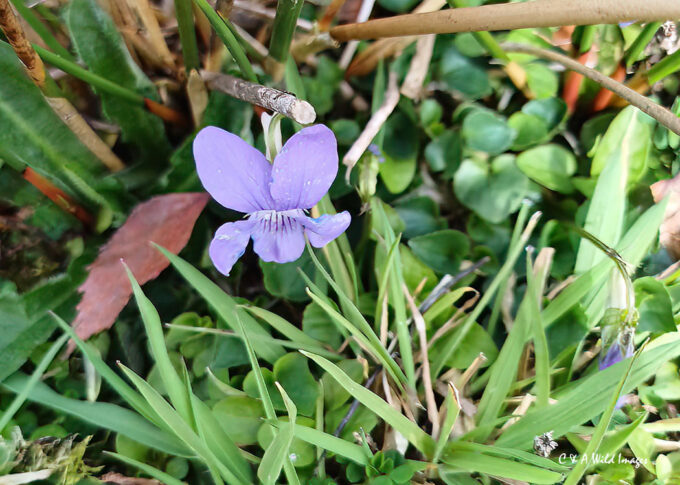

Leaving Oak Fen we followed our normal route along the track beside the main drain. Here there were sighting of numerous butterflies … speckled wood, peacock and orange tip were feeding on the spring flowers which had started to appear. Dog Violet, Lesser Celandine and Dandelion added to the Coltsfoot and Ground Ivy. They were also providing a nectar source for the Red-tailed and white tailed Bumble bees. Seven Spotted Ladybirds brought a bright splash of red colour among the vegetation.
Along Oak Fen Drain
Unfortunately the Greylag nest which we had spotted on our last visit in March next to the main lodge looked to have been predated, as there were a lot of feathers and abandoned eggs. Mallard ducklings were active on the drain following their parents. Black headed gulls, Greylags, Egyptian geese, Swans, Red shank, Tufted duck, Oystercatchers, and Lapwings were present on the scrape. There looked to be some new bark stripping on the fallen silver birch near lodge two.
The discovery of the new dam and another in the wood along the IDB stream, means there now appear to be three dams in total. The trail cameras positioned at the dam on Oak Fen drain continued to capture excellent video footage of all four beavers. They were actively adding logs and mud to the construction. It was now holding back a considerable amount of water along the entire length of the drain. Large red damselflies were busy flitting amongst the rushes and nettles. With activity detected in the new area in plantation wood, we decided to relocate some of the cameras. Particularly as the water levels were dropping which might mean the beavers changing their behaviour.
Man Made Dam
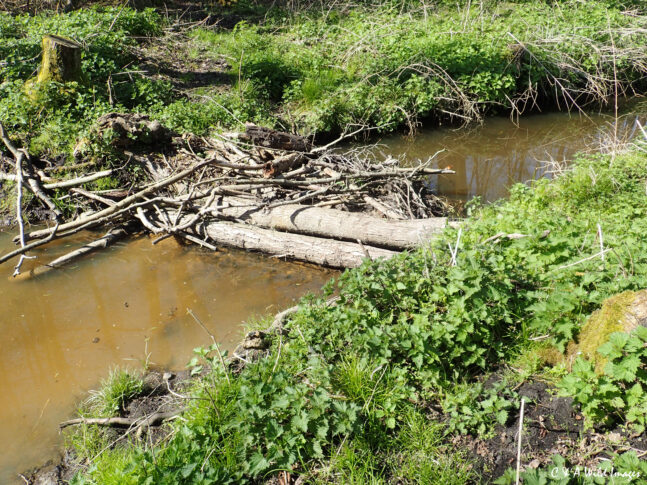
We explored a man-made dam in a channel that joins the main drain, only to find that the beavers had added a considerable amount of wood and mud to it over the winter. They were redirecting excess water from the drain through the woodland. We therefore relocated a camera to this fourth dam area.

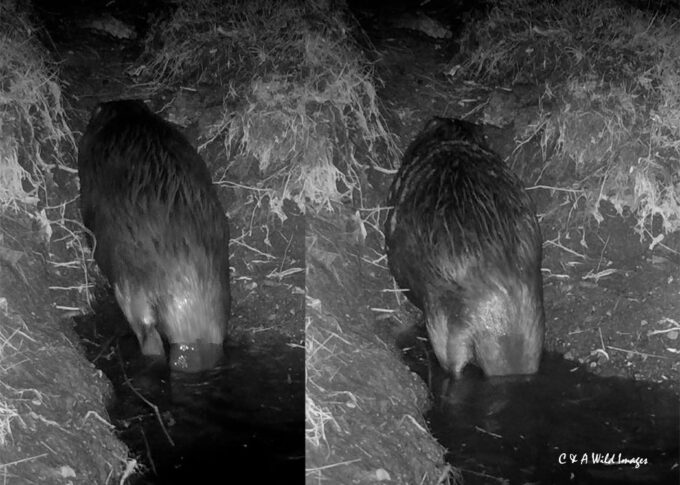
Reviewing the camera footage for the month, from the Oak Fen Drain dam and the trail used to access the IDB stream. Revealed four healthy beavers, with the kits noticeably growing. Interestingly, one of the adult beavers appeared significantly larger than the other. This was something we observed around the same time last year when she was pregnant. This observation raised hopes that we might anticipate another set of kits.
| Otters | Moorhen | Muntjac |
| Goldfinch | Water Vole | Pheasant |
| Squirrel | Hare | Mallard |
| Greylag Geese | Blackbird | Rat |
| Woodpigeon | Jay | Magpie |
| Hedgehog | Great White Egret | Blue Tit |