Pouso Alegre
After lunch there was some free time before the afternoon game drive. I took the opportunity to catch up with my journal and Alan went around the grounds of the Alegre lodge with his camera.
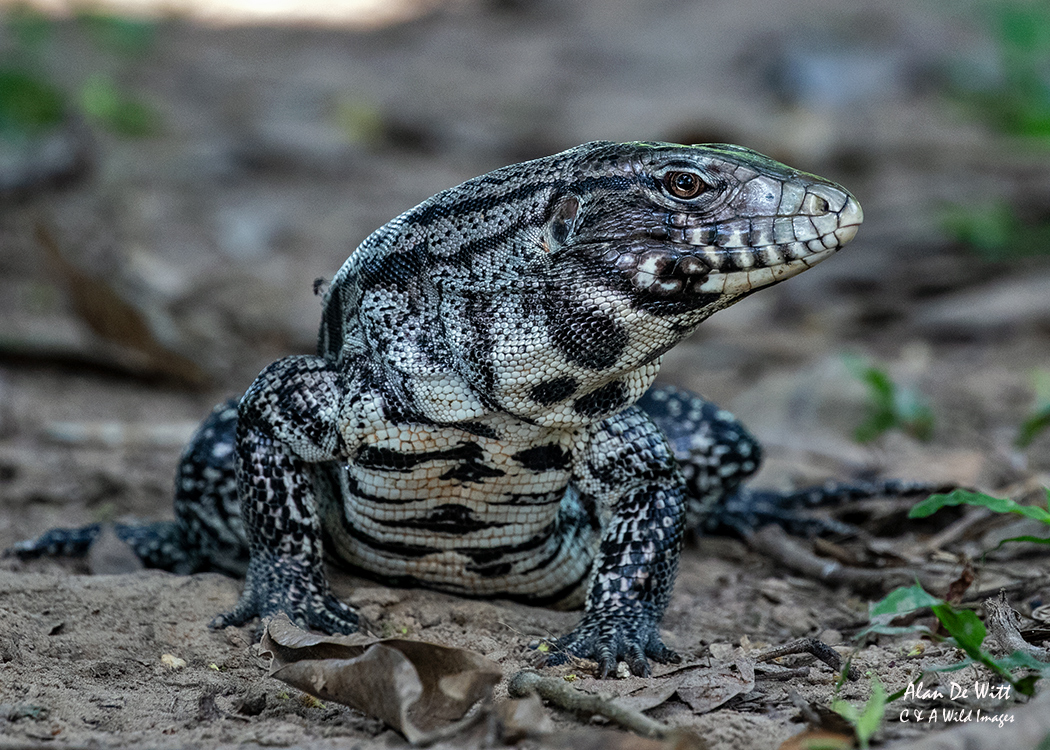
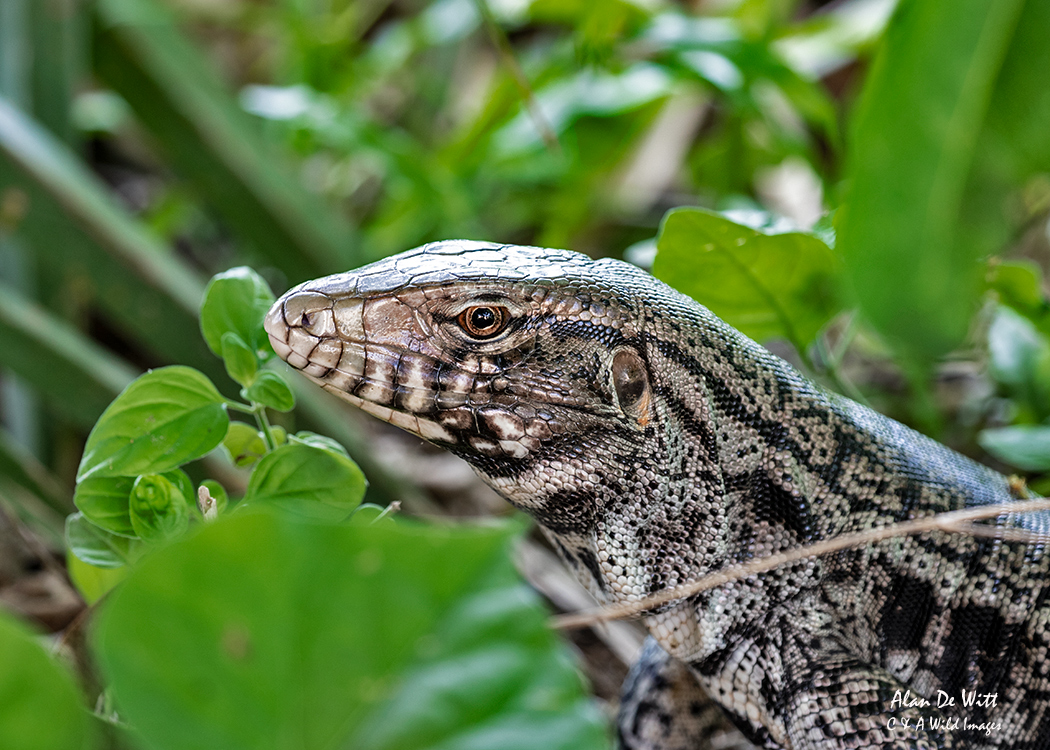
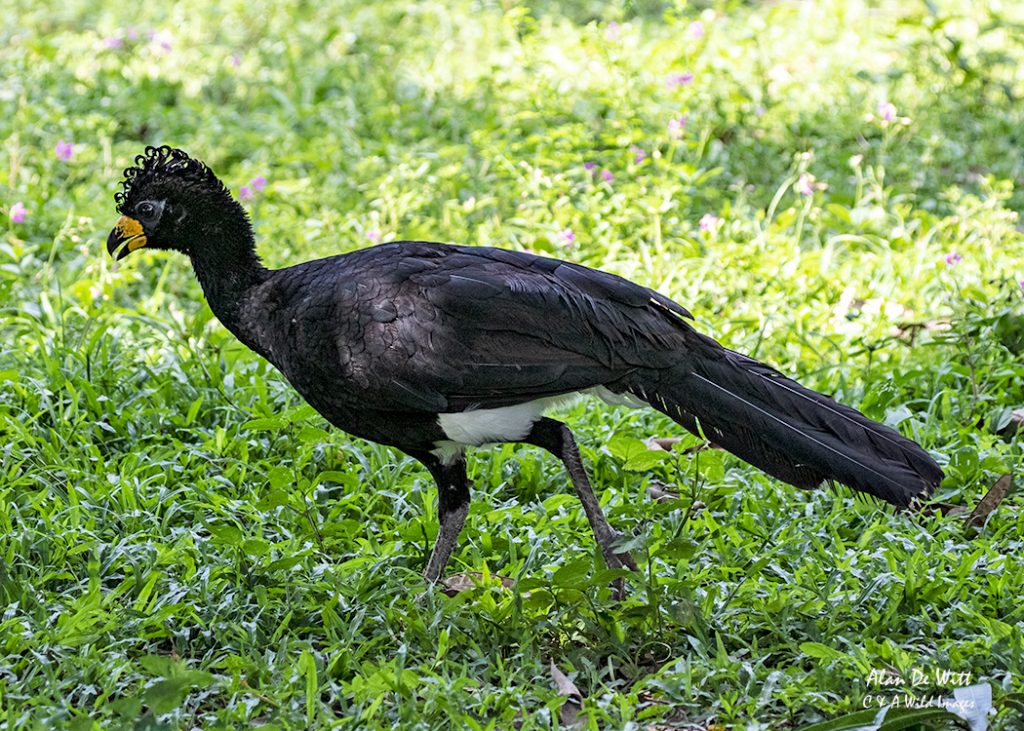
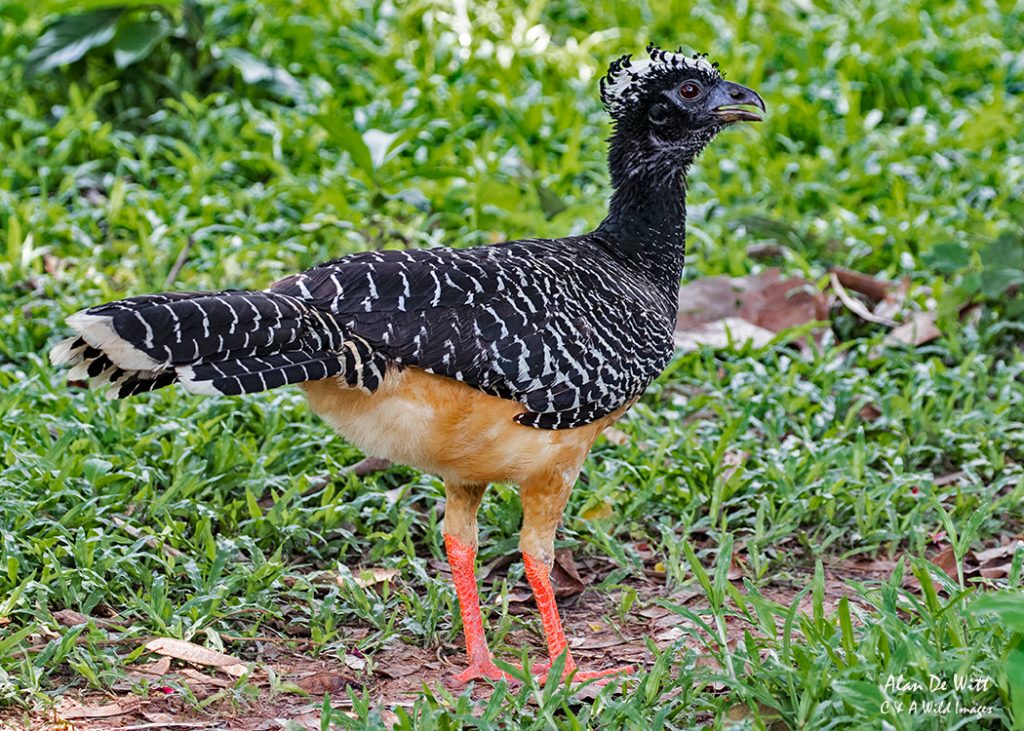
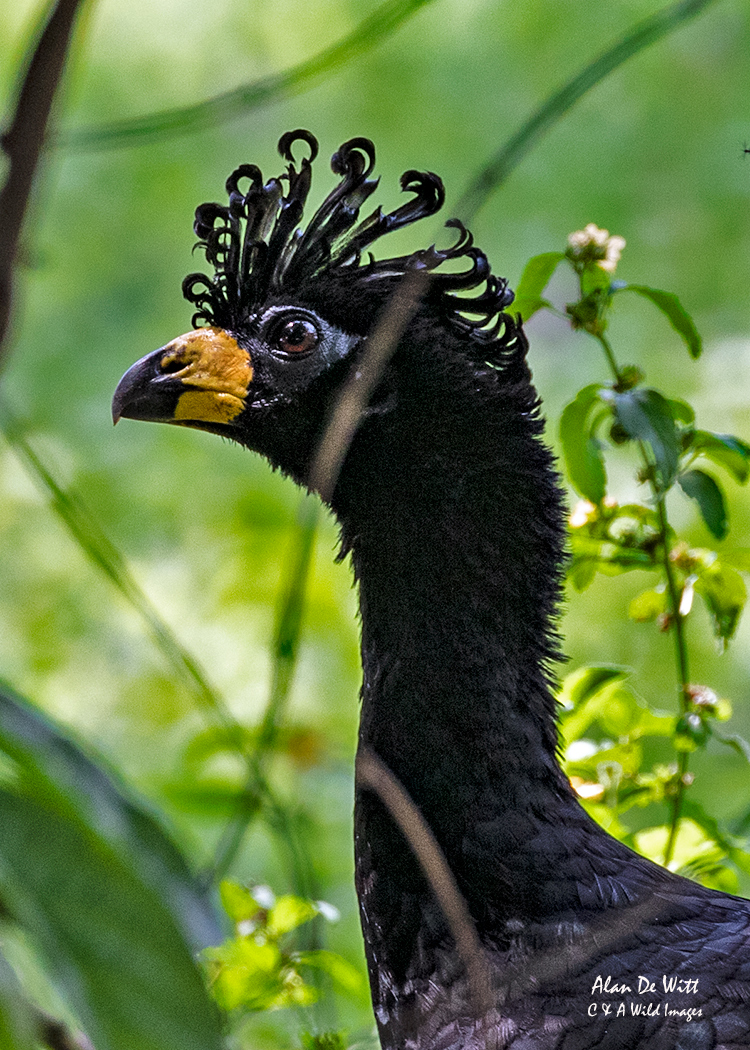
He managed to track down the large Tegu Lizard that we had seen before the morning game drive. A pair of Bare-faced Curassows strutted along showing their amazing curly crest feathers. The male and female appear so different they could be different species.
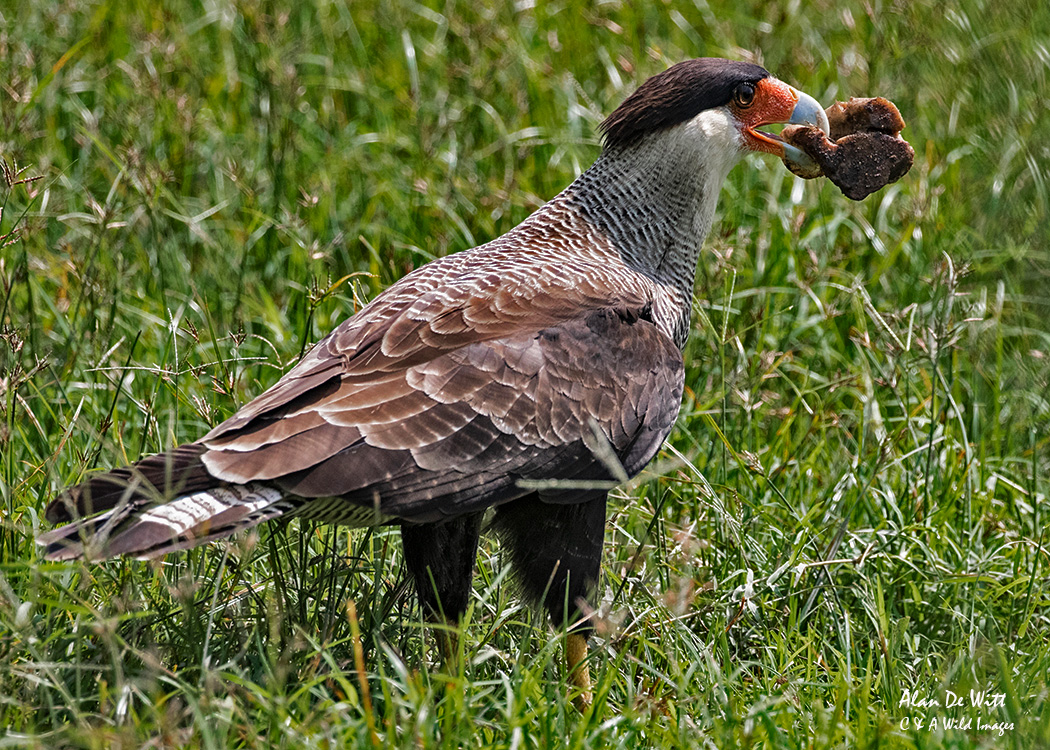
Nearby a Southern Crested Caracara bounded along the ground on the lookout for carrion and the fallen mango fruit. They are a brute of a bird with their massive bill, shaggy crest and long legs. Their bare face changes colour from red to yellow when they are excited.
The Black Hawk was still in the grassland area where we had spotted him earlier along with a Cowbird. Rheas walked leisurely through the grounds. In a bush outside our room Greater Kissadee and Yellow Billed Cardinals flew in and out of the foliage. Horses and a family of feral pigs wandered underneath the mango trees. It was time to get ready for the afternoon game drive.
Afternoon Game Drive
This afternoon we were in search of Tapir and Giant Ant Eater a journey that would take us out of Pouso Alegre onto the Transpantaneira Highway.
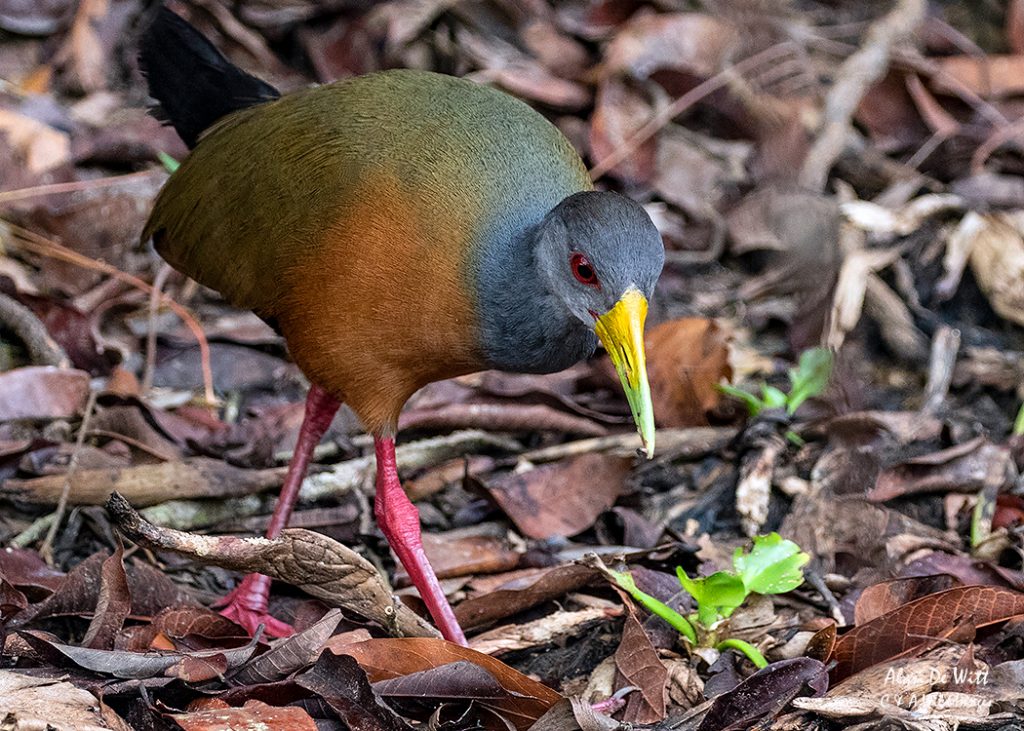
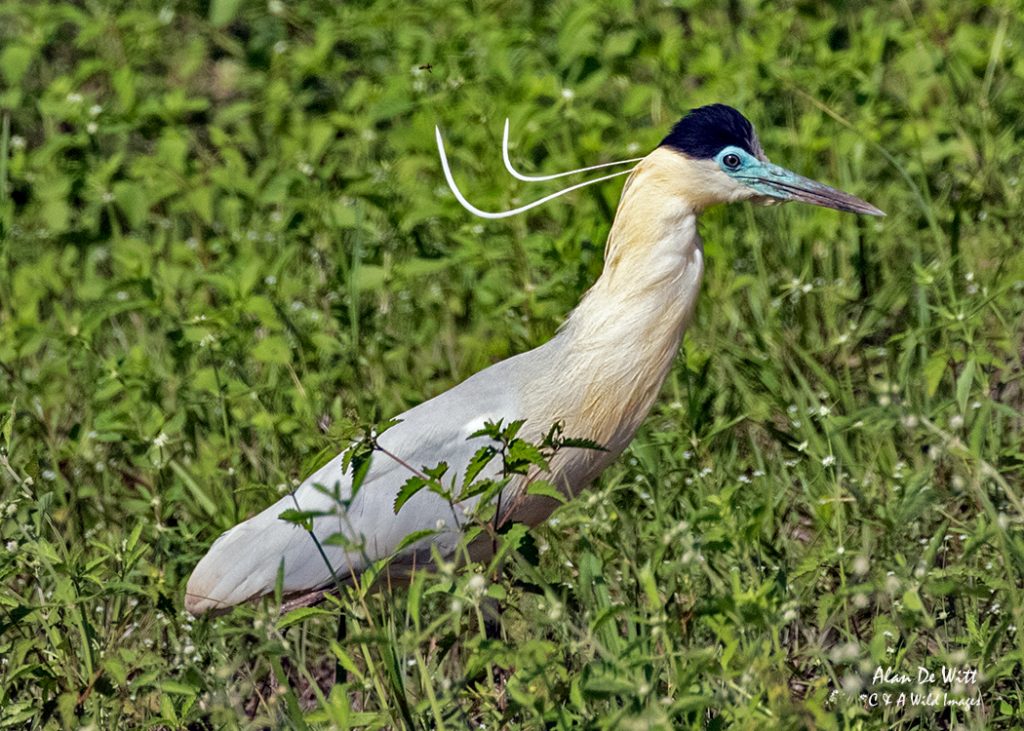
Along the route in a waterhole we saw White Faced Whistling Duck and Brazilian Teal. A Capped Heron stood motionless watching the water. Nearby Plumbeous Ibis pecked along the bank and a Gray-cowled Woodrail darted in and out of a muddy ditch. In an open area Jabiru pecked at the ground. Families of Capybaras and Rheas were a common sight. Once again Hyacinth Macaws flew overhead, but still no good look at them.
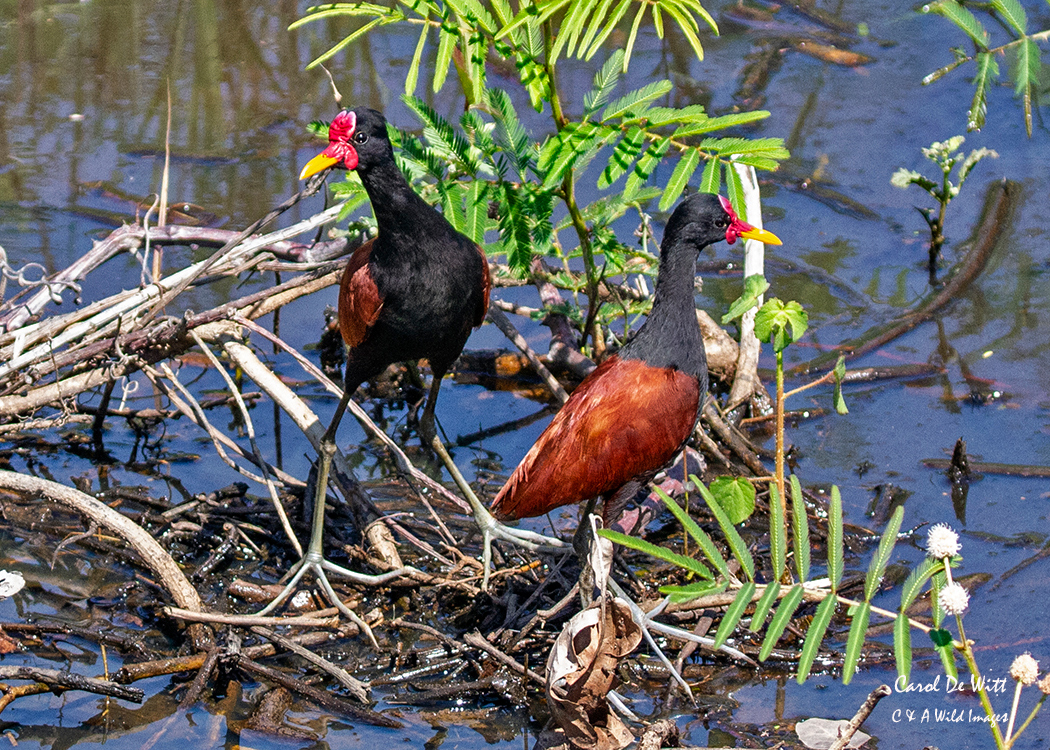
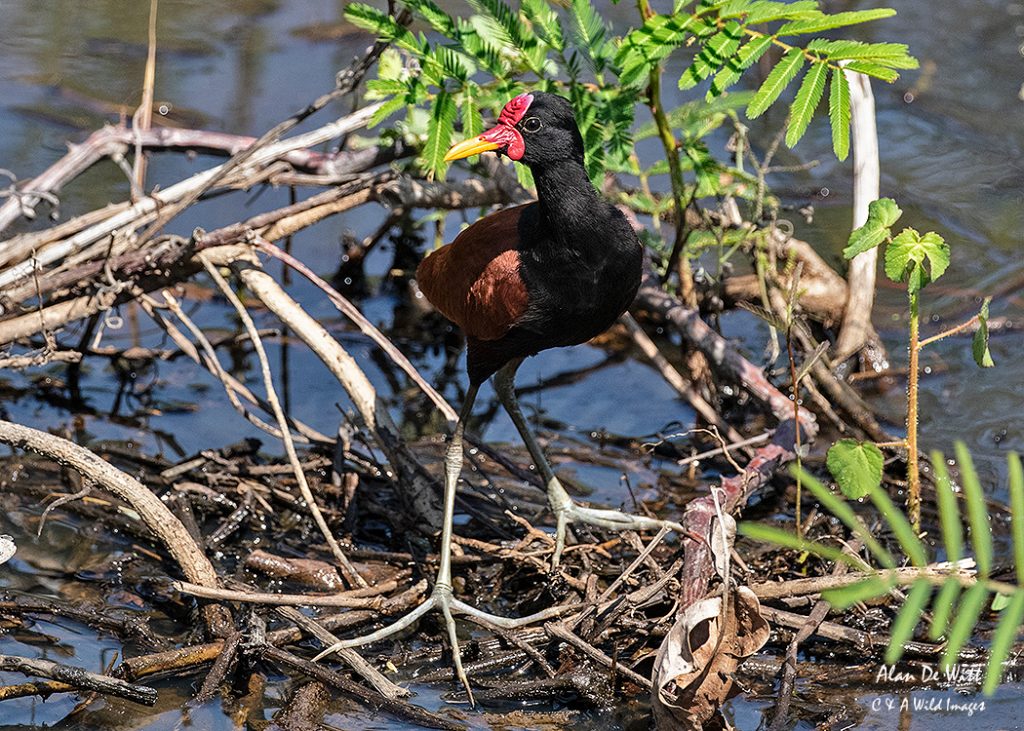
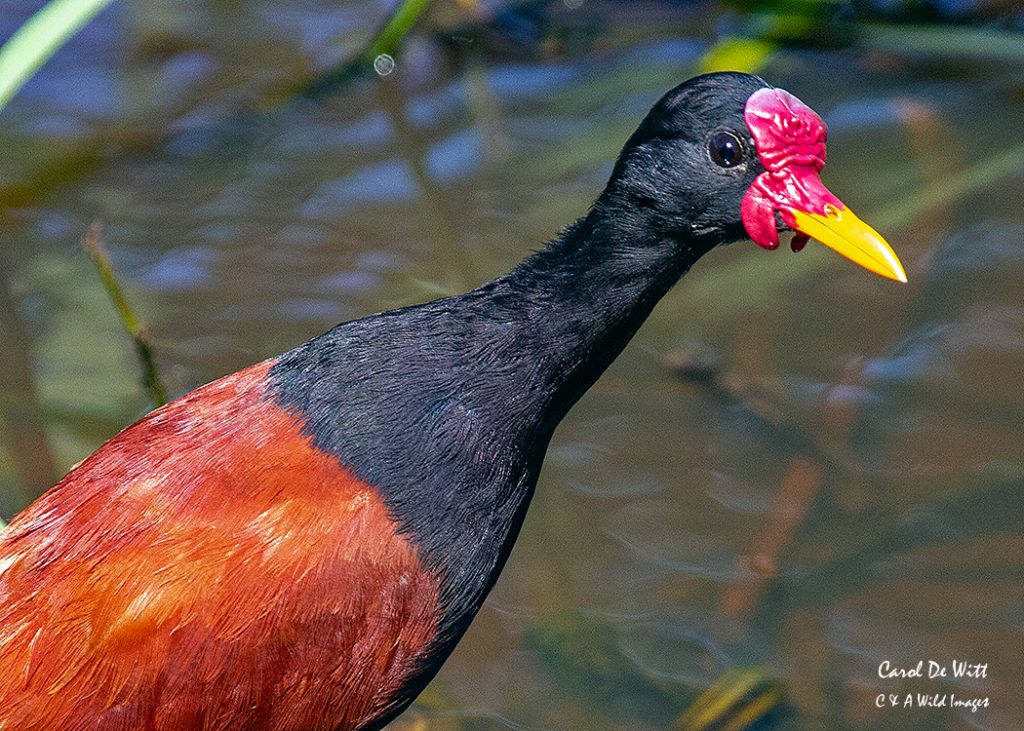
Sunbittern, Limpkin And Wattled Jacana.
A Sunbittern crouched heron-like with its sinuous neck, long legs, sharply pointed beak and striped plumage providing excellent camouflage. It then strode along seeking out crabs. When it flies it’s wings open to reveal a startling flash of yellow, chestnut and black, looking rather like huge eyes.
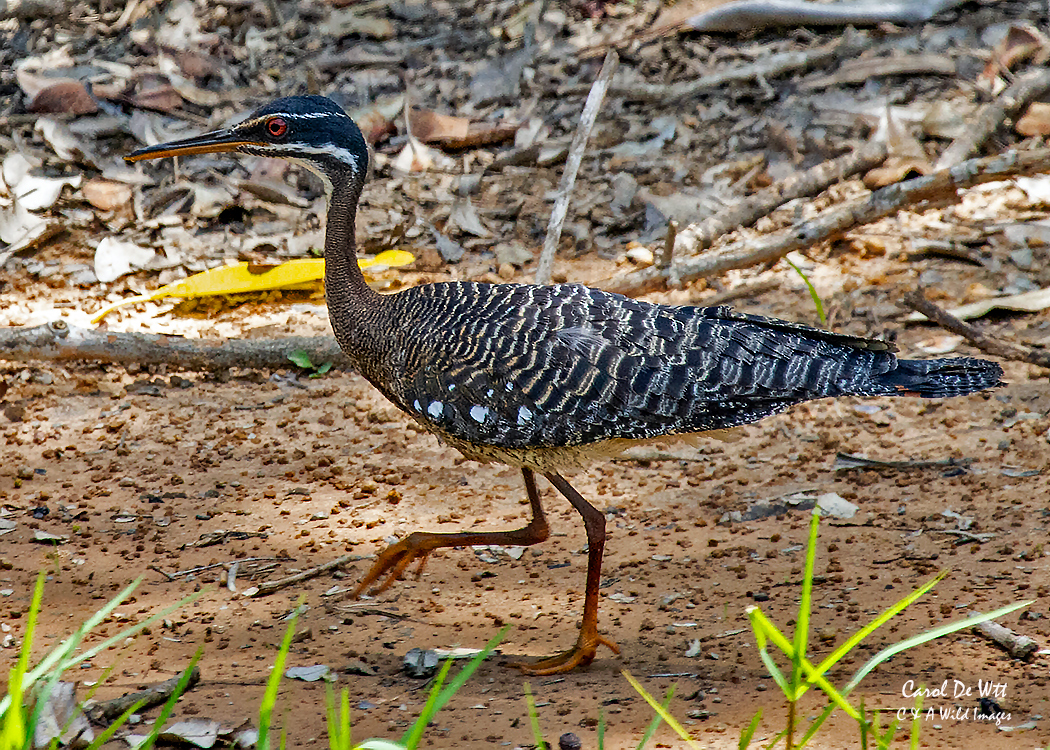
There were lots of Limpkin around the shallow areas of water. They get their name from the hobbling way they walk. This bird has a twisted windpipe which allows it to produce a very distinctive call. Its sharp bill has a kink allowing it to prise open the apple snails which are its’ main food.
A common sight were Wattled Jacana walking on the pond vegetation, which earns them the local name of Lily-trotter. Their long legs and extremely long toes are adaptations to allow them to walk precariously on the floating vegetation. The female Jacana mates with many males that then assume responsibility for the young. When threatened they put the young under their wings so only their legs can be seen dangling.
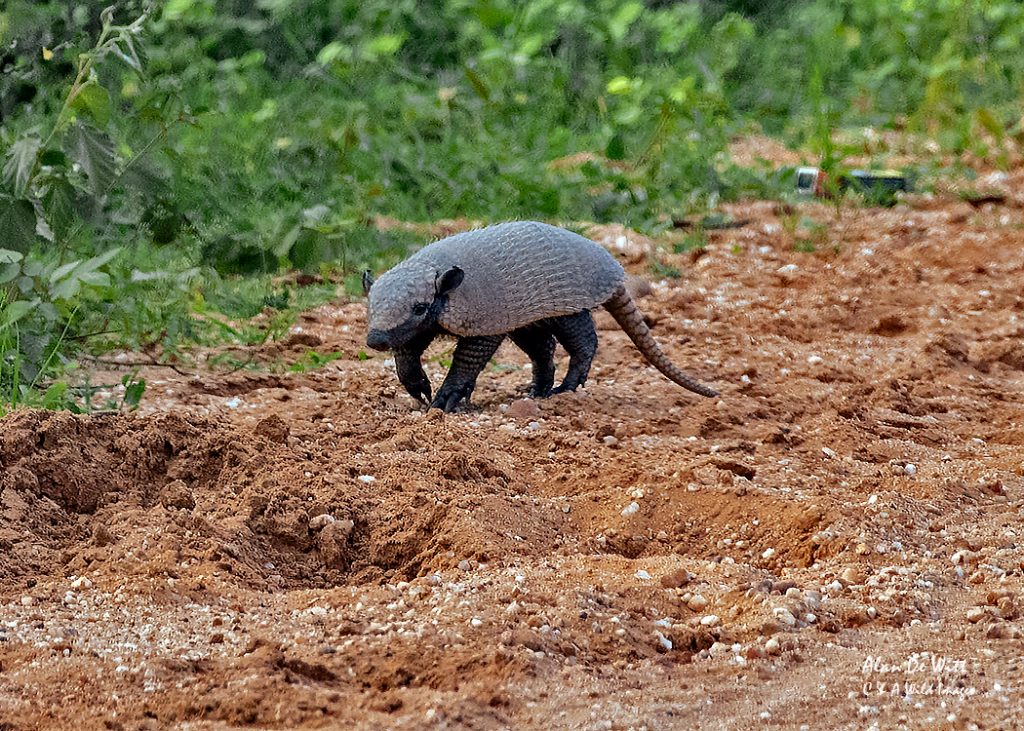
Further along the road a Six Banded Armadillo crossed the track in front of us. Brocket Deer grazed and Feral Pigs turned over the soil in the the grassy areas.
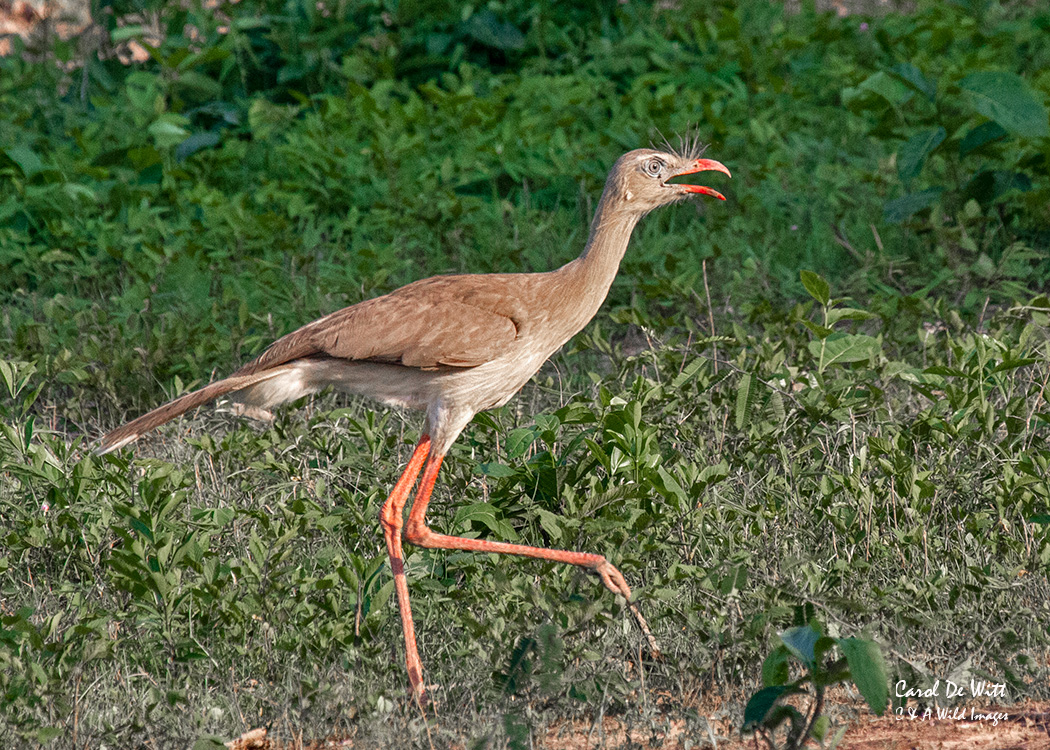
Red Legged Seriema
There were huge grassland areas covered in Termite mounds, but no signs of any Giant Anteaters. In a field near the entrance to a cattle ranch we could see a large long-legged turkey like bird. This proved to be a Southern Screamer, aptly named for the noise it makes. Although the Screamer is turkey-like on the ground in the air it resembles an eagle in flight.
A little further along the highway a Red legged Seriema strode majestically through the grassland. This tall leggy bird is reminiscent of the African Secretary Bird. It rarely flies but can run at 60km/h. They have a staring eye, long eyelashes and a forward pointing crest. They are popular with the local pantaneiros as they eat snakes.
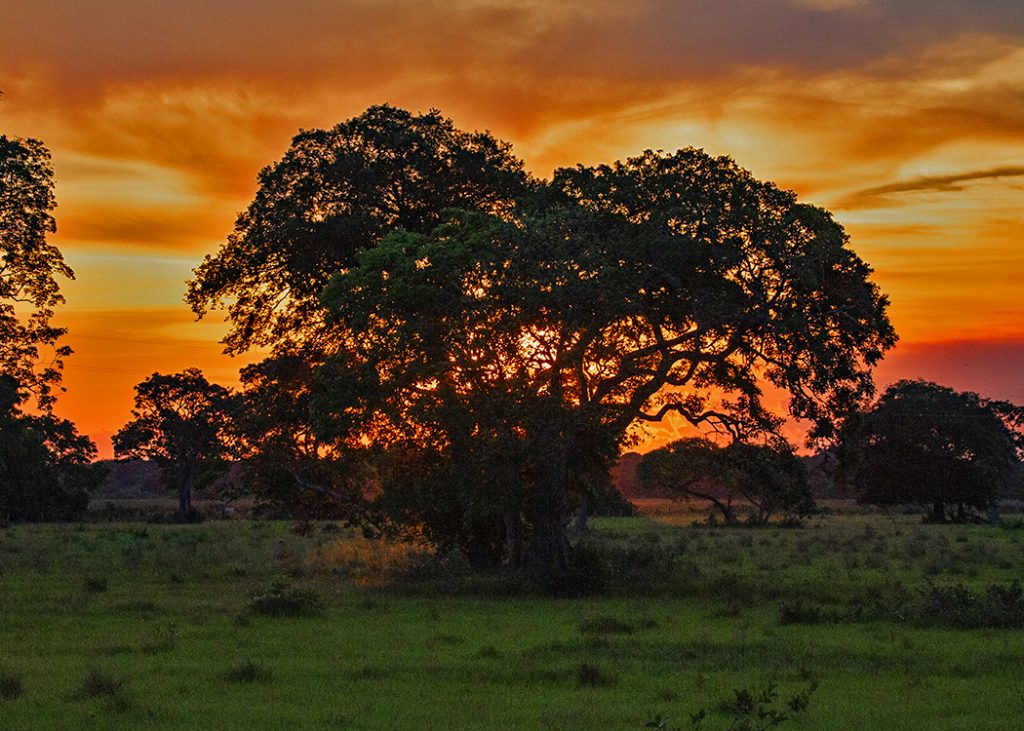
As the sun started to set a pantaneiro galloped across the grassland sending up a cloud of dust as he rounded up the cattle.
Spotlight Return To The Lodge
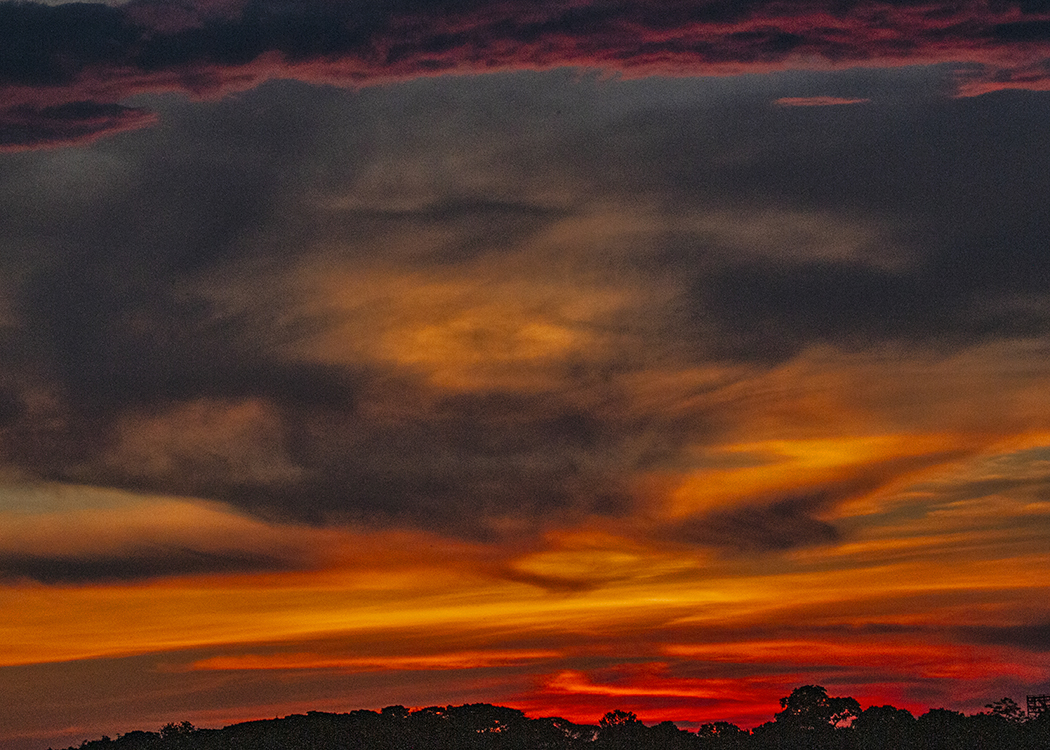
After a sundowner watching the sun set we headed back to the lodge. As we turned off the highway onto the bumpy track back to the lodge Nuan switched on the spotlight. As we crossed over the wooden bridges Caiman and Capybaras could be seen on the edges of the ponds. Little Nightjars sat on the dusty track and then flew as we got closer. Great Fishing Bats and and Lesser Bulldog bats skimmed the surface of the water. Crab Eating Racoons eyes shone in the spotlight but were difficult to see.
Tapir
Suddenly a large shape appeared on the edge of the trees in the dusk. It was a Brazilian Tapir. This is one of the heaviest of South American mammals reaching 250kg. It is a strange looking animal with its’ elongated upper lip and a humped forehead ending in an short erect mane. The long nose helps it to find and eat fruit and vegetation. The young tapir’s are striped chestnut and white which provides camouflage from the Jaguars. This contrasts with the grey colour of the adult..
Evening Spotlight Drive
After the evening meal we were off again on a one hour spotlight drive. The Caiman and Capybaras were now lying on the wooden bridges and track edges. The Nightjars were still sitting on the track and the bats were flying under the bridges. A trio of Crab Eating Foxes crossed from the edge of the woodland across the track towards a waterhole.
It was time to turn back. Suddenly, we were lucky there was the gleam of eye-shine. It was a better view of a Tapir, probably the same one. Now it was on the other side of the track heading from the woods towards water.
On to the Flotel.
Back at the lodge we decided to go to bed. Breakfast was at 5.30 a.m. What an incredible day! There were lots of mosquitoes today in the vehicle. They even bit through clothing. Tomorrow we move on to the Flotel.
Day Two (Afternoon) : – Checklist
| Mammals | |||
| Greater Fishing Bat | Brazilian Tapir | Crab-eating Racoon | Crab-eating Fox |
| Capybara | Brown Brocket Deer | Feral pig | Six Banded Armadilio |
| Lesser Bulldog Bat | |||
| Reptiles & Amphibians | |||
| Yacare Caiman | Red Footed Tortoise | Common Tegu Lizard | Tree Frog |
| Birds | |||
| Greater Rhea | Neotropic Cormorant | Whistling Heron | Snowy Egret |
| Cocoi Heron | Great Egret | Cattle Egret | Striated Heron |
| Rufescent Tiger-Heron | Capped Heron | Buff-necked Ibis | Plumbeous Ibis |
| Jabiru | White-faced Whistling-Duck | Black-faced Whistling-Duck | Muscovy Duck |
| Brazilian Teal | Black Vulture | Turkey Vulture | Lesser Yellow-headed Vulture |
| Snail Kite | Savanna Hawk | Plumbeous Kite | Black-collared Hawk |
| Great Black Hawk | Southern Caracara | Chaco Chachalaca | Chestnut-bellied Guan |
| Blue-throated Piping-guan | Gray-cowled Wood-Rail | Limpkin | Red-legged Seriema |
| Sunbittern | Southern Lapwing | Orange-backed Troupial | Wattled Jacana |
| Scaled Dove | Ruddy Ground-Dove | Picui Ground-Dove | White-tipped Dove |
| Hyacinth Macaw | Monk Parakeet | Turquoise-fronted Parrot | Greater Ani |
| Smooth-billed Ani | Guira Cuckoo | Ferruginous Pygmy-Owl | Great Potoo |
| Common Pauraque | Little Nightjar | Ringed Kingfisher | Amazon Kingfisher |
| Green Kingfisher | American Pygmy Kingfisher | Toco Toucan | Campo Flicker (Campo) |
| Pale-crested Woodpecker | Straight-billed Woodcreeper | Rufous Hornero | Cattle Tyrant |
| Short-crested Flycatcher | Tropical Kingbird | Rusty-margined Flycatcher | Lesser Kiskadee |
| Great Kiskadee | White-winged Swallow | Brown-chested Martin | Gray-breasted Martin |
| Purplish Jay | Black-capped Donacobius | Rufous-bellied Thrush | Silver-beaked Tanager |
| Grayish Saltator | Yellow-billed Cardinal | Saffron Finch | Rusty-collared Seedeater |
| White-bellied Seedeater | Bay-winged Cowbird | Crested Oropendola | Yellow-rumped Cacique |
| Solitary Cacique | Unicoloured Blackbird | Chopi Blackbird | Bare-faced Curassow |
| Solitary Sandpiper | Green Ibis |