Florida’s Birding Hotspots
Its our sixth visit to what must be one of Florida’s birding hotspots and one of the best places in Palm Beach area for wildlife and bird photographers. Each time we are visiting the Sunshine State we try to call in and it’s always a treat. The best time to visit is from December to March when the site attracts a number of different bird species. Often in breeding plumage, nesting and feeding the chicks. During the winter months the site also draws in a good number of winter migrants. Despite the wetland site being surrounded by Delray Beach’s residential areas, Wakodahatchee wetlands remains a real hidden gem.

Wakodahatchee Wetlands
The Wakodahatchee wetlands are designed to recycle wastewater from the county’s Water Reclamation Facility. Together with the treatment plant there’s a huge area of freshwater marsh, an ideal habitat for wetland bird species. The centre is free to visit, but parking can be limited. Also the boardwalk is popular with walkers, which for photographers can cause some problems. So a hand held camera setup is better than trying to set up tripods. Otherwise, this place is for the birds. As a tip, try timing any visits to early in the morning. As it can get hot once the sun’s up and there are less people on the boardwalk.


The area includes a three-quarter-mile handicap-friendly elevated boardwalk loop. This crosses much of the open water areas. The wetlands features four different habitats:- an Open water area, Freshwater Marsh, a number of Islands, and a wooded walkway, each of which attracts different types of wildlife. The islands providing ideal nesting and roosting sites


Great Florida Birding Trail
The wetlands provide an amazing wildlife habitat providing homes for over a 100 different species of birds plus alligators, turtles. including numerous very large iguanas that have invaded the area. It is part of the southern portion of the Great Florida Birding and Wildlife Trail, a series of over 500 wildlife and birding sites throughout the state. The site is an important rookery for a number of species including Double-crested Cormorants and Wood Storks.

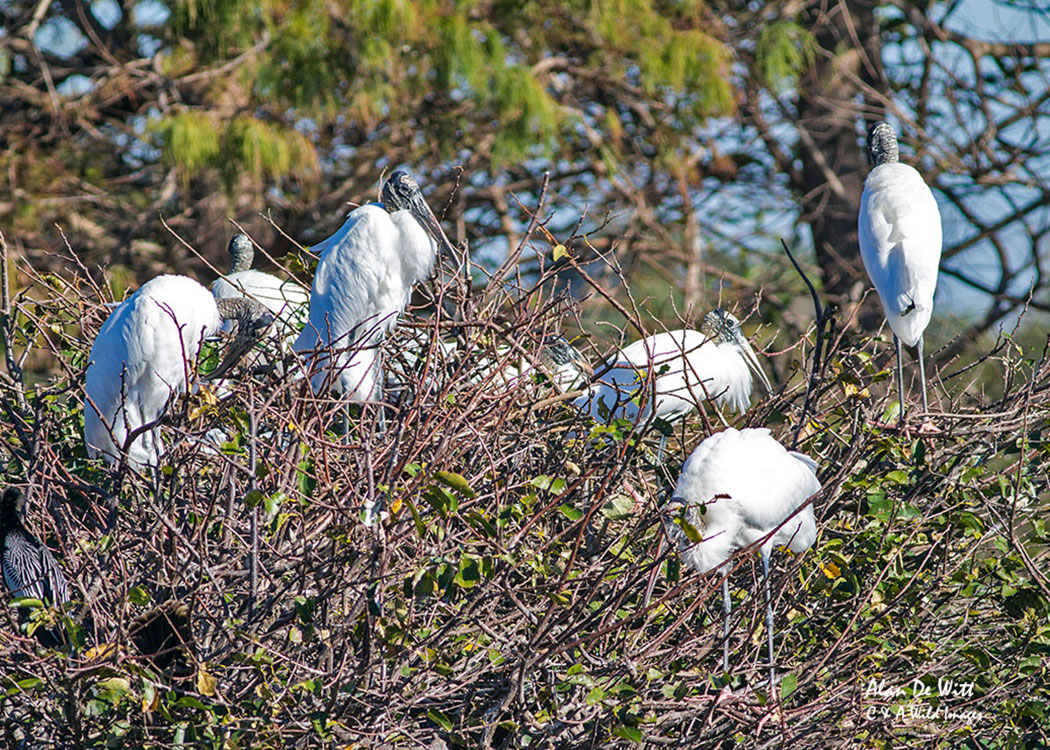
Over the years Wakodahatchee has become well known for its wildlife photographic opportunities. It’s been interesting to observe the growing number of visitors with cameras during our visits. The site is particularly good for those photographers whose budget doesn’t stretch to the cost of the massively long lens that are often required to get just that little bit closer.

From February to March, the site becomes one of the major rookery sites in the area with hundreds of pairs of nesting birds very close to the boardwalk. During one of our visits we managed to get some great shots of Wood Storks, Double-crested Cormorants and Anhingas with their young.

Latest Visit
Today’s visit to the birding hotspot was intriguing. Although the site had hosted between 60 to 80 nesting pairs of Wood Storks in recent years, we only spotted a couple. It’s possible that the recent tropical storms impacted their numbers. On the bright side, there were plenty of Anhingas and Double Crested Cormorants starting to gather at their nesting sites.

As we strolled around the boardwalk, our attention was drawn to a Red-shouldered Hawk perched attentively, overlooking an open grassy area. Before long, the hawk leapt down to investigate what had caught its eye, leading to a captivating encounter between the hawk and a snake.

The snake didn’t come out on top, but it provided us with fantastic photo opportunities.

Aside from the larger and more conspicuous bird species, we also spotted smaller ones like the Purple Gallinule and some winter visitors in the wooded area. Over the open water, an Osprey rested on a snag and called out before swooping to take a fish.

In our past visits, a bird that consistently drew attention was the Purple Swamp Hen. This invasive species likely resulted from several birds escaping during a hurricane some years ago. They have clearly become well-established in the area over time.

