RSPB Bempton Cliffs
Having travelled down to Pembrokeshire last June to visit Skomer. In the hope of getting some photos of the sea birds especially the Puffins. We thought that a trip up to Yorkshire to visit RSPB Bempton Cliffs this year might provide another opportunity. Not knowing much about the east coast above the Norfolk area we didn’t know what to expect. A trip to Northumberland a few years ago had surprised us as to just how beautiful the coast was there. So with a trip to York planned and the prospect of a few days of good weather we drove over to the RSPB reserve at Bempton Cliffs. Fully expecting it to be fairly quiet on a Wednesday out of the main holiday season.
RSPB Bempton Cliffs
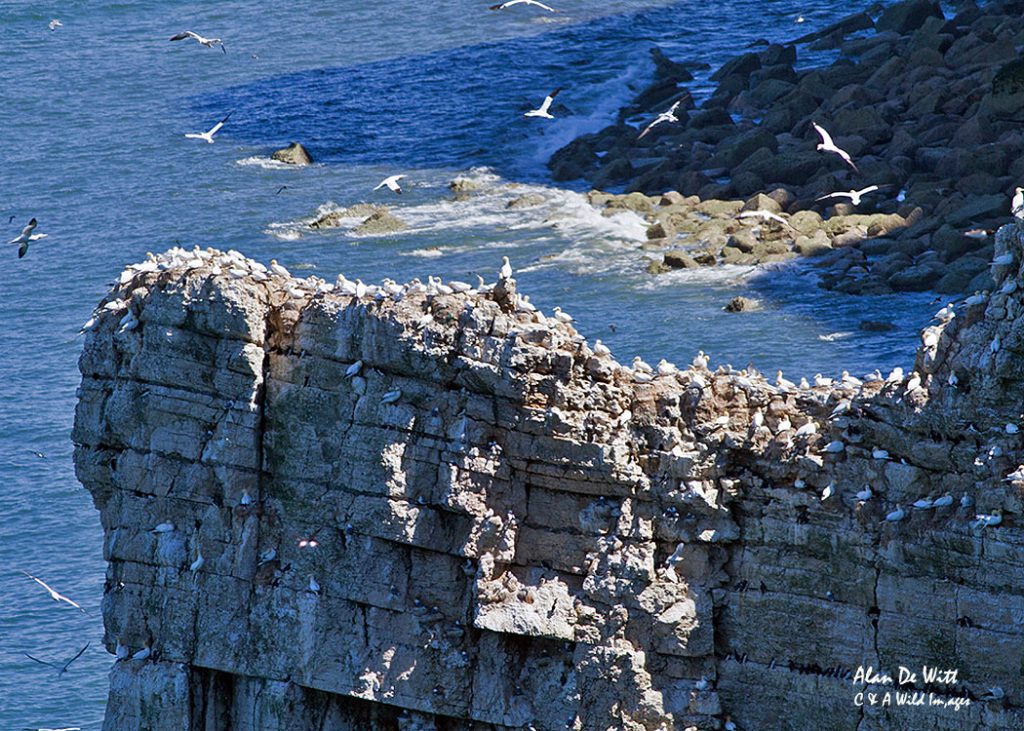
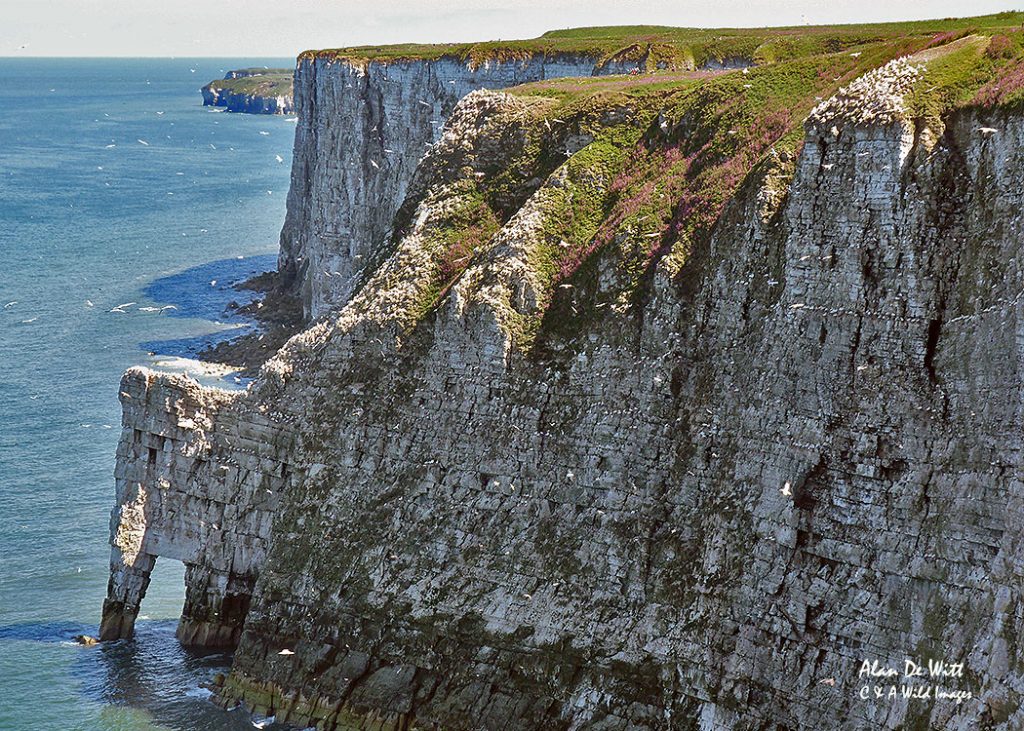
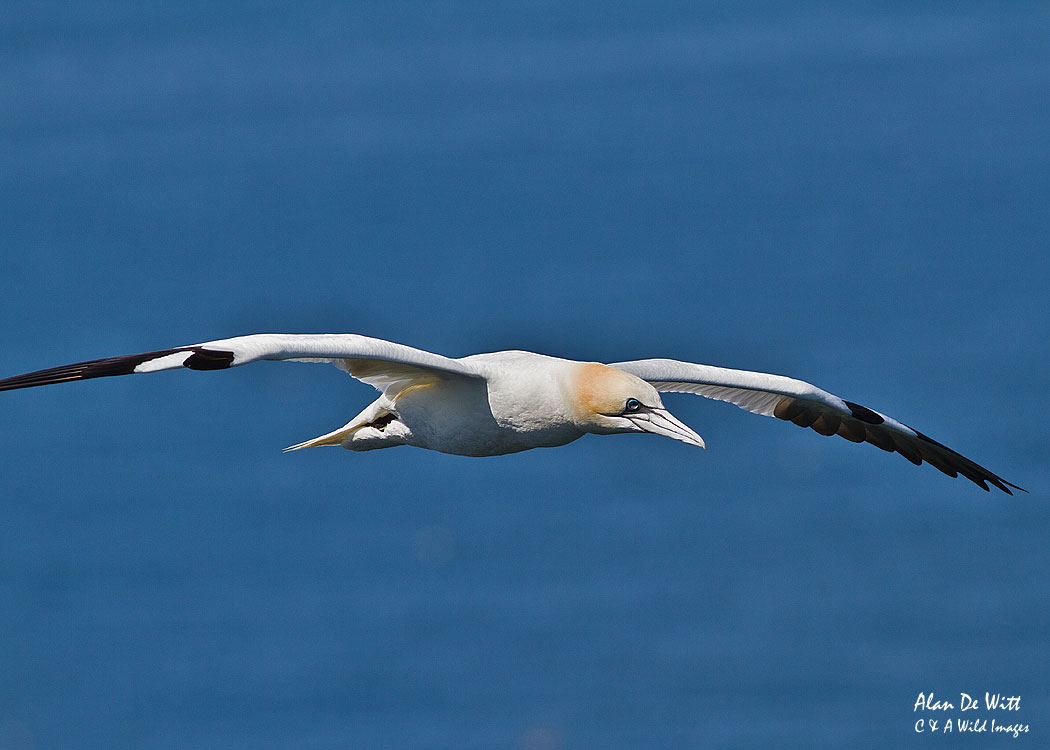
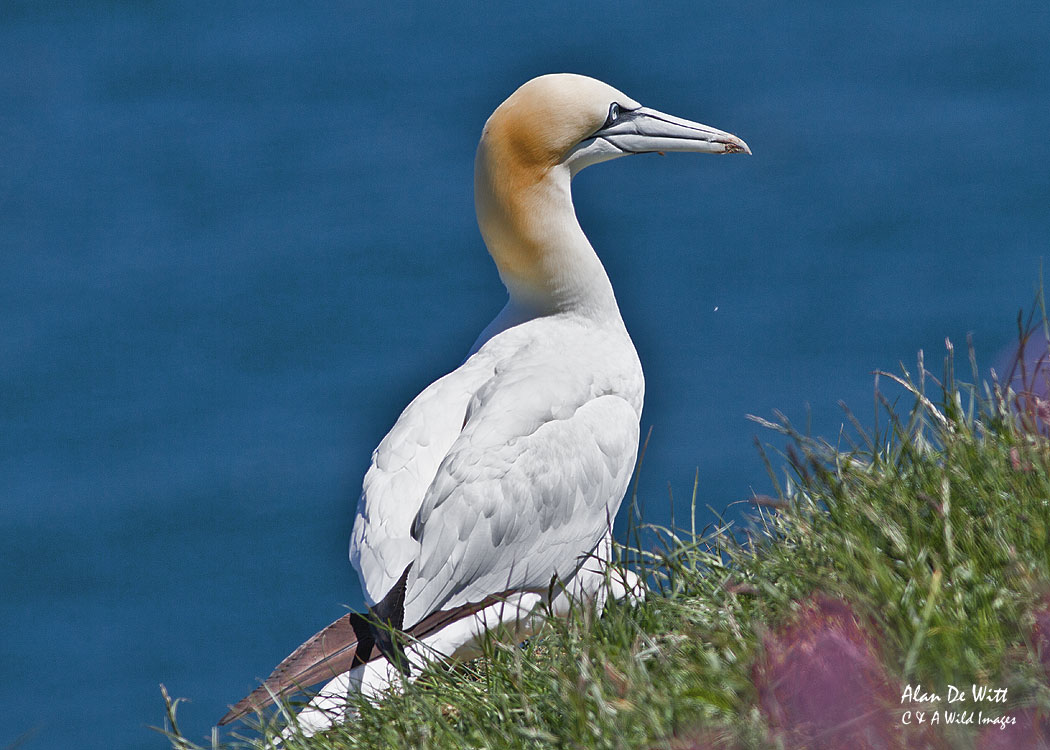
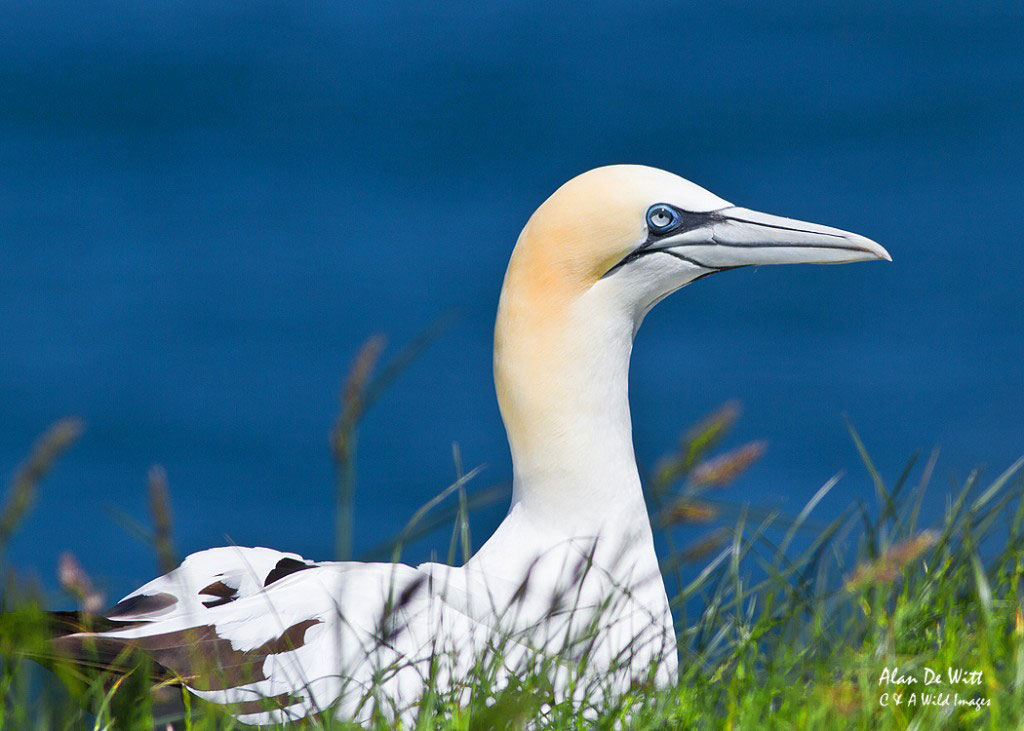
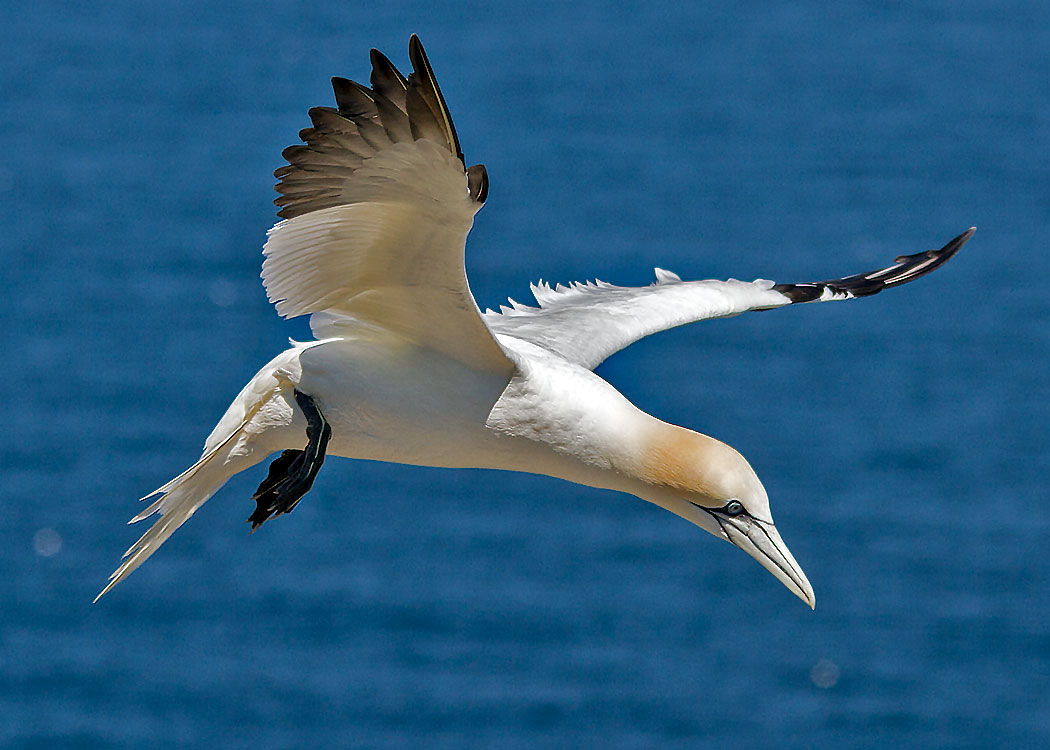
The first surprise was to find the car park full, a newly opened visitor centre with excellent facilities and more than a few people gathering on each of the viewing points. On the short walk to the cliff top footpath it wasn’t long before you realise that there are a lot of sea birds on the cliffs, In fact something over 200000+ to be exact, and all feeding on a diet of mainly fish, so the smell was overpowering. That said as we walked towards the cliff top it wasn’t long before the Gannets provided close views of their flying abilities. Providing us with excellent opportunities to capture some images of them in flight, trying out the new 400 mm prime lens.
Cliff Top Platforms
We walked further along to some more viewing platforms which provided views of Razorbills and Guillemots crowding the cliff ledges. At the Jubilee Point, the last platform travelling north, we were given first class views down the cliff face. Large numbers of nesting Gannets with chicks balanced precariously on narrow ledges and Puffins landed on the ledges and disappeared into the rock chambers. Which they were using instead of the more traditional burrows we’ve seen them occupy in other locations. All the time taking in the all pervasive smell of fish and the sights & sounds thousands of birds wheeling around the cliffs.
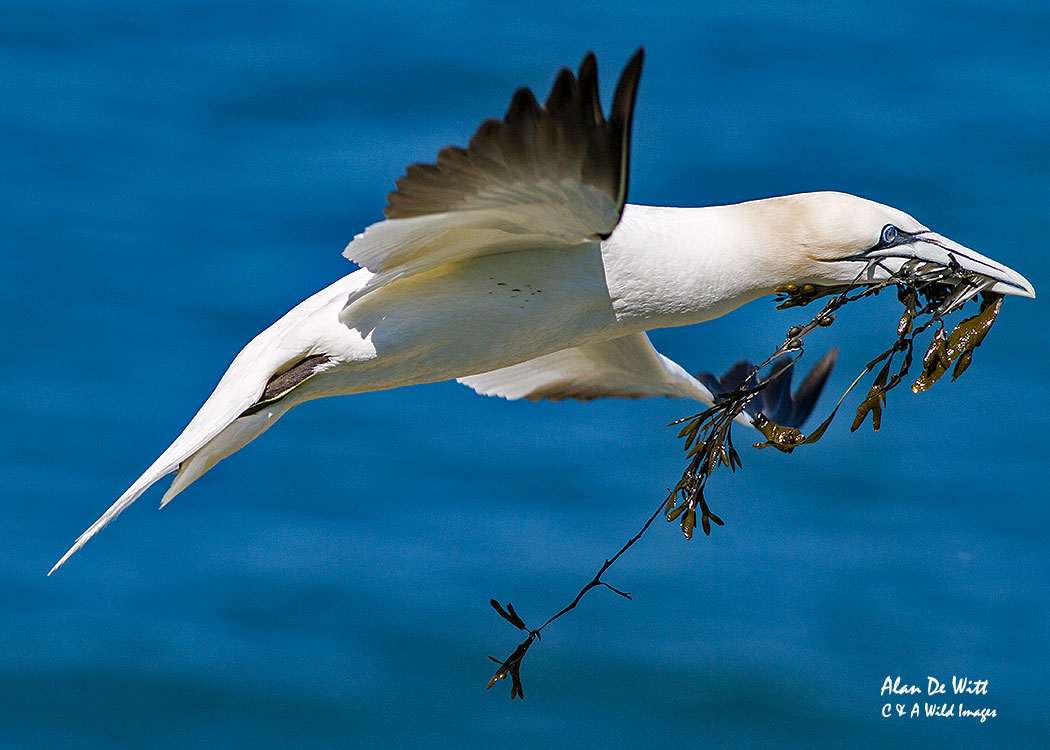
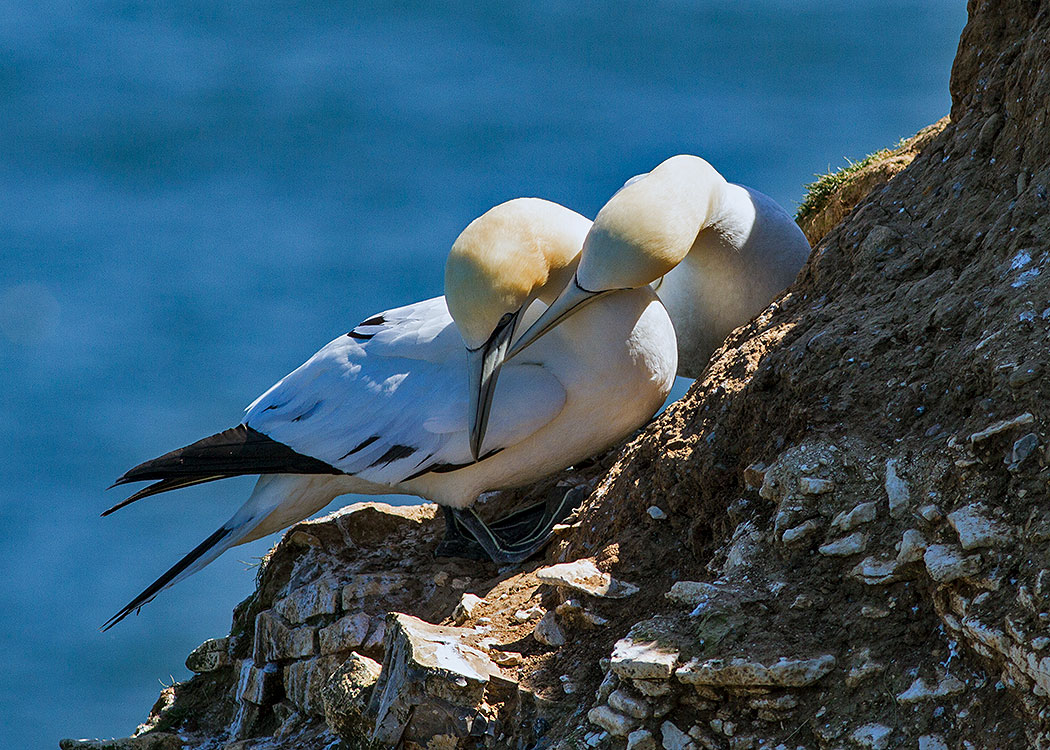
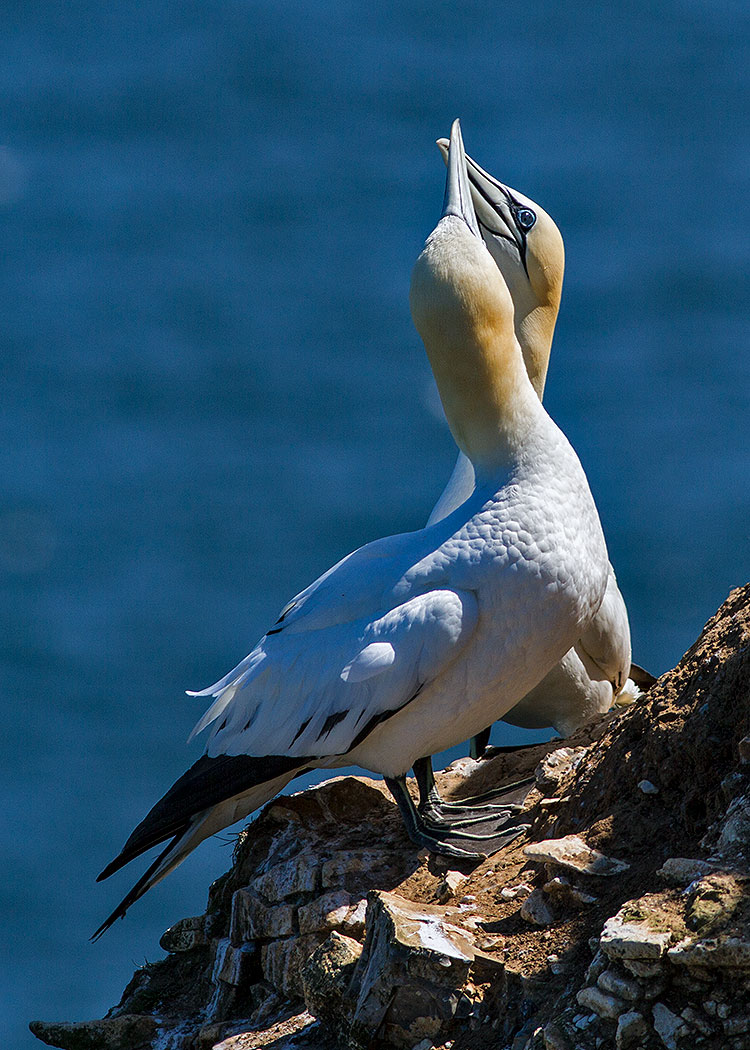
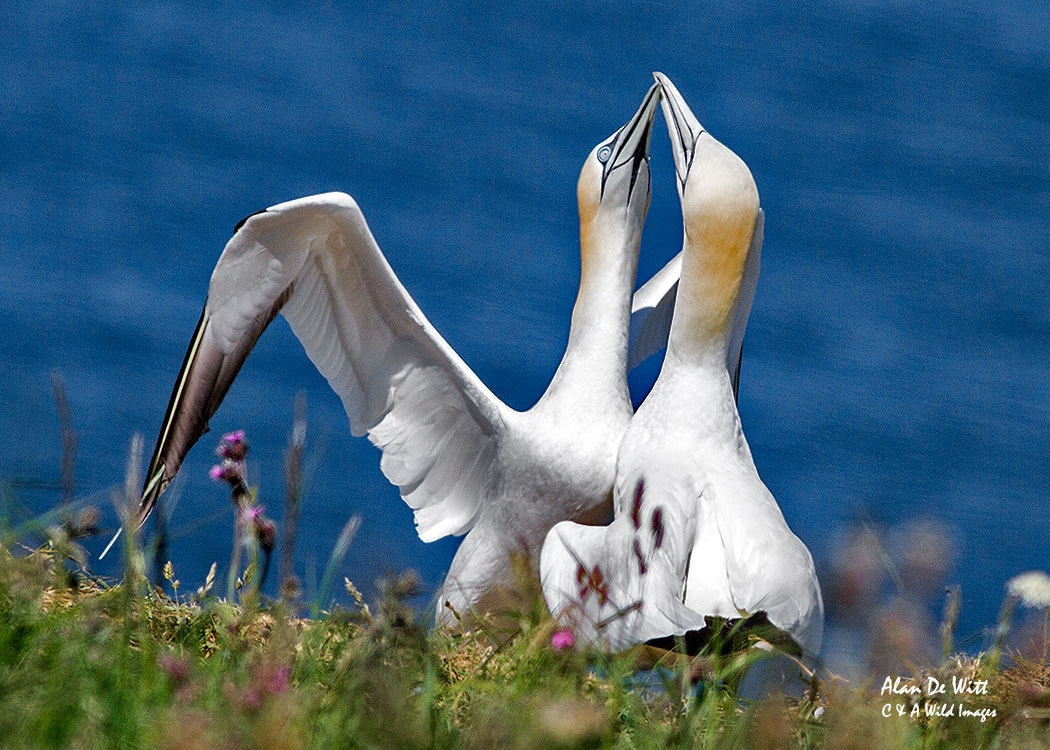
It was interesting to watch the behaviour of the Gannets, some were nest building and flying in with seaweed dangling from their beaks. They would then present the seaweed to their mate, who would be sitting waiting on a narrow ledge. With much calling, stretching of necks and beak clicking against each other as they performed an elaborate greeting ceremony.
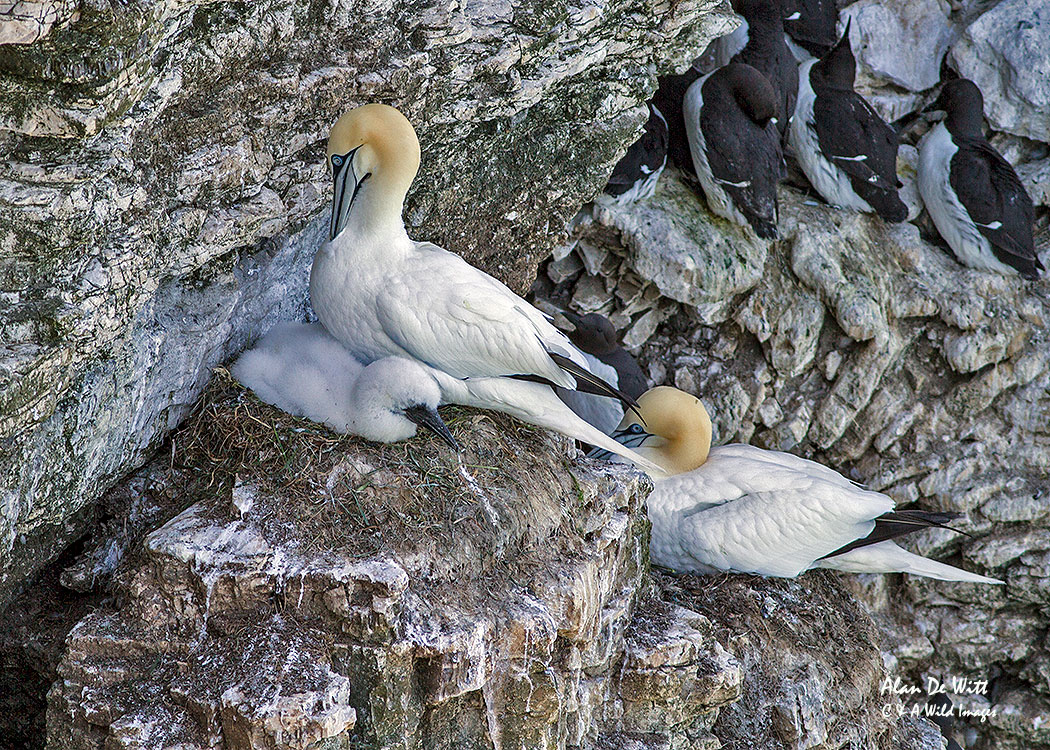
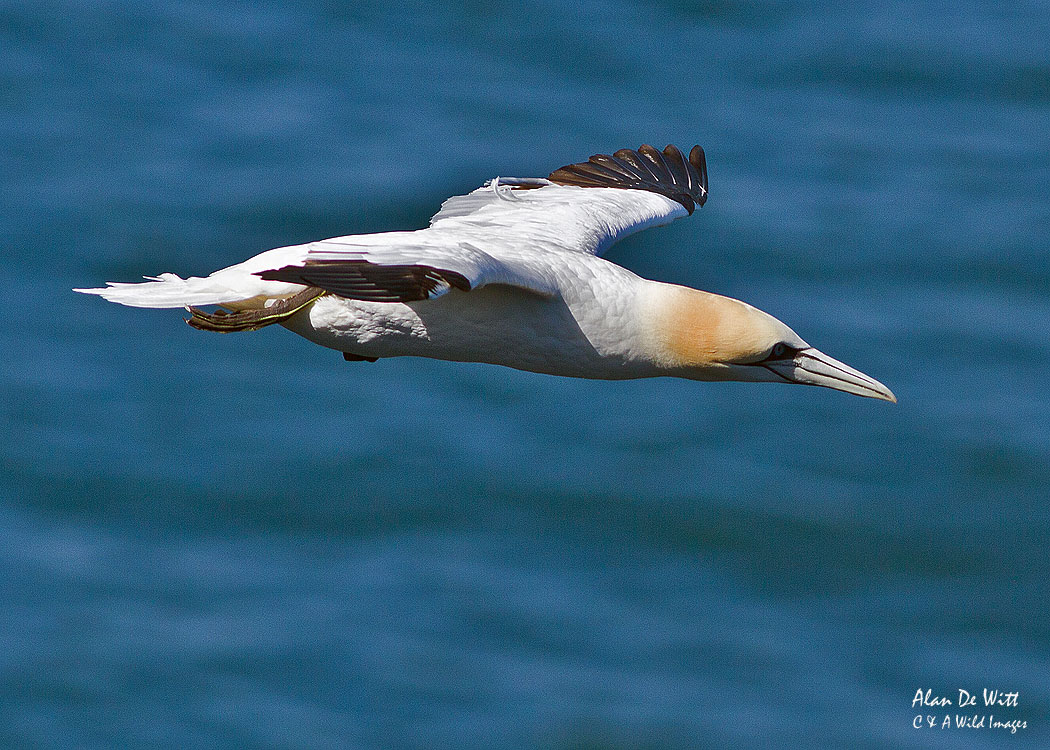
The Gannets are real masters of the air, changing direction with an adjustment of their tail feathers.Bending their wings back like an arrow as they plunge dive for fish, angling and lowering their wings as they head for the cliff ledges, an amazing sight to watch.
Puffins and Razorbills
The Puffins flew and swooped at the vertical cliff face. Abruptly stopping before their colourful beaks made contact, lowering their legs and making touch down before waddling into a groove in the cliff face. They always seem a comical bird, in stark contrast to the elegant Gannets.


Bempton Cliffs definitely an excellent place to visit and an almost guaranteed opportunity to capture some first class images of birds in flight.
Wonderful pix – it’s spurred us to visit!
Hi there, really great article and super photos too. I am looking to do some bird photography at Bempton Cliifs this year. I wanted to ask you a question, is a 400mm lens long enough?
Sam
Hi Sam, Thanks for the comments. The 400 mm lens is exactly what’s needed there. All the images of the birds on that post were taken with an old Cannon 400 Prime and a 7D Mark I. There were guys with larger lenses, but with the heavier lens, a lot of them seemed to be having trouble tracking the gannets in flight. There are platforms there, (Jubilee Corner is good) which get you close to the birds on the cliffs. The Gannets use the up-draft of the cliffs so are close to the path along the cliff edge. As we travel around my wife and I use the 100-400 lens and 7D’s for all the images. We find that combination the best compromise for wildlife. Hope that helps.